

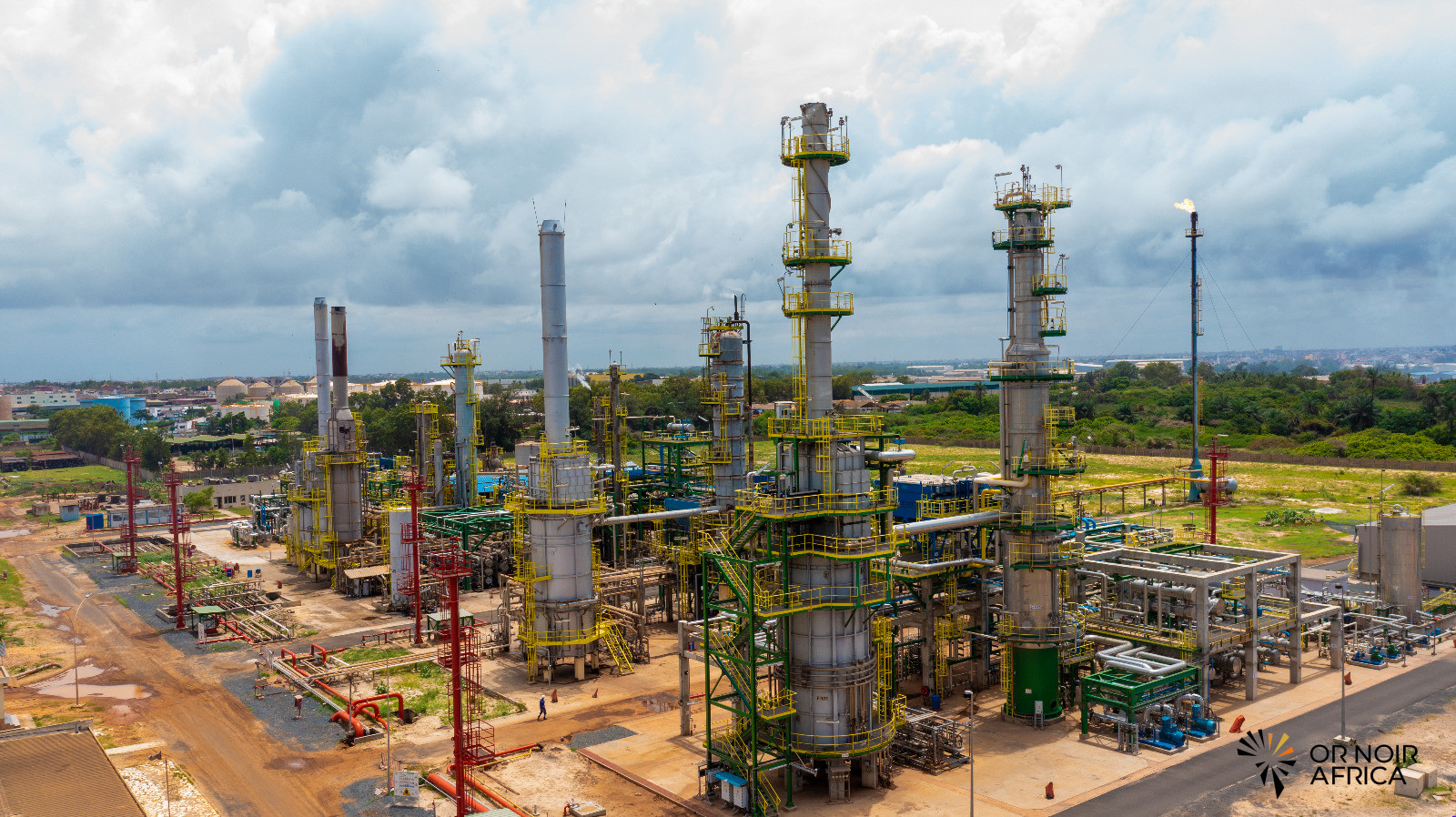
Regional competition is prompting the Société africaine de raffinage to extend its horizons beyond its traditional market. SAR's challenge is now to develop a competitive offering across West Africa while supporting Senegal's changing energy needs.
Competition also takes place at storage depots
An article published on 2 October 2026 reports concerns expressed by SAR's managing director, Mamadou Abib Diop, about Dangote's expansion into neighbouring countries. It mentions announced investments in The Gambia and proposed depots in Guinea. According to the sources consulted, the latter remain reported projects, rather than facilities whose commissioning has been confirmed.
The announcement concerning The Gambia requires clarification. The presidential statement dated 7 July 2026 links the $2 billion commitment to two projects: a 250 MW solar power plant and fuel storage infrastructure. The amount should therefore not be presented as an investment devoted exclusively to refining. The statement also provides for agreements to be concluded, studies to be undertaken and implementation structures to be established.
Storage is emerging as an essential commercial tool: it can bring products closer to customers and improve delivery consistency. Competition therefore extends across the supply chain, from crude processing to distribution.
SAR2: turning an industrial ambition into delivery
On 23 September 2026, the Société africaine de raffinage (SAR) and Turkish company Yamata signed a memorandum of understanding in New York to establish a second refinery and modernise the existing facility. The new plant is expected to have capacity of 4 million tonnes a year, specifically dedicated to processing crude oil extracted in Senegal.
This initiative could substantially diversify SAR's commercial opportunities. However, a memorandum of understanding alone does not establish the actual commissioning date, final financing arrangements or purchase commitments from future customers. Close monitoring of the project will be needed to distinguish announced capacity from facilities that are genuinely operational.
For sector participants, four key factors will be decisive: crude supply, cost management, product quality and market access. Increased capacity does not necessarily guarantee greater competitiveness.
Anticipating changes in demand
The planned conversion of SENELEC's power plants to gas could change the outlook for SAR's fuel oil. The scale and timing of this impact require detailed documentation; it would be premature to conclude that this market will disappear immediately.
For the refinery, this calls for analysis of the balance between different products, the requirements of transport and industry, and export opportunities. These markets require robust infrastructure and strong commercial relationships capable of supporting expected volumes.
Local value as a measure of performance
For Senegalese businesses, opportunities lie in areas such as engineering, maintenance, transport and industrial services. Realising these opportunities will depend on access to contracts, the required qualifications and effective project structuring.
SAR's response to regional competition should be assessed across several dimensions: industrial reliability, commercial competitiveness and participation by local businesses. Increasing production is a crucial step; the economic objective, however, is to supply competitive products sustainably while maximising value added in Senegal.
Have any thoughts?
Share your reaction or leave a quick response — we’d love to hear what you think!
-
 0
-
0
-
0
-
0
-
0
-
0





