

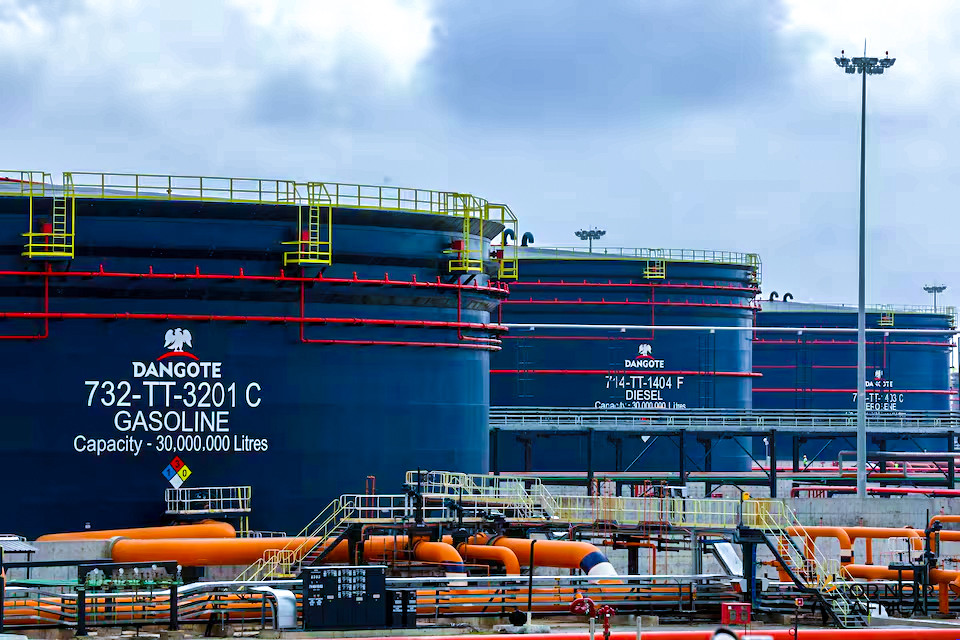
The opening of the Dangote refinery’s ownership to investors is attracting strong interest and presenting Nigeria’s financial market with a major test. Beyond the announced fundraising, the transaction must demonstrate how far investors can support the development of a major African industrial asset.
On September 29 in Nairobi, Aliko Dangote reported very strong demand for the ongoing offering. This statement signals enthusiasm surrounding the transaction; however, it does not constitute a final account of subscriptions or funds actually raised.
An offering accessible to small investors
Opened on September 14, 2026, the public offering comprises 4.1 billion ordinary shares at 525 naira each. The minimum subscription is ten shares, or 5,250 naira. It is scheduled to close on October 13, subject to the provisions of the prospectus.
The target amount is approximately 2.15 trillion naira, presented as around $1.6 billion. An extension of the offering in the event of strong demand could bring fundraising to some $2.1 billion. This scenario remains conditional and must not be confused with an amount already secured.
The low entry threshold broadens access to share ownership. For the Nigerian market, the challenge is to turn this access into lasting participation, with understandable financial information and reliable subscription mechanisms.
Financing meets industrial ambition
The fundraising is intended to support the development of the Lagos complex. Dangote notably states an objective of increasing its refining capacity to 1.4 million barrels per day. This is an expansion ambition whose realization will depend on investment and execution.
For Africa’s energy sector, the transaction illustrates the convergence of industrial capacity and capital markets. Mobilizing a broader shareholder base can support large-scale projects, but also entails greater requirements for transparency and performance monitoring.
Enthusiasm must translate into results
The next step will be the official outcome of the offering: amounts subscribed, share allocations and the transaction’s final terms. The market’s depth will then be measured by its ability to convert declared interest into capital actually mobilized.
For ONA, this initial public offering is an indicator of the financing potential for African energy infrastructure. Its significance will extend beyond successful subscription if the resources mobilized translate into productive capacity, operational reliability and lasting results.
Have any thoughts?
Share your reaction or leave a quick response — we’d love to hear what you think!
-
 0
-
0
-
0
-
0
-
0
-
0





