

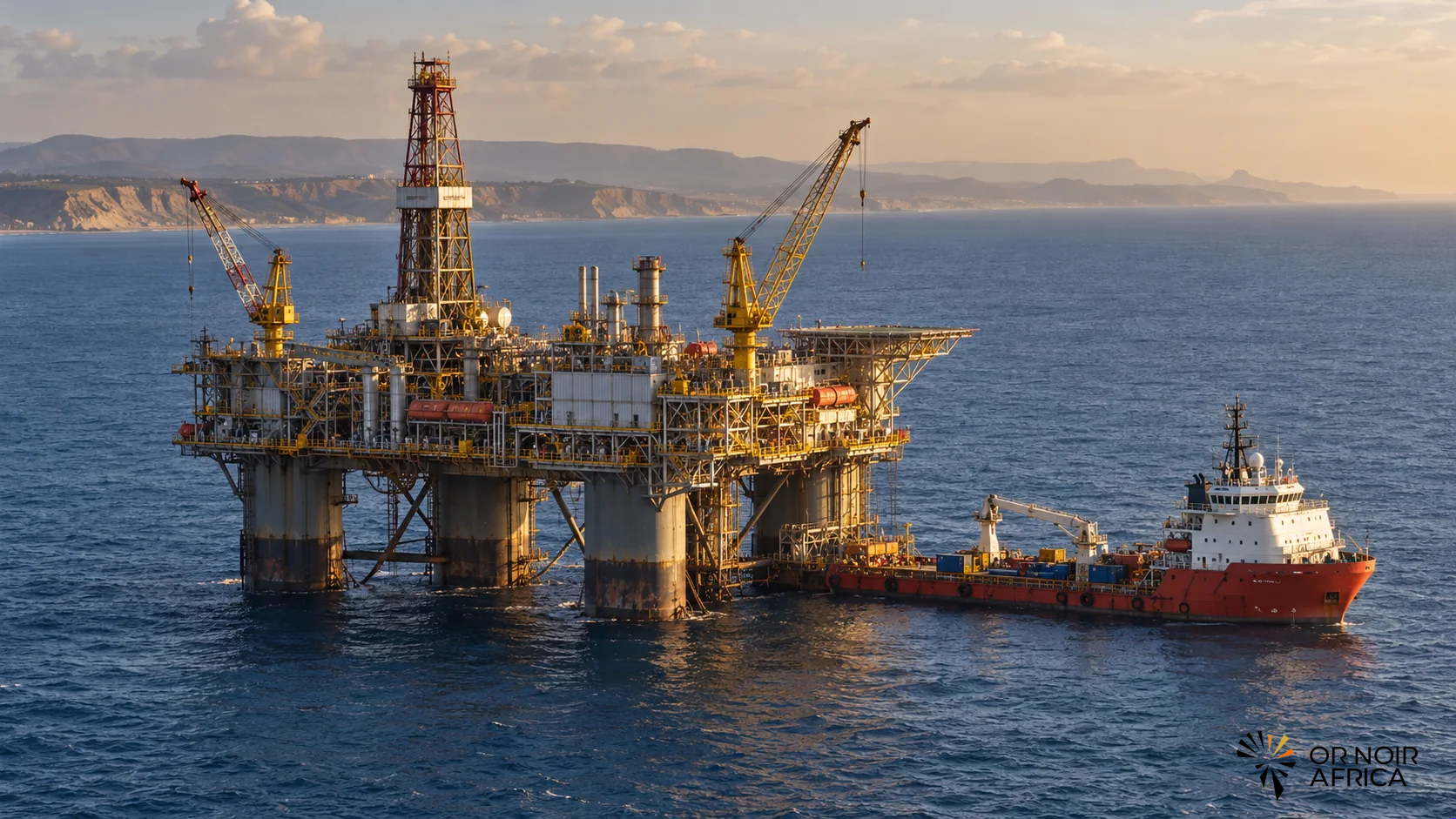
The war with Iran has weakened part of Qatar's gas export capacity and increased the importance of diversifying assets and supply routes. At the same time, QatarEnergy continues to expand its African portfolio. The Qatari state-owned company is set to enter two offshore blocks in Angola, a transaction that gives tangible substance to its growing interest in African basins.
The agreement signed in Luanda on September 10, 2026 with Shell, Sonangol E&P and the National Agency for Petroleum, Gas and Biofuels concerns blocks 8 and 22. Subject to government approvals and finalization of contracts, QatarEnergy is to hold 30%, Shell 50% and the operatorship, while Sonangol would retain 20%. This step marks QatarEnergy's entry into Angola's energy sector and forms part of an international upstream exploration strategy.
An expanding African portfolio
The Angolan agreement adds to positions already established or under development in several African countries, including the Republic of Congo, Egypt, Namibia and South Africa. In April, QatarEnergy participated in an offshore hydrocarbon discovery in Congo on the Moho license operated by TotalEnergies. In June, the company also reported an oil discovery in Namibia following the drilling of the Merlin-1X well in the Orange Basin.
This presence does not mean the company is immediately moving production from the Gulf to Africa. African assets remain diverse: some are in exploration, others in development or production. Commercial value depends on discovery appraisal, infrastructure access, contracts and investment decisions. Minority interests alongside experienced operators allow QatarEnergy to access projects without assuming sole responsibility for operations.
Angola offers an established oil sector, experience of partnerships with major companies and offshore basins that may still be explored. The participation of national company Sonangol also places the transaction within the country's institutional framework. For Angola, the challenge is to attract capital and expertise while ensuring that contractual commitments, revenues and local benefits match national priorities.
The Iranian conflict highlights concentration risk
Qatar remains one of the world's main suppliers of liquefied natural gas, but its Ras Laffan facilities have been affected by the Middle East conflict. The International Energy Agency said attacks in March damaged two liquefaction trains and a gas-to-liquids facility. The affected capacity represents approximately 12.8 million metric tons of LNG annually, or nearly 17% of Qatari capacity, with repair times measured in years rather than weeks.
This disruption highlights the exposure of an export model heavily concentrated around a major industrial complex and a strategic shipping route. It strengthens the case for a diversified international portfolio, but does not establish that the Angolan agreement was signed as a direct reaction to the war. QatarEnergy had already been developing a partnership strategy in emerging basins for several years. The conflict instead serves as a reminder of the risks facing its value chains.
African investments do not offset lost Qatari volumes in the short term. An interest in an exploration block does not provide immediate cargoes; seismic work, drilling and a commercial discovery must be followed by infrastructure and sales contracts. The strategy is more about building a range of options and broadening future revenues than quickly replacing Ras Laffan exports.
An exploration strategy, not yet diversified deliveries
For African countries, a new international investor can bring two benefits: mobilizing capital and contributing to exploration in areas where knowledge of the subsurface remains incomplete. However, the terms of access to blocks and the pace of work matter as much as the announcement of participation. Exploration remains risky, and not all awarded areas lead to commercial discoveries.
Once a resource is identified, the challenge shifts to development. Producers must be able to connect the field to pipelines, processing facilities or export terminals, depending on the deposit's nature and the target market. The availability of long-term financing, operating costs and stable tax rules determine whether a project can move through this stage.
African partners can seek to use this competition to negotiate investment in infrastructure, training, local services and processing capabilities. The challenge is to prevent an increase in foreign interests from resulting only in financial holdings and crude or gas exports without lasting industrial gains.
An African presence to assess over time
QatarEnergy therefore approaches Africa as a growth area for its upstream portfolio, while Gulf tensions highlight the limits of geographically concentrated infrastructure. The two dynamics intersect, but are distinct: African assets are medium- and long-term investments, rather than an immediate solution to disruptions in Qatari LNG.
The scope of this strategy will be judged by verifiable results: completing agreements, starting work, discovering commercial resources and then deciding to finance developments. For African states, the decisive question will be how to turn QatarEnergy's and its partners' interest into economic activity, national skills and local value.
Have any thoughts?
Share your reaction or leave a quick response — we’d love to hear what you think!
-
 0
-
0
-
0
-
0
-
0
-
0





