

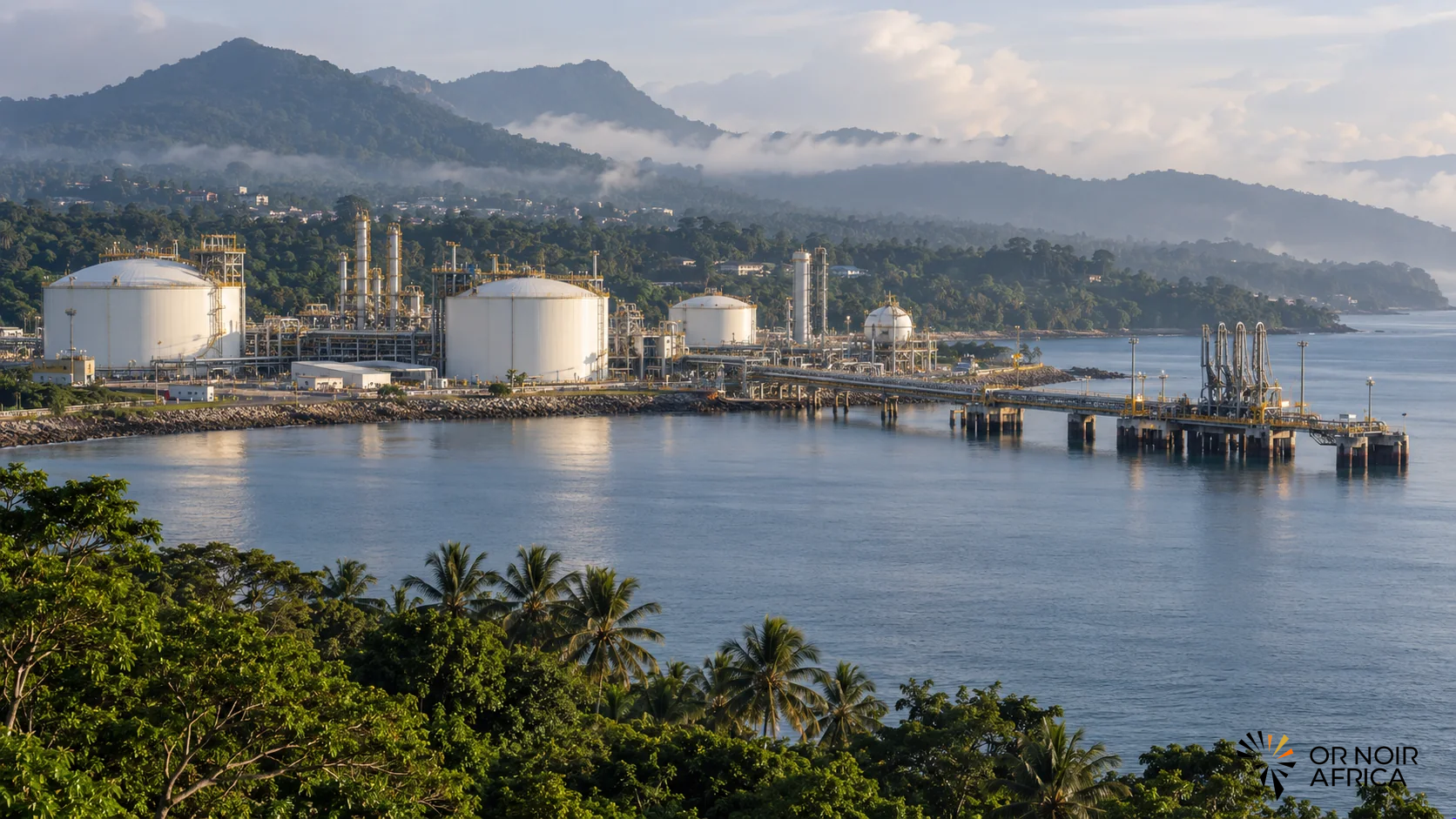
Equatorial Guinea seeks to turn Punta Europa, its gas processing and export complex on Bioko Island, into a regional platform. The objective is to progressively replace volumes from Alba, a longstanding field at an advanced stage of its life cycle, with gas produced from other fields in the country and, eventually, resources from neighboring countries.
This strategy draws on existing infrastructure: liquefaction facilities, liquefied gas production, a power plant and a methanol plant. The model could allow resources to be monetized that would otherwise be difficult to develop independently. But the challenge is to secure sustainable supply at the right cost before Alba's decline reduces utilization of existing facilities.
The Gas Mega Hub advances, but still depends on new volumes
The Gas Mega Hub project relies on connecting offshore fields to Punta Europa's facilities. The Alen field connection entered service in 2021. Additional work on Alba followed in 2025, and in April 2026 Chevron approved the development of Aseng, which is to be connected to existing infrastructure through a subsea well.
Alen and Alba currently supply around 175 million cubic feet of gas per day. When the Aseng project enters production, volumes from these phases could exceed 300 million cubic feet daily. Together, these projects aim to commercialize approximately one trillion cubic feet over the next decade. They constitute an important step, but confirmed volumes alone are insufficient to maintain EG LNG's maximum liquefaction capacity as fields decline.
The hub therefore needs additional sources. In the short term, the closest opportunities are discoveries or connection projects capable of using existing pipelines. This approach reduces the need to build an entirely new production, processing and export chain, but requires sufficiently documented volumes and commercial terms acceptable to the different partners.
Cross-border cooperation could change the scale
The Yoyo-Yolanda project, shared between Equatorial Guinea and Cameroon, is one of the most advanced options. The two countries formalized the field's unitization in February 2026. A subsea connection to Alen could deliver up to 350 million cubic feet per day, with first gas targeted from late 2029. The timetable nevertheless depends on investment decisions, sales agreements and infrastructure construction.
Other discoveries in the Alba, D, O, EG-23, EG-31 and EG-08 blocks would together represent nearly two trillion cubic feet of potential backfill supply. Some resources' proximity to existing pipelines is a potential advantage. Recoverable volumes, flow rates and costs must nevertheless be confirmed before a firm contribution to Punta Europa's supply can be inferred.
The most ambitious option is block EG-27, now called Ebano. It holds approximately three trillion cubic feet of contingent resources. If confirmed and considered developable, these could support an additional liquefaction train. However, the block lies approximately 140 kilometers from existing infrastructure. Development would require substantial expenditure and should be compared with a floating liquefaction solution allowing gas to be processed offshore. A previous regional FLNG project, Fortuna, failed to obtain the required financing in 2019, a reminder of the banking challenges facing major gas projects.
SONAGAS currently holds the entire block, while ConocoPhillips has signed an agreement in principle to participate. Finalizing a partnership, choosing a technical solution and obtaining financing will be decisive in moving from potential to a tangible project.
Cameroon and Nigeria: available resources, necessary coordination
Extending the hub across borders would broaden its supply base. Cameroon has more than six trillion cubic feet of largely undeveloped gas. The end of the Hilli Episeyo floating facility's contract in July 2026 strengthens the search for a new outlet for some resources. According to assessments, the Etinde and Sapele projects could supply Punta Europa by pipeline.
Nigeria would represent a larger-scale option. The proposed Gulf of Guinea pipeline project, supported by a bilateral treaty from 2024, could transport up to 2.7 billion cubic feet per day. This volume would be several times Equatorial Guinea's current liquefaction capacity and could supply power plants, industries and potentially new LNG units.
Such a prospect remains conditional. It requires firm volume commitments, bankable cross-border agreements and a credible financing structure. The countries concerned must also balance their own gas demand, exports, transportation costs and domestic development priorities. An announced pipeline does not constitute guaranteed supply until contracts and financing are concluded.
A window closing as Alba declines
Punta Europa has a rare advantage: existing infrastructure, operating experience and a favorable geographical position in the Gulf of Guinea. By connecting nearby fields rather than developing each deposit independently, the hub could reduce some costs and offer an outlet for cross-border resources. It must nevertheless compete with floating projects and new LNG terminals worldwide that also seek capital and long-term contracts.
Success will depend on a precise sequence: confirming resources, selecting the most competitive connections, concluding sales agreements, financing infrastructure and starting work before existing production declines further. Equatorial Guinea has a useful industrial base, but turning it into a regional gas platform will require lasting cooperation with Cameroon and Nigeria.
The hub's potential is real, but the decision to monitor is not simply the quantity of gas announced. Supply contracts, final investment decisions and the first delivered volumes will show whether Punta Europa can become a shared outlet for Gulf of Guinea resources.
Have any thoughts?
Share your reaction or leave a quick response — we’d love to hear what you think!
-
 0
-
0
-
0
-
0
-
0
-
0





