

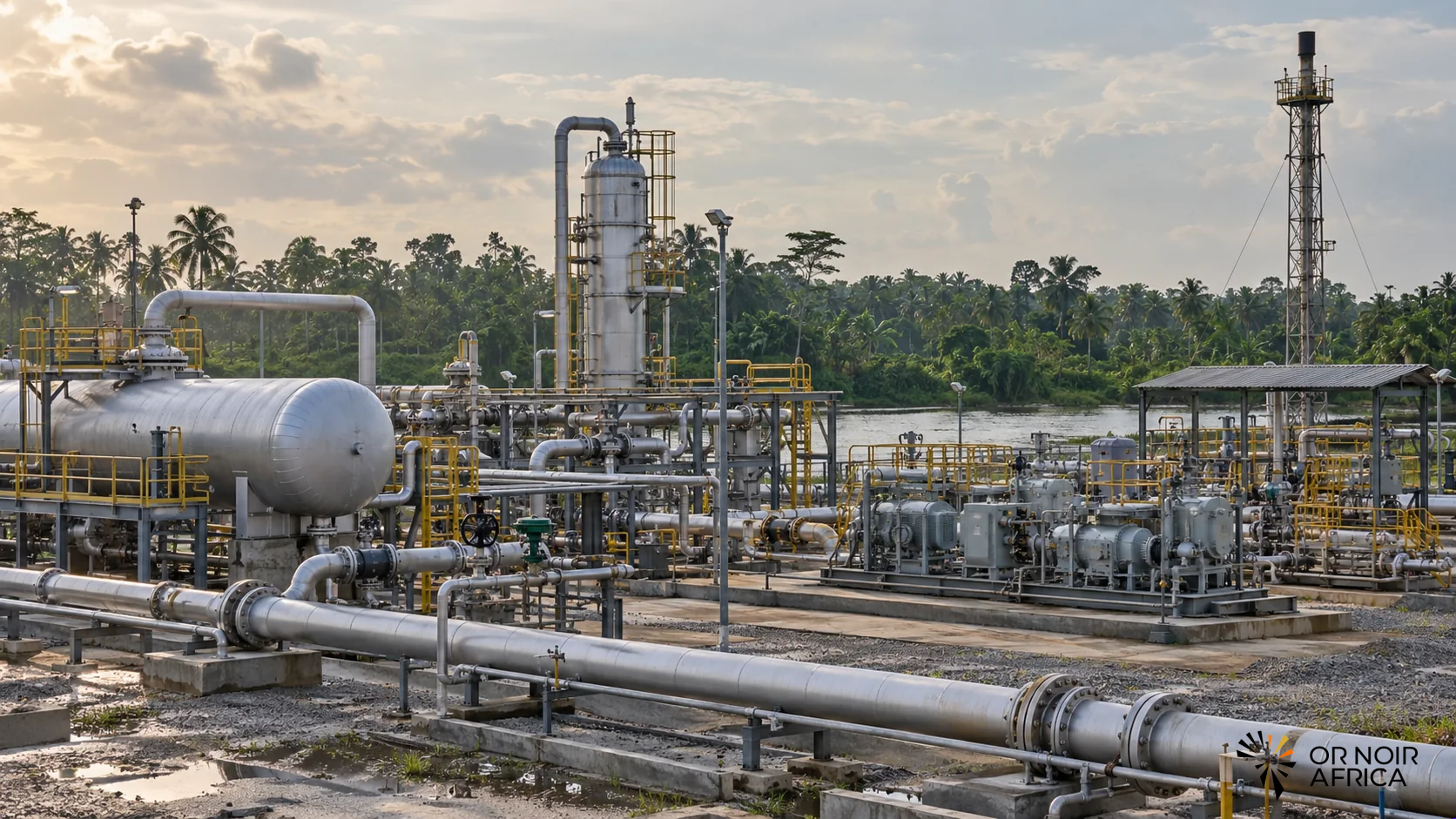
Nigeria wants to increase gas production to 10 billion cubic feet per day by 2027, then to 12 billion in 2030. These targets appear in the Gas Master Plan 2026, which also seeks to attract more than $60 billion in investment across the value chain by the end of the decade. The ambition reaffirms gas's place in the country's economic strategy, but achieving it will depend on the ability to turn substantial reserves into marketable volumes that are transported and consumed.
The plan aims to better connect production, processing, pipelines and markets. It seeks to strengthen supply to power plants, industries and the markets for liquefied petroleum gas, compressed natural gas and small-scale liquefied natural gas. This approach reflects a central challenge: higher production creates value only if infrastructure and customers can absorb the volumes.
A near-term target, but a chain that needs strengthening
The 10-billion-cubic-feet daily milestone is set for 2027, a tight timetable that puts execution first. The next target, 12 billion in 2030, requires continuous project progress, better availability of existing facilities and fewer obstacles delaying field development. The plan also aims to convert some identified resources into economically recoverable and financeable reserves.
Nigeria has vast gas potential, but several constraints still limit its exploitation: inadequate infrastructure in some areas, project delays, losses through flaring, commercial uncertainty and payment difficulties among some customers. Operators need predictable contracts and prices that cover investment, while domestic consumers demand affordable, regular fuel. Resolving this tension will be decisive in attracting the necessary capital.
The plan envisages a more commercially oriented approach based on reducing costs and purchase and sale agreements tailored to different segments. It seeks to accelerate investment in pipelines, processing facilities and marketing infrastructure. Projects must be prioritized according to their ability to unlock volumes and provide creditworthy markets.
The domestic market, a key to industrialization
The increase in supply is intended, in particular, to support electricity generation and gas-consuming industries. More reliable supply could reduce production stoppages in manufacturing, improve thermal power plant availability and strengthen the competitiveness of activities using gas as a feedstock. Gas can also support transportation solutions and more decentralized distribution networks.
Absorption capacity nevertheless remains a challenge. Power plants must be able to pay for fuel and deliver electricity in a system where tariffs, commercial losses and payment delays weigh on operators. Industries need contracts and networks that guarantee continuity of supply. Without coordinated electricity and transportation reforms, demand from customers able to pay may grow more slowly than the targeted production.
A substantial part of the strategy also depends on exports, particularly liquefied natural gas. Foreign revenues can support investment and strengthen Nigeria's position in international markets. But export projects do not automatically replace the development of domestic infrastructure: the country will have to balance foreign sales, power plant needs and local industrial demand.
Investment, flared gas and project reliability
The more than $60 billion sought by 2030 covers the entire chain, from fields to users. To mobilize this amount, the regulatory framework must provide visibility on permits, taxation, contracts, infrastructure access and payment mechanisms. Financing availability will also depend on project profitability and stable relations between companies, authorities and customers.
Eliminating routine flaring by 2027 is among the stated priorities. Reducing flaring can make previously lost volumes available, limit emissions and improve producer revenues. It nevertheless requires gathering and processing facilities, connections to markets and buyers able to take the gas. The target therefore depends as much on infrastructure construction as on enforcing rules.
Execution risks are substantial: some projects may face cost overruns, procurement delays or operational difficulties. Infrastructure security and operational continuity also remain factors to consider. The decisive indicators will be production actually delivered, pipeline and plant utilization rates, volumes of flared gas and payments received from customers.
Credibility will depend on delivered volumes
The Gas Master Plan 2026 sets a clear direction: making gas a driver of growth, industrialization and energy security. Progress toward 10 billion cubic feet per day in 2027 and then 12 billion in 2030 would represent a major change in scale. But investment announcements and national targets are not enough to measure progress.
The test will be the commissioning of facilities, producers' connection to networks and the existence of customers able to pay for volumes. If these conditions come together, gas can support electricity, industries and exports while reducing flaring. If they take time, higher production will remain a target distant from market realities. For Nigeria, the priority now is to convert ambition into financed projects, available infrastructure and supplies actually delivered.
Have any thoughts?
Share your reaction or leave a quick response — we’d love to hear what you think!
-
 0
-
0
-
0
-
0
-
0
-
0





