

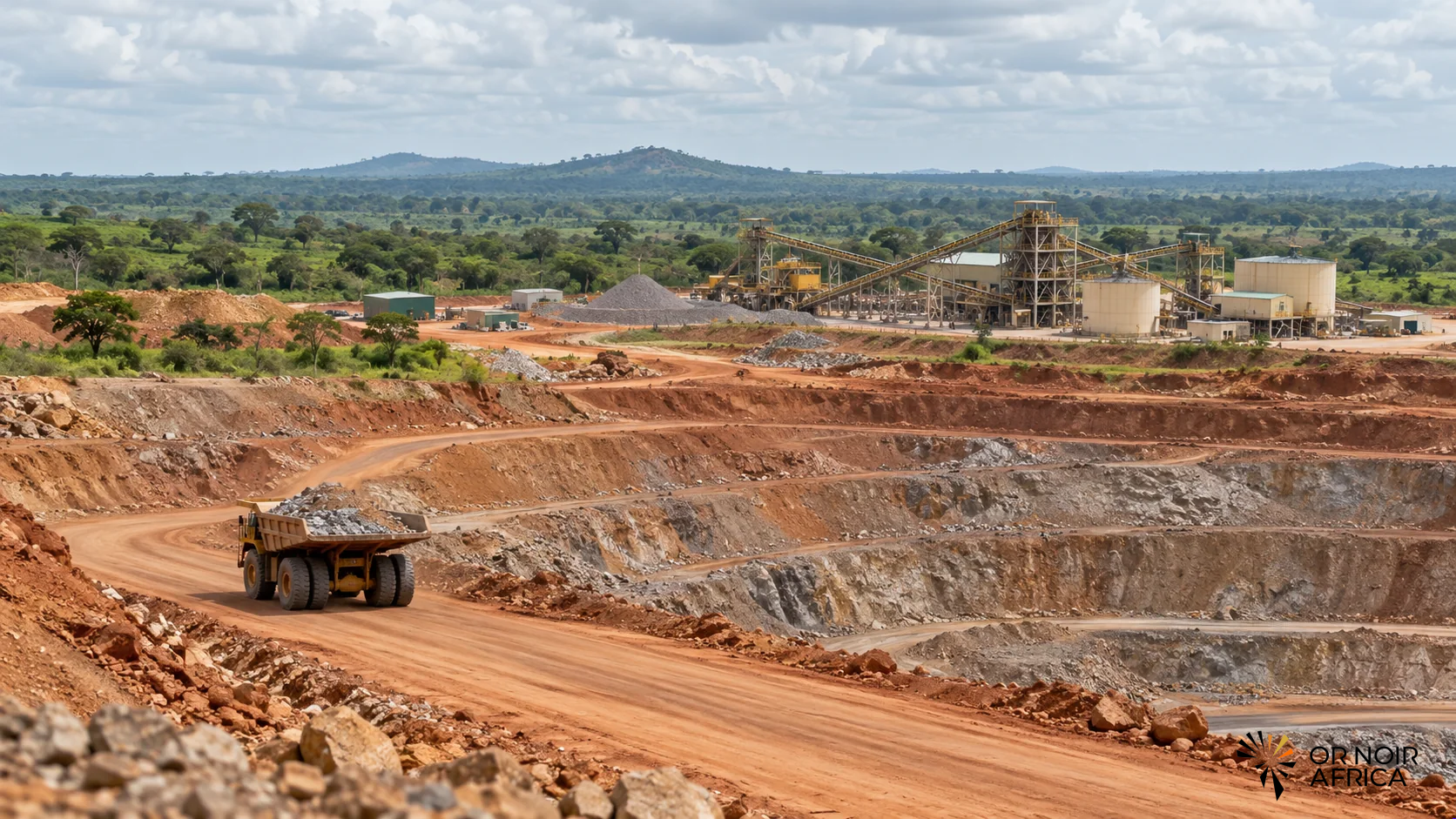
Fortuna Mining aims to increase annualized production to approximately 500,000 gold-equivalent ounces in the second half of 2028. Its strategy rests on two West African projects: expanding the Séguéla plant in Côte d'Ivoire and developing the Diamba Sud gold project in Senegal. The company estimates these investments could increase production by more than 60% from its current level, drawing on existing assets and financial resources.
The 500,000-ounce objective is targeted annualized production, not output already achieved. It depends on executing two projects, ore availability, permits and financing. The announcement comes amid high gold prices and cash generation that can support investment, but mining schedules remain exposed to construction and ramp-up risks.
Séguéla: a capacity expansion in Côte d'Ivoire
The Séguéla mine is already operating in Côte d'Ivoire. Fortuna approved a 30% expansion of the plant's processing capacity, with investment estimated at around $109 million. The aim is to process more ore and increase annual production beyond 200,000 ounces once the expansion is operational, with first production targeted in 2028.
Expanding an existing mine may involve less uncertainty than an entirely new project because infrastructure, personnel and resource access are already in place. It nevertheless requires work at an operating site, regular ore supply and commissioning that meets specifications. Delays or higher costs may postpone expected benefits and affect current production during construction.
Plant capacity is only one component of performance. The mine plan must supply enough suitable-quality ore, equipment must operate reliably and recovery rates must be maintained. Energy costs, consumables and water management will also influence cost per ounce.
Diamba Sud: a new project in Senegal
Diamba Sud is Fortuna's gold project in Senegal, currently at the feasibility-study stage. It is intended to provide a new production source for the group. A new mine's timetable includes completing studies, making the investment decision, securing financing, construction, installing processing facilities and opening extraction areas.
Expected timelines remain sensitive to permitting and financing. The company plans to use operating cash flow and liquidity to support growth, limiting reliance on issuing new shares. This reduces shareholder dilution risk but requires maintaining strong performance at existing mines while capital expenditure increases.
For Senegal, project implementation could create jobs, stimulate local procurement and generate public revenues. Benefits depend on local-content commitments, training programs and community-consultation mechanisms. Water, land and biodiversity impacts must be managed throughout the mine's life cycle.
Growth supported by cash flow but exposed to cycles
Fortuna's results highlighted strong available cash and the ability to finance projects from cash flows generated by its assets. This provides an advantage in a sector where construction costs have risen and capital access varies between markets. It does not eliminate project risk: falling gold prices or rising expenditure may limit available funds.
Gold-equivalent production combines volumes of several metals using price conventions, facilitating internal comparisons but potentially changing with market quotations. Distinguishing actual gold ounces from equivalents and monitoring all-in sustaining costs by asset is therefore useful. Investors must also assess whether the group can maintain a strong balance sheet while simultaneously financing the Séguéla expansion and Diamba Sud construction.
The 500,000-ounce ambition assumes both initiatives progress in parallel. A smaller contribution from one would need to be offset by the other or improvements at existing mines. Visibility on schedules and costs will therefore matter as much as the volume target.
2028: an objective dependent on execution
Fortuna's announced growth would strengthen its position in West African gold and make Côte d'Ivoire and Senegal two pillars of its portfolio. The next stages are executing the Séguéla plant expansion, completing Diamba Sud preparatory work and confirming construction costs.
The target of 500,000 annualized ounces in the second half of 2028 may attract attention but must be read as conditional. Concrete milestones include work at the Ivorian site, permits and financing for the Senegalese project, and then initial commercial volumes. If costs are controlled and schedules met, existing assets could finance much of the growth. Otherwise, Fortuna will need to balance production objectives, cash resources and preserving its balance sheet.
Have any thoughts?
Share your reaction or leave a quick response — we’d love to hear what you think!
-
 0
-
0
-
0
-
0
-
0
-
0





