

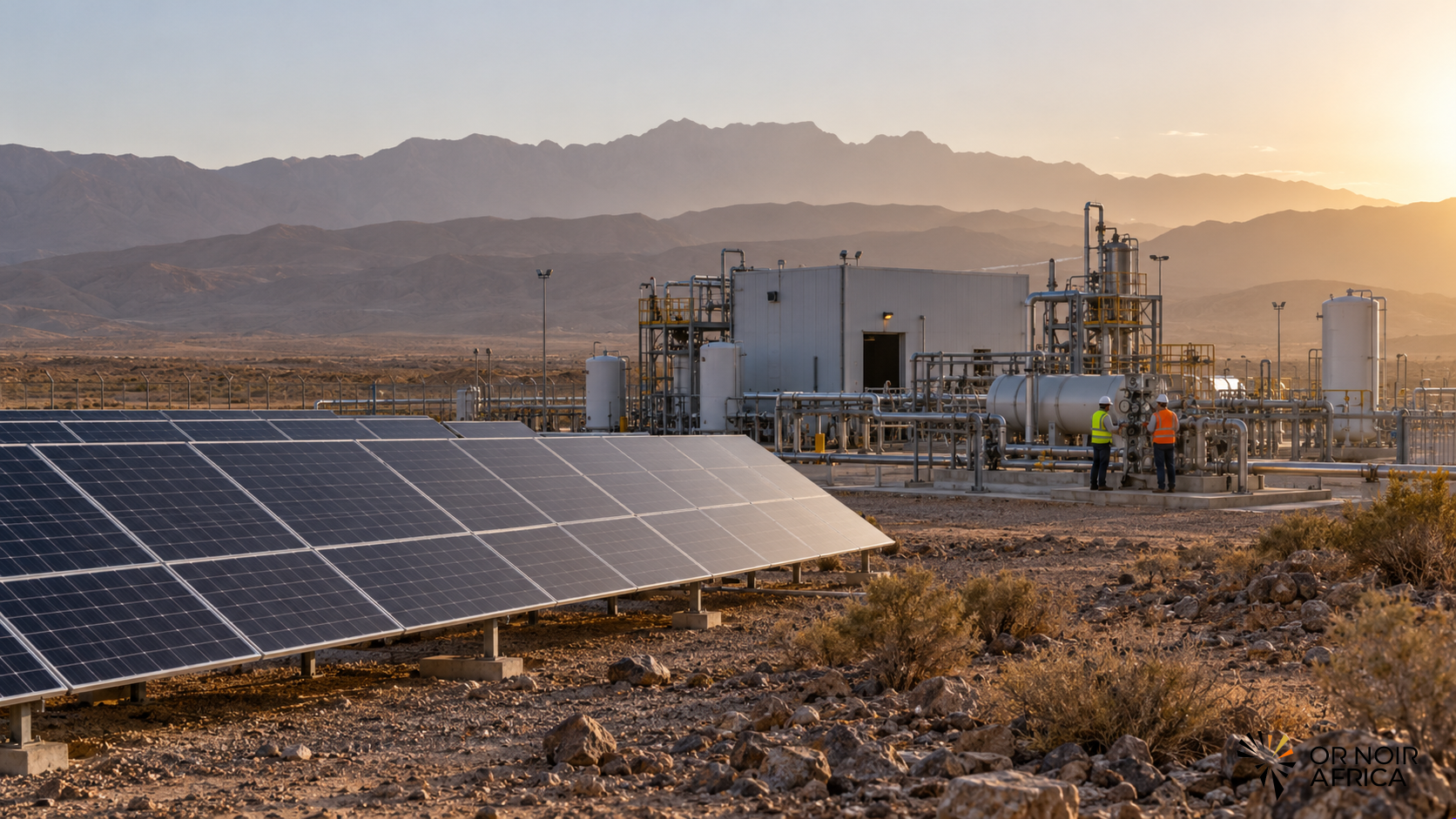
Morocco has positioned itself among the first North African countries to structure a national green hydrogen strategy. Its solar and wind development, the “Morocco Offer” and the presence of consuming industries such as OCP Group underpin this ambition. But project announcements do not yet mean investments have been decided or exportable volumes will soon be available. Costs, water, infrastructure and offtake contracts remain decisive conditions.
Morocco’s strategy seeks to connect renewable energy, electrolysis, derivative production and industrial uses. The aim is both to capture international demand and create local consumption. These markets have different requirements: exports will depend on logistics and long-term contracts, while domestic use could draw on chemical and fertilizer industry needs.
An existing renewable and industrial base
Morocco’s wind and solar capacity has grown strongly over the past decade. Official data indicate renewables represented more than 45% of installed electricity capacity at the end of 2024. This measures generation capacity, rather than the actual share of electricity generated during the year; the distinction matters when assessing electricity availability for electrolyzers.
The Morocco Offer aims to organize the value chain around several major projects and mobilize investors around land, renewables, electrolysis and hydrogen-derived molecules. Announced public ambitions include substantial electricity and hydrogen-derivative production capacities. These should be interpreted as targets and projects to develop, rather than capacity already built.
OCP’s presence offers a potential advantage: the group consumes hydrogen and ammonia industrially, particularly for fertilizer manufacturing. Local demand can reduce dependence on uncertain export markets and allow hydrogen to be used in an existing industrial chain. It does not, however, guarantee competitive production costs or that projects will reach a final investment decision.
Offtake contracts will determine project pace
European demand has helped draw attention to North African hydrogen. European industrial companies seek low-carbon molecules for certain heavy industrial uses, but envisaged volumes only become financeable if buyers commit for the long term, at an acceptable price and under recognized certification rules.
Globally, several hydrogen projects have been delayed because purchasing decisions remain insufficient to guarantee expected revenues. Producers must also finance renewable power plants, electrolyzers, networks, storage, terminals and sometimes conversion facilities. Visibility into domestic and export demand therefore becomes a prerequisite, rather than an end-of-project formality.
Morocco will thus need to weigh local processing against exports of derivatives such as ammonia or synthetic fuels. Transporting molecules by ship or pipeline requires specific technical and economic choices. Added value will depend on local content, skilled jobs, purchases from Moroccan companies and investment-related taxation.
Water and grids are part of the equation
Electrolysis requires water, while several regions face increasing pressure on the resource. Projects must specify water sources, desalination needs, treatment facilities and the energy required to operate them. Desalination can meet some demand, but adds costs, electricity requirements and discharge-management issues.
Large-scale hydrogen production also requires networks capable of transporting renewable electricity, connecting industrial sites and securing supply. New capacity must be integrated into the national electricity system without competing with already prioritized domestic and industrial uses. Storage, flexibility and grid access are therefore as important to competitiveness as sunshine or wind speed.
According to the International Energy Agency, renewable hydrogen remains significantly more expensive than fossil-fuel-based hydrogen without support. The precise gap varies with electricity price assumptions, operating hours and capital costs. To narrow it, Morocco will need to use its renewable resources while controlling financing, equipment utilization and shared infrastructure.
Turning a strategic lead into delivered projects
Morocco has a planning framework, renewable resources and industrial consumers that distinguish it from several regional countries. This lead remains to be converted into operational assets. The decisive stages will be land allocation, final agreements, offtake contracts, impact studies, financing and construction.
Success will also depend on local benefits. Projects focused solely on exports could leave a limited share of value in the producing country. By connecting hydrogen with chemicals, fertilizers, engineering services and training, Morocco can strengthen existing industries and develop new occupations. Partnerships must specify skills needs, local purchasing and Moroccan companies’ access to associated markets.
The regional green hydrogen race will therefore depend less on capacity announcements than on concluding contracts and building competitive projects. Morocco has established several elements of this strategy. The next step is demonstrating that hydrogen can meet real demand while respecting water, grid and financing constraints.
Have any thoughts?
Share your reaction or leave a quick response — we’d love to hear what you think!
-
 0
-
0
-
0
-
0
-
0
-
0