

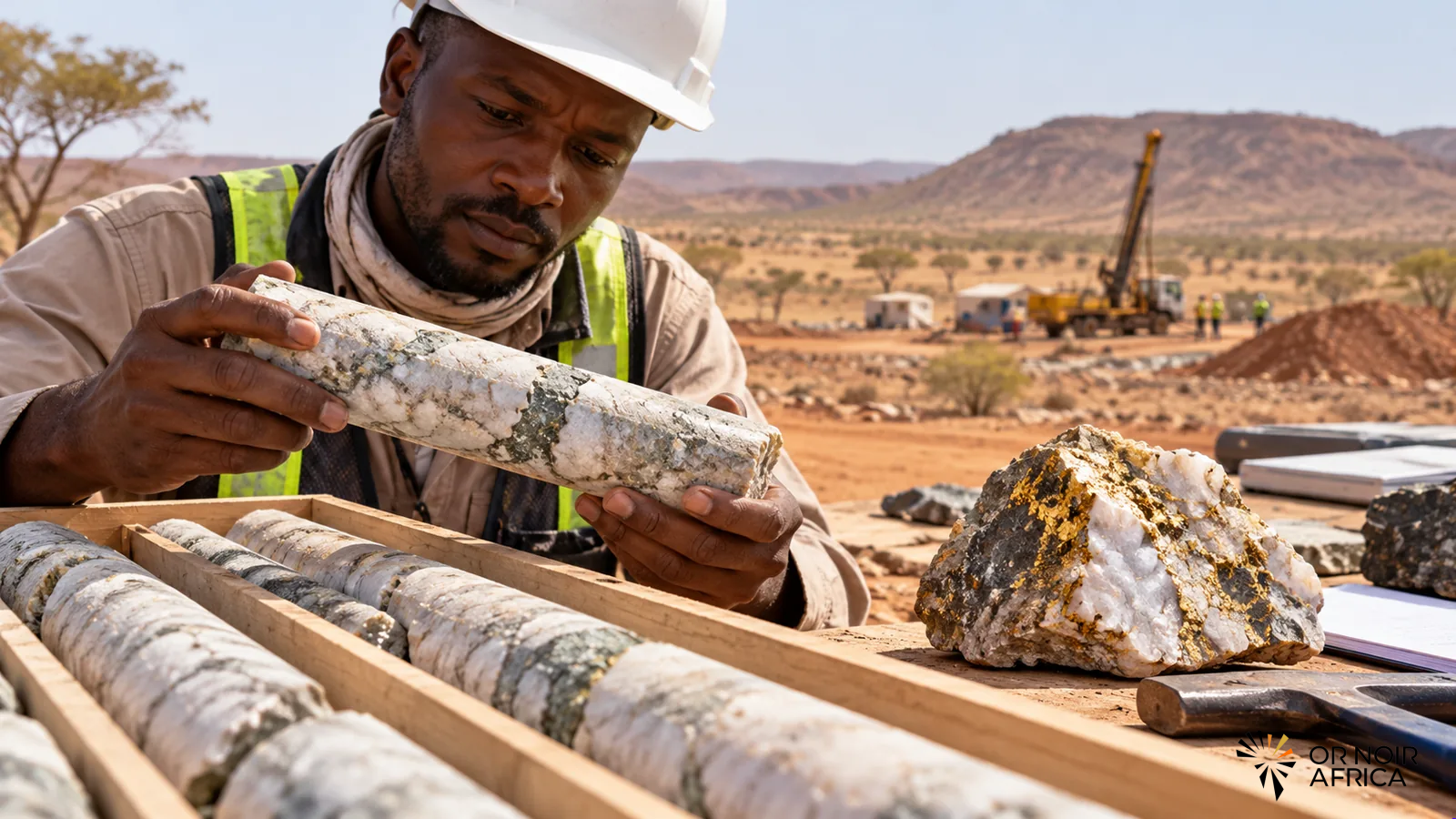
Mali’s gold and lithium are attracting renewed US diplomatic attention. On 24 September, the US embassy in Bamako organised a meeting bringing together around twenty mining and security specialists. The initiative is part of international competition for access to minerals and secure supply chains. However, it is neither a mining agreement nor evidence that a specific US investment has been approved.
The meeting’s stated purpose was to examine ways of encouraging sustainable and responsible commercial engagement between foreign partners, US companies and Mali. It took place as Washington accelerated its policy of securing critical minerals and Bamako sought to diversify its partners while strengthening national control over resources. The issue lies at the intersection of these interests: preparing economic dialogue rather than announcing a contract.
Strategic resources, two value chains
Gold remains the traditional backbone of Mali’s extractive industry. It generates exports, public revenue and jobs, but also exposes the economy to price fluctuations and production disruptions. Lithium adds a new dimension. It is part of battery manufacturing and energy storage supply chains, sectors central to industrial policy and the energy transition. The Goulamina and Bougouni projects place the country in an industry whose balance depends as much on geological resources as on processing capacity and long-term markets.
The two metals raise different questions. Gold has been mined for decades, with industrial operators and substantial artisanal activity. Value creation involves taxation, compliance, processing, marketing and revenue distribution. For lithium, priorities include starting and ramping up projects, financing infrastructure, mastering processing stages and managing exposure to price cycles. A US strategy therefore cannot simply seek uniform access to ‘the mine’.
The global context matters. The United States wants to diversify its sources of minerals essential to batteries, electronics and defence equipment. China holds a major position in several processing and refining segments. In Africa, Chinese investment, Russian interests and Western partners increasingly intersect around projects, financing and industrial capacity. Washington may therefore view Mali both as a raw materials producer and as a place to discuss the rules governing access to those resources.
Opening to investment on Mali’s terms
Bamako has sought to regain greater control over its mining sector. The code adopted in 2023 strengthens requirements concerning state participation and local content, and the government has taken multiple steps to increase the share of revenue retained in the country. This direction is unavoidable for any investor: access to resources now involves negotiating economic terms, taxes, jobs, processing and benefits for domestic companies.
A diplomatic meeting can open channels, identify areas of cooperation and connect businesses with public officials. It does not replace licensing procedures, feasibility studies, community consultation or financing agreements. So far, no mining contract arising from the September meeting has been publicly announced. Describing the episode as a US ‘takeover’ of resources would therefore go beyond the available facts.
The absence of an announcement does not mean the initiative is insignificant. Panels, visits and technical exchanges often prepare subsequent steps: understanding the market, assessing risks, connecting partners and clarifying rules. However, US companies face substantial obstacles, including security risks, infrastructure availability, regulatory predictability, access to data and financing arrangements. A statement of intent cannot advance a project unless these conditions are met.
The test will be the value created in Mali
The central question for Mali’s government will be to distinguish foreign presence from the development of domestic capacity. Agreements limited to exporting minerals have different effects from those that finance exploration, training, local processing and Malian suppliers. For lithium, this means assessing whether processing operations can be established sustainably and whether infrastructure meets the sector’s needs. For gold, it also involves formalising artisanal flows and strengthening traceability.
Communities in mining areas must also be considered in projects. Local benefits, access to water, waste management and working conditions affect the social legitimacy of operations. In a fragile security environment, mining corridors and facilities face risks that can increase costs and reduce investor interest. Foreign governments and private companies alike must incorporate these realities into their models.
On this issue, the rapprochement between Washington and Bamako remains exploratory. US interest in gold and lithium is evident in its global minerals strategy, but its importance in Mali will depend on concrete proposals and their compatibility with national priorities. The next signs to watch will be trade missions, partnerships, financing agreements or technical programmes. For now, the September meeting reveals intensifying competition without determining its outcome.
Have any thoughts?
Share your reaction or leave a quick response — we’d love to hear what you think!
-
 0
-
0
-
0
-
0
-
0
-
0