

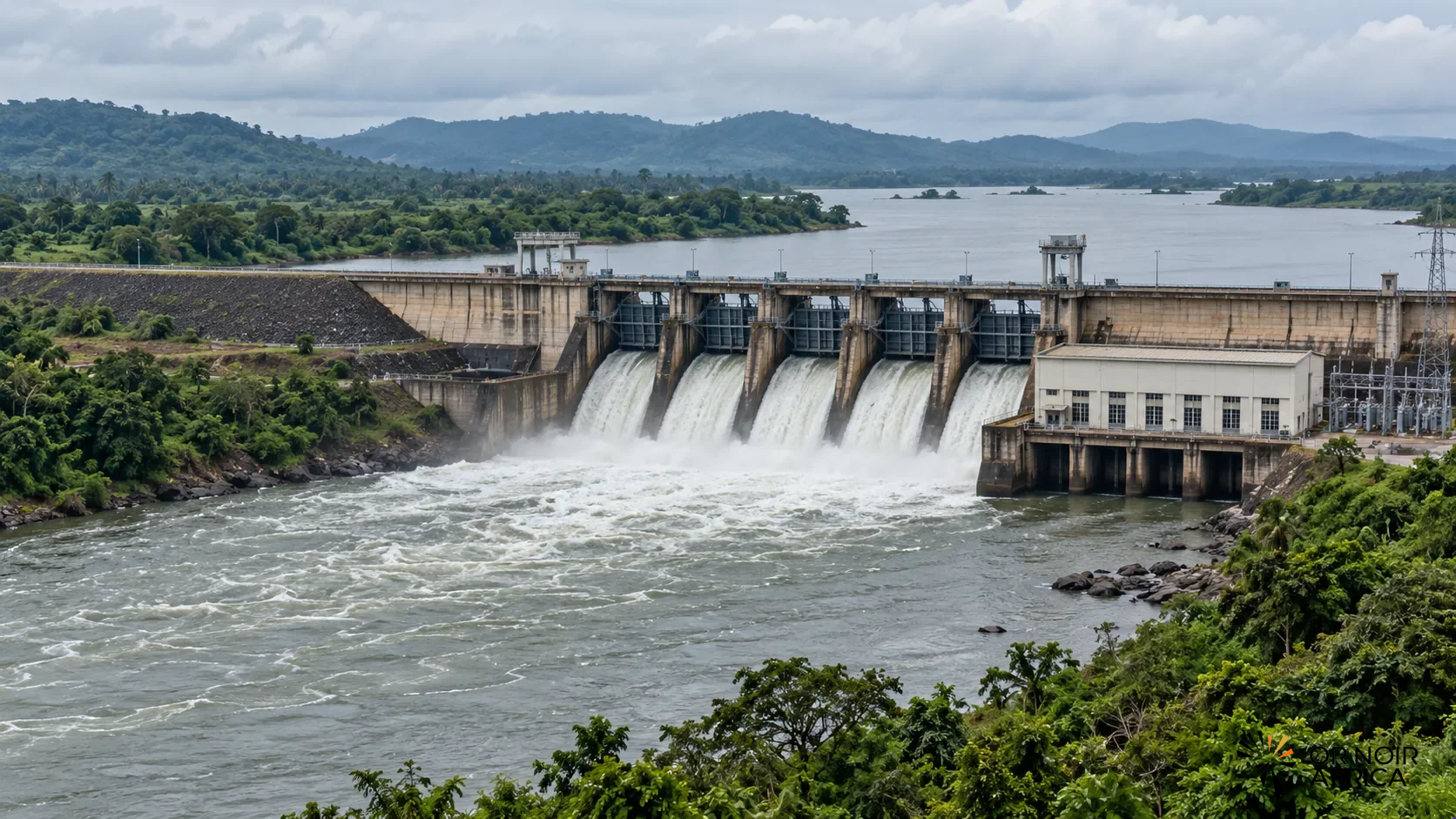
**Categories:** News, Energy **Tags:** Malawi, hydropower, coal, energy security, Mpatamanga **Excerpt:** Facing load shedding, Lilongwe is reviving the coal option while advancing a major hydropower tender. These parallel choices reveal the urgency of increasing supply, as well as the challenge of reconciling reliability, costs, financing and the climate pathway. **Slug:** malawi-charbon-hydroelectricite-mpatamanga-appel-offres **Image alt:** A hydropower plant and reservoir in a Malawian landscape, with generating infrastructure visible in the foreground.
Malawi faces an increasingly urgent energy trade-off: rapidly increasing generation to reduce outages while financing solutions compatible with its climate goals. The authorities are reviving the Kam’mwamba coal-fired power plant project and pursuing a major hydropower project, while existing equipment also requires repairs.
This direction comes in an electricity system where hydropower supplies a large share of generation and droughts, breakdowns and insufficient capacity make supply vulnerable. Load shedding affects households, public services and businesses. In the short term, the government has allocated funds to restore part of its hydropower and diesel fleet, while new capacity projects advance at different speeds.
Mpatamanga: a major project with demanding requirements
The Mpatamanga hydropower project on the Shire River is designed as a large-scale storage and generation facility. Project documents refer to capacity of approximately 358.5 megawatts. The project company has launched an international engineering, procurement and construction tender, an essential step in selecting a contractor and clarifying costs and timelines.
Mpatamanga’s implementation still depends on structuring financing, concluding contracts and managing construction risks. Major infrastructure works require several years of preparation, environmental and social studies, and coordination between public and private partners. The project will therefore not resolve the grid’s immediate constraints until it is built and connected.
Hydropower provides dispatchable energy and can help balance the grid, but remains exposed to hydrological variations. Sound energy planning must account for droughts and diversify generation and storage sources. Investment in maintenance, regional interconnections, solar power and storage solutions can complement large dams.
Coal returns to the energy debate
The government has also reassigned the Kam’mwamba coal-fired power plant project to state-owned EGENCO. It was previously envisaged at 300 megawatts in an expandable first phase. This revival is aimed at supply security and baseload generation, but raises questions about financing, timelines, fuel costs and compliance with climate commitments.
Coal can provide steady generation when a plant is operational and supplied with fuel. However, such a project requires substantial investment, a stable logistics chain and emissions control measures. Construction times and financing risks can also delay the expected electricity supply. Its full cost must include transport, operation, maintenance and environmental consequences.
The comparison with hydropower cannot therefore focus solely on the announced cost per megawatt. Generation profiles, climate risk, grid costs, timelines, flexibility and the ability to mobilize capital must be considered. Malawi must also assess whether projects can be delivered without creating financial obligations that are difficult for the state or the public utility to bear.
Repairing, diversifying and interconnecting
Restoring existing equipment can be one of the fastest ways to increase available electricity if repairs are properly planned and financed. Hydropower and diesel plants currently in operation provide capacity that can be mobilized immediately, but their reliability depends on spare parts, maintenance teams and management quality.
Diversification is also essential to limit the effects of a dry year or a major breakdown. Solar projects and regional exchanges can reduce dependence on a single resource. Transmission lines and reserve capacity must develop alongside generation so that electricity can reach consumption centers.
The debate between coal and hydropower highlights the tension between urgency and long-term planning. Decisions must be based on transparent tenders, verifiable costs and comparable studies. Key indicators will be an actual reduction in load shedding, the reliability of restored equipment, financial close for Mpatamanga and a clear Kam’mwamba timeline.
For Malawi, the objective is not simply to add megawatts on paper. It is to build a system capable of supplying affordable, reliable energy, including during periods of hydrological stress. Success will depend on coherence between new projects, maintenance, grids and the country’s financial capacity.
Have any thoughts?
Share your reaction or leave a quick response — we’d love to hear what you think!
-
 0
-
0
-
0
-
0
-
0
-
0





