

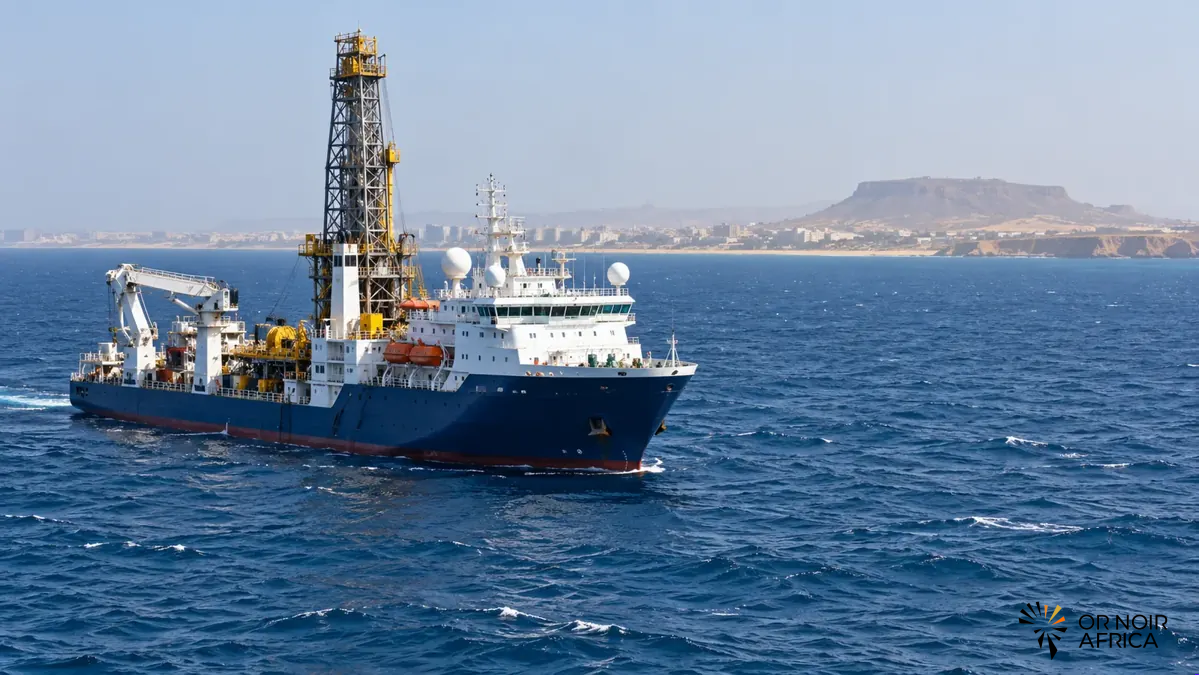
**Categories:** News, Oil, Gas **Tags:** Egypt, Pharos Energy, drilling, El Fayoum, North Beni Suef **Excerpt:** Pharos Energy has resumed drilling in Egypt with a six-well programme and announced investment of $11 million. Settlement of receivables by the Egyptian state improves financial visibility, but results will depend on well success and rapid connection to production. **Slug:** egypte-pharos-energy-forage-six-puits-investissement-2026 **Image alt:** Oil drilling installation in Egypt's Western Desert.
Pharos Energy is intensifying operations in Egypt with a six-well programme and an announced investment budget of $11 million for 2026. The campaign covers El Fayoum and North Beni Suef assets in the Western Desert. The British group resumed drilling in June with the Silah 8-2 well, marking the return of work after a period of slower activity.
This restart follows improved collection of amounts owed to the company by Egypt. Pharos says it received $12.6 million during the year, bringing its Egyptian receivables up to date for the first time since acquiring the assets in 2019. Regularised payments and renewed investment create a more favourable basis, but future performance will depend on output achieved and programme execution.
Six wells to support production
The programme's first well, Silah 8-2, was drilled starting on June 4. It forms part of development of the Silah field on the El Fayoum block. The campaign also includes operations on North Beni Suef, where seismic data and interpretation work identified new targets. The programme is intended to maintain production and test areas that could add volumes.
A drilling programme does not guarantee increased production. Each well must encounter recoverable reservoirs, be completed and then connected to facilities. Initial flow rates may change during production, and commercial results depend on drilling costs, oil quality and surface processing capacity. The group must therefore balance exploration, development and work on existing wells.
Pharos announced that a second drilling rig would be mobilised for the rest of the campaign. Using several rigs can shorten the overall duration if equipment, teams and services are available. It also increases coordination and financing needs. The company must publish successive well results to enable assessment of the campaign's contribution to produced volumes.
Settled receivables and a clearer financial framework
Accumulated receivables have been an issue for operators in Egypt for several years. Payment delays can constrain exploration budgets, postpone maintenance and force companies to finance operations from their own cash. The collection announced by Pharos reduces this risk for its portfolio and improves short-term visibility.
The company attributes this development to regular payments by the state oil company and settlement of historical amounts through dialogue with authorities. A consolidated concession agreement for Egyptian assets should also harmonise development arrangements and strengthen investment incentives. Ratification and practical implementation remain important to ensuring predictability.
Clearing arrears is a favourable signal for investors, but its impact depends on future payment regularity. Producers need stable cash flows to undertake drilling campaigns and meet schedules. Egyptian authorities seek to increase domestic production and reduce imports. Continuity in this contractual relationship therefore serves both parties' interests.
Geological results will determine the benefits
El Fayoum and North Beni Suef assets lie in the Western Desert, a region where existing infrastructure enables processing and transport of production. This proximity can reduce costs compared with areas lacking facilities, but profitability remains dependent on recoverable volumes and development expenditure.
Silah 8-2 and subsequent targets must demonstrate productivity. Announcements of drilling activity must not be confused with confirmed reserves or secured volume increases. Test results, stabilised production rates and connection dates will provide more reliable indicators.
The $11 million budget is a relatively targeted allocation for a multi-well programme. Its return will depend on the ability to share equipment, limit costs and prioritise targets with the best potential. Expenditure must also include surface works, electricity for facilities and possible interventions on existing wells.
An issue for Egyptian supply
Egypt seeks to support domestic hydrocarbon production while internal demand and electricity needs remain high. Pharos's activity is modest relative to the national market, but small projects and interventions on existing fields can help slow production decline. They are particularly valuable when infrastructure is already available and rapid connection is possible.
However, the country must balance hydrocarbon investment with energy diversification objectives. Local production can improve short-term supply security, while energy efficiency and renewables can moderate demand and reduce imports over the longer term. Consistent planning must connect these horizons.
The coming months will allow the campaign's effect to be measured: well results, connected volumes, regular receipts and adherence to the expenditure budget. For Pharos, returning to drilling in Egypt marks an operational change. For the country, the value of this effort depends on actual production achieved and the ability to maintain a predictable payment framework for operators.
Have any thoughts?
Share your reaction or leave a quick response — we’d love to hear what you think!
-
 0
-
0
-
0
-
0
-
0
-
0





