

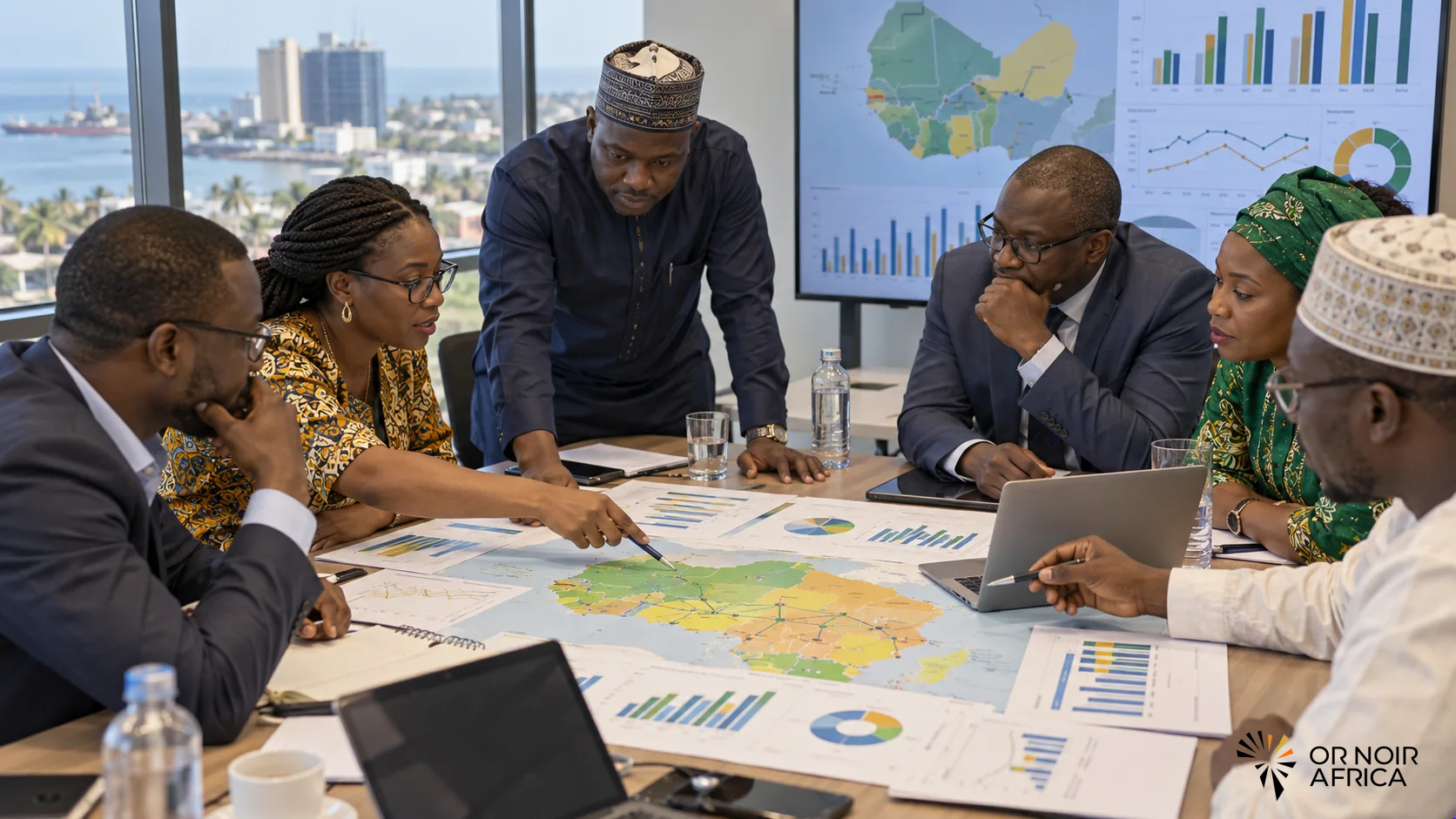
**Categories:** Event **Tags:** ECOWAS, energy efficiency, data, electricity, West Africa **Excerpt:** Experts from twelve countries are meeting in Lomé to validate energy data for 2023 and 2024. The quality of these statistics underpins grid planning, the measurement of losses and the evaluation of efficiency policies in the region. **Slug:** cedeao-lome-validation-donnees-efficacite-energetique **Image alt:** West African experts examine energy data and regional maps during a workshop in Lomé.
The Economic Community of West African States wants to improve the quality of the data used to plan its energy policies. A regional consultation that opened in Lomé on 5 October brings together experts from twelve countries to examine and validate energy consumption and efficiency data for 2023 and 2024.
Participants are reviewing several indicators: final energy consumption, electricity losses and uses in households, industry and transport. This information is intended to feed into national systems and the next edition of the regional energy efficiency report. The administrations also aim to agree on a common method for collecting and updating data.
Statistics needed for decision-making
Governments cannot size networks, establish investment priorities or assess progress without a coherent statistical base. Incomplete data complicate comparisons between countries and can lead to needs being overestimated or underestimated. Reliable demand forecasts help plan power plants, transmission lines, access programmes and measures to manage consumption.
The previous regional report, covering 2018–2022, recorded average growth in final energy consumption of 3.85% per year. The residential sector accounted for 55% of this consumption, while biomass represented 77% of the energy used for cooking. Electricity losses reached 21.3% in 2022, more than twice the regional target of 10% set for 2020.
These data indicate the scale of the challenges, but they must be updated and interpreted cautiously. Regional figures aggregate different electricity systems and economic structures. Climate variations, changes in grid access, tariff developments and industrial activity can alter consumption profiles from one country to another.
Losses: an economic and operational challenge
Electricity losses include technical losses in lines and transformers, as well as commercial losses associated with metering, billing or collection. They reduce the amount of electricity sold relative to that fed into the grid. For electricity utilities, they can weaken finances and limit the ability to maintain facilities or invest in new lines.
Reducing these losses requires solutions suited to their causes. Strengthening networks, replacing equipment, maintenance, modernising meters and improving billing can deliver complementary results. Detailed data help identify the areas where interventions will have the greatest impact and track whether gains are sustained.
Cooking is another central challenge. The prominent role of biomass in residential uses has consequences for health, the time spent collecting fuel and pressure on forest resources. Clean cooking policies must be designed around incomes, fuel availability, habits and distribution infrastructure.
Building lasting data systems
Validating data for 2023–2024 is one step, but it is insufficient if administrations cannot update them regularly. Countries need statistical officers, common methods, budgets and transmission tools. Electricity companies, ministries, statistical institutes and regulators must also use compatible definitions.
Data quality depends in particular on coverage of households without grid connections, the distinction between final consumption and primary energy, and estimates of informal uses. Digital tools can improve collection, but results must be checked and documented. The limitations of each indicator must be understood before it is used to guide financing.
Regional cooperation can facilitate the sharing of experience, performance comparisons and preparation of cross-border projects. A harmonised base also improves visibility for investors and technical partners. However, publication must be regular and allow researchers, businesses and local authorities to understand methods and differences between data.
The work in Lomé is a reminder that energy efficiency policy depends as much on the quality of measurement as on the technologies deployed. Validated data will help establish priorities and better track results, provided national systems continue to update them. For the region, the next step will be to convert the indicators into measurable action plans addressing electricity losses, cooking, buildings and industry.
Have any thoughts?
Share your reaction or leave a quick response — we’d love to hear what you think!
-
 0
-
0
-
0
-
0
-
0
-
0





