

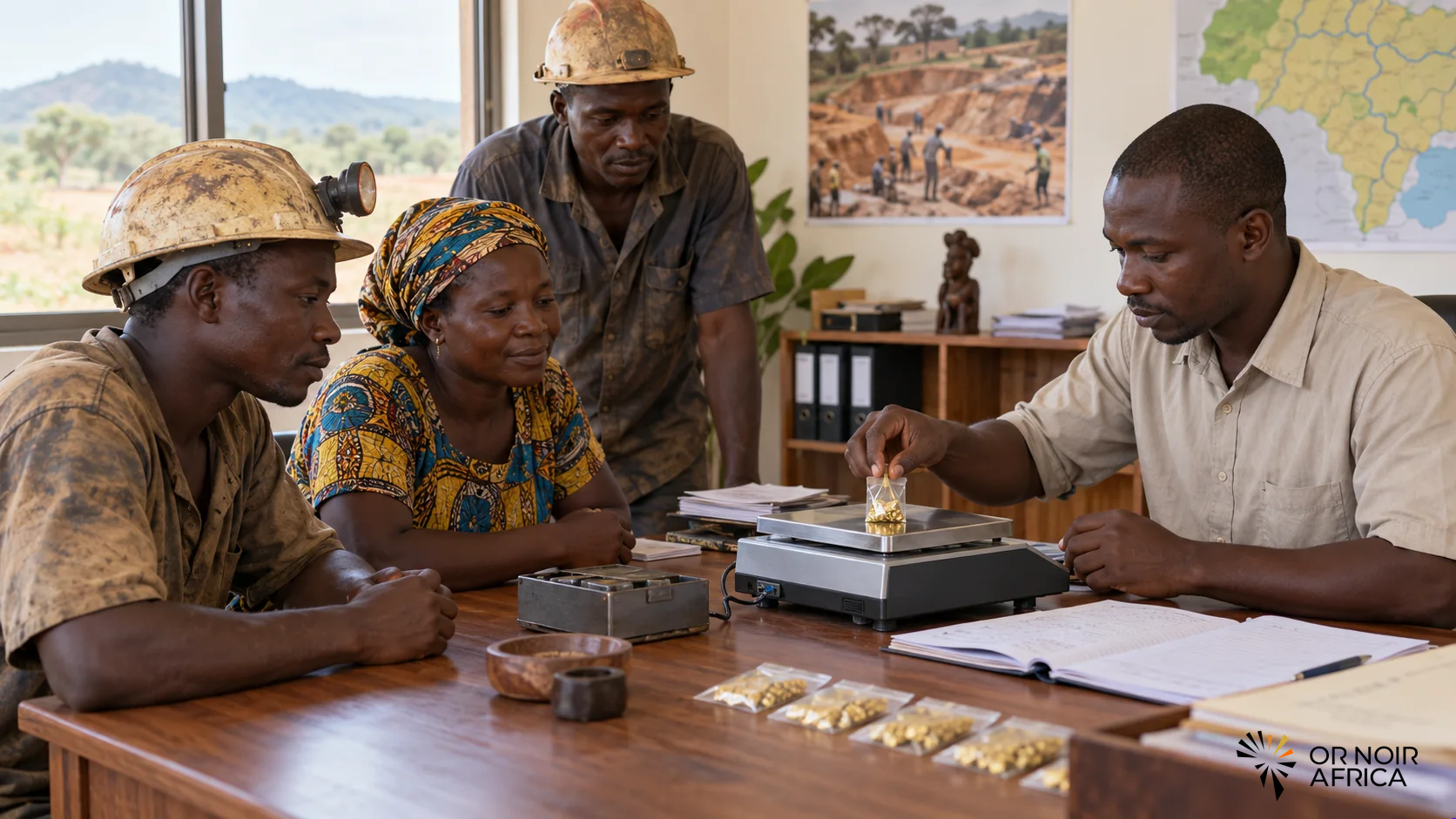
**Categories:** News, Mining **Tags:** SigraFi, artisanal gold, financing, traceability, mining cooperatives **Excerpt:** SigraFi announces a $35 million credit facility to finance gold purchases under multi-year contracts with artisanal cooperatives and aggregators. The financing could strengthen formal channels, subject to rigorous checks on the origin and compliance of the volumes involved. **Slug:** sigrafi-credit-35-millions-approvisionnement-or-artisanal **Image alt:** Operators and a buyer check the weight of gold from an artisanal mining cooperative.
SigraFi has secured a $35 million credit facility to finance gold sourcing under multi-year contracts with cooperatives and aggregators of artisanal miners. The company says it intends to use this capacity to expand purchases in Africa and South America. The arrangement uses supply chain financing as a means of connecting small-scale producers to formal markets.
Credit allows a buyer to finance purchases and supplier payments more quickly, before the gold is delivered and then marketed. This can provide cooperatives with greater visibility and reduce their dependence on informal intermediaries. However, a credit facility is neither a direct investment in mines nor a guarantee of outlets for producers. Drawdown conditions, costs, guarantees and the volumes financed determine how the facility is actually used.
Financing flows rather than deposits
The announced model is based on long-term purchase contracts. The company finances sourcing against future gold deliveries, creating a relationship between access to capital and suppliers' ability to meet agreed volumes and quality criteria. This mechanism can help stabilise cooperatives' revenues while allowing the buyer to secure part of its supply.
Artisanal supply chains often face a shortage of short-term financing despite having marketable production. Producers need equipment, cash, transport and processing services. Traditional lenders are reluctant to finance flows when the metal's origin, the regularity of deliveries and site compliance are insufficiently documented.
Specialist financing can help bridge this gap if contracts are balanced and producers retain bargaining power. Cooperatives must understand pricing mechanisms, applicable deductions, payment deadlines and the consequences of deliveries falling short of forecasts. Transparent agreements are essential for commercial relationships to deliver a real benefit to mining communities.
Traceability at the heart of risk
Formalising artisanal gold requires tracking the metal from the production site to export or refining. Companies must verify suppliers' identities, the origin of volumes, authorisations and the risks of money laundering or financing illicit activities. In fragile areas, checks must also cover conflict risks, working conditions and environmental impacts.
SigraFi has previously worked with the aggregator PeaceGold on supplies from artisanal cooperatives, including in eastern DRC, according to information published by the company and specialist media. This region makes due diligence on sites and intermediaries particularly important. A contract alone does not guarantee that a flow meets international standards: it must be documented and checked, and purchases must be capable of being suspended when irregularities are identified.
Access to financing can help responsible channels compete with informal buyers who pay quickly and conduct few checks. However, if procedures impose disproportionate costs on small producers, they can exclude the participants they seek to formalise. Cooperatives need practical support to maintain records, establish safety procedures and respond to documentation requests.
A test for artisanal mineral financing
Securing $35 million demonstrates some investors' interest in sourcing models backed by contracts and demand for traceability. The facility can increase SigraFi's capacity to prefinance volumes and diversify its suppliers. The outcome will depend on the amount actually drawn, the markets served and how revenues are distributed along the chain.
Assessing the impact will require monitoring the number of cooperatives under contract, payment times, volumes purchased from verified sources, producers' revenues and site inspections. Investors and regulators will also need to examine financing costs, contract duration and the risks of purchasing power becoming concentrated among a limited number of aggregators.
Credit can facilitate the integration of artisanal gold into formal supply chains, but it does not replace public action. States must clarify licensing, improve geological services and support processing and certification infrastructure. Buyers, for their part, must ensure transparent practices and avenues for redress in disputes.
SigraFi's credit line is a transaction financing commodity flows, at the intersection of commodity finance and mining formalisation. Its significance will be measured less by its amount than by the quantity of responsible gold actually marketed and the benefits delivered to the producers who extract it.
Have any thoughts?
Share your reaction or leave a quick response — we’d love to hear what you think!
-
 0
-
0
-
0
-
0
-
0
-
0





