

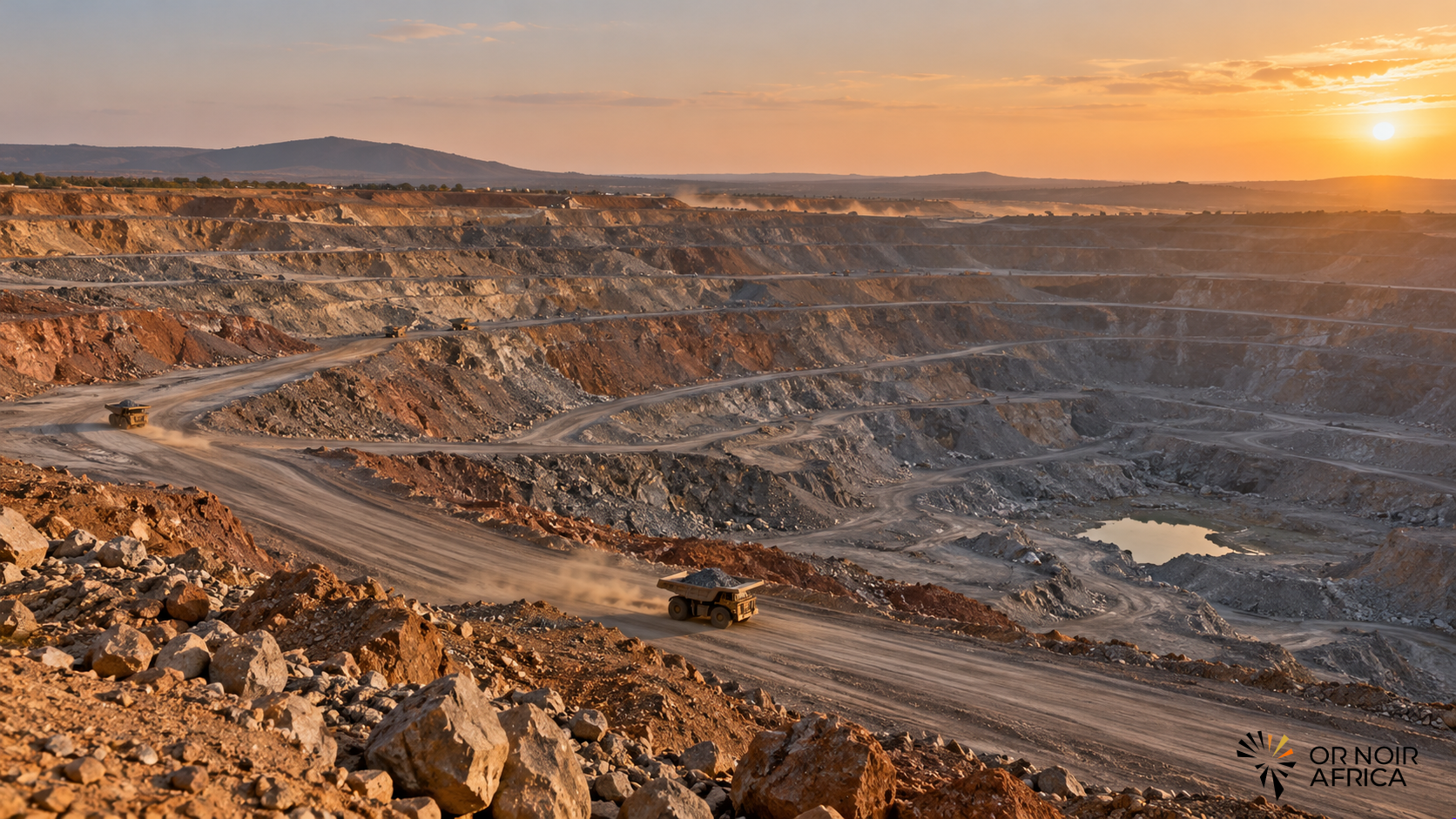
Zambia wants to end speculative holding of mining licenses. President Hakainde Hichilema warned rights holders leaving projects idle that the government intends to apply the “use it or lose it” principle. The announcement, made on October 19 at the opening of the Zambia Mining and Investment Insaka 2026 in Lusaka, forms part of a strategy to accelerate exploration, revive existing assets and increase national copper production.
For the authorities, the challenge is to convert mining rights into concrete economic activity. An idle license can prevent other operators from advancing a deposit without creating jobs or revenue. Hichilema’s approach therefore aims to reduce bottlenecks and direct concessions toward projects capable of moving from exploration to development. Its implementation will nevertheless depend on clear criteria: the timetable granted to holders, investment obligations and appeal safeguards will be decisive in preventing the reform from introducing fresh uncertainty.
A target of three million tonnes of copper
The president reaffirmed the ambition to raise annual copper production to three million tonnes. He believes this goal can be supported by restarting stalled projects, expanding operating mines and intensifying exploration across the provinces. The announcement does not guarantee short-term production: new volumes will depend on investment delivery, available infrastructure and operators’ ability to maintain operations.
Hichilema cited the revival of Konkola Copper Mines and the Konkola Deep Mining project as important drivers. According to commitments reported at the event, the mining complex is expected to contribute 300,000 tonnes toward the national target. This wording refers to an expected contribution, not production already achieved. It highlights the importance Lusaka attaches to reviving established assets in its expansion plan.
The president also highlighted Kansanshi’s S3 expansion, valued at $1.3 billion, and activities at Lumwana. These investments are presented as opportunities to strengthen local contracts and young people’s participation in supply chains, manufacturing and mining services. For these benefits to go beyond announcements, measurement must focus on procurement actually awarded to Zambian businesses, training delivered and the stability of jobs created.
Geological mapping to reduce exploration risk
The government has allocated nearly $100 million to a national high-resolution geophysical mapping campaign covering approximately 752,000 square kilometers. According to Hichilema, these data should improve subsurface knowledge and reduce investors’ risk before drilling. A more precise geological foundation can facilitate target selection, help companies prioritize expenditure and broaden interest beyond established mining districts.
However, data replaces neither field exploration nor feasibility studies. Turning mapping into new projects will require results to be accessible under transparent rules, predictable permitting procedures and financing for operators to proceed. The program can therefore help spread mining activity more widely across the country, but its economic effect will depend on decisions taken after geological information is published and used.
Electricity, processing and regional cooperation
The president called on Zambia, the Democratic Republic of the Congo and Botswana to develop cross-border joint ventures and harmonize their approaches to critical minerals and energy. He emphasized that reliable electricity, shared transport infrastructure and an open energy market are conditions for deep mining and local mineral processing.
This aspect is central to industrialization. Extracting more copper can increase exports, but producing processed materials domestically requires competitive, stable electricity, equipment, skills and logistics networks. Better coordinated regional cooperation could reduce some barriers and expand markets accessible to companies. It nevertheless requires precise agreements on investment, electricity tariffs, risk allocation and benefit sharing.
The Insaka discussions also emphasized community benefits. Hichilema advocated employment, skills development and contracts awarded to local businesses as lasting benefits for communities beyond one-off corporate social responsibility initiatives. This approach shifts project evaluation toward not only extracted volumes, but also income, industrial capabilities and services retained in mining areas.
Credibility will depend on enforcement
The “use it or lose it” principle can accelerate activity if it clearly distinguishes speculation from a project genuinely delayed by regulatory, financial or technical constraints. Overly abrupt revocation could discourage long-term investment; excessively flexible enforcement would allow inactive rights to immobilize mining potential. Predictable rules will therefore be as important as firm enforcement.
The combination of more actively used licenses, stronger geological data, investment in existing mines and better regional integration gives Lusaka a coherent program to develop copper. Results will be judged by actual progress in work, volumes produced, available energy and the share of value retained domestically. The three-million-tonne target sets an ambitious direction; its credibility will depend on concrete milestones that government and companies manage to reach.
Have any thoughts?
Share your reaction or leave a quick response — we’d love to hear what you think!
-
 0
-
0
-
0
-
0
-
0
-
0





