

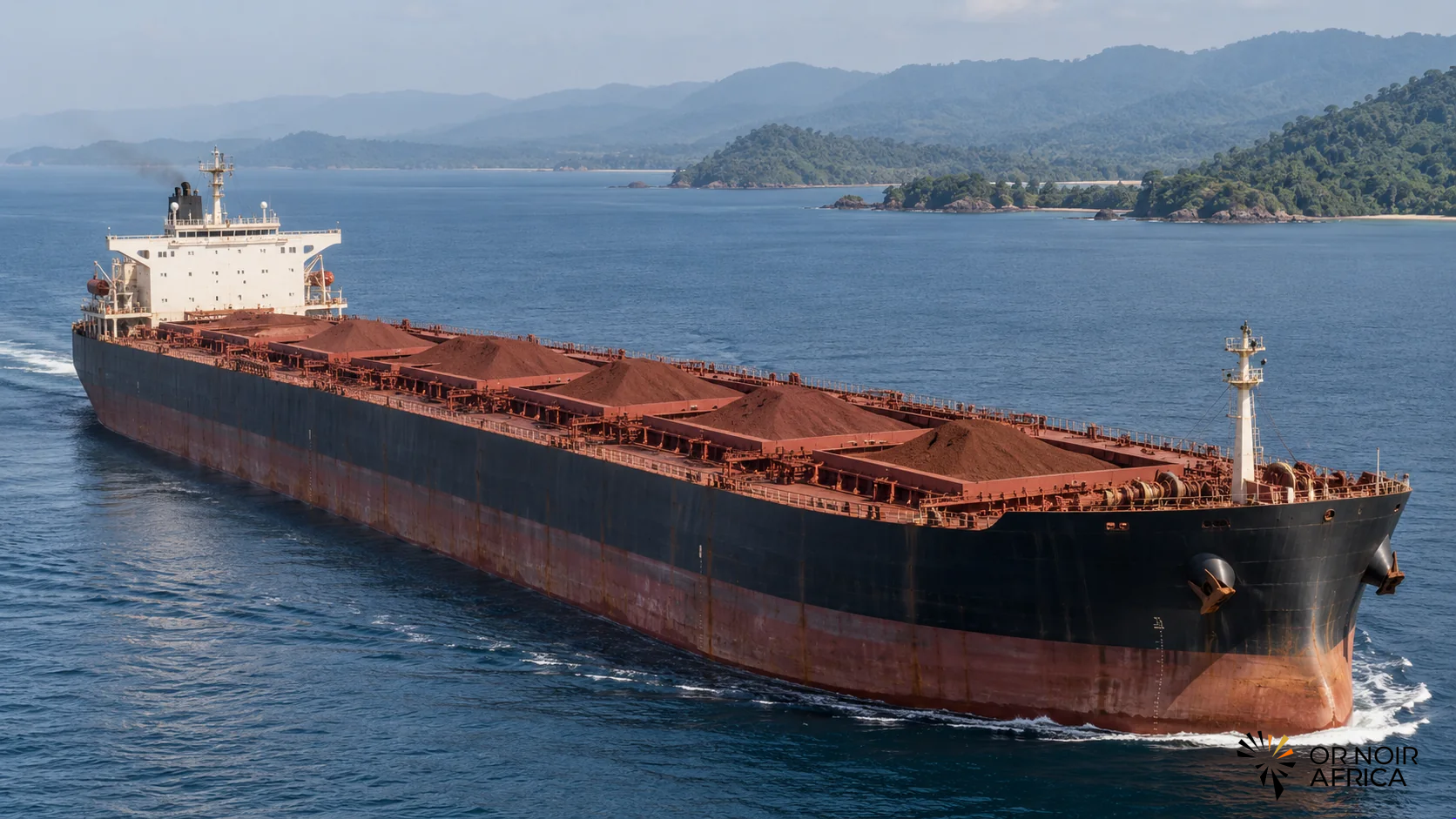
The ramp-up of the Simandou iron ore project could have a major effect on global shipping. According to a Fearnley Securities estimate reported on October 22, full-capacity production could increase bulk carriers’ tonne-mile transport demand by 9% to 10%, provided other cargoes remain stable. The effect would not come only from tonnage shipped from Guinea: the distance to Asian markets occupies vessels for longer than routes from Asia’s main supply regions.
A faster-than-expected ramp-up
Fearnley estimates that Simandou shipments have reached 19.3 million tonnes since the start of 2026, close to the 20 million tonnes forecast for the full year by consultancy MySteel. This pace corresponds to an annualized rate of approximately 63 million tonnes. The analyst believes the complex could reach its planned capacity of 120 million tonnes annually in 2028, approximately two years earlier than the market outlooks previously cited in its analysis anticipated.
This trajectory remains a market estimate, not a guaranteed official timetable. Volume growth will depend on progress at the mines, train and port availability, and operational regularity. The integrated infrastructure—two mining complexes, a railway more than 600 kilometers long and a port—is designed to enable exports of up to 120 million tonnes annually when the system is fully operational.
The two operators together produced 1.14 million tonnes of iron ore between October 5 and 11, according to data reported by PortNews. The Baowu Winning consortium accounted for 936,494 tonnes and SimFer for 207,975 tonnes that week. These weekly figures illustrate operational progress, but must not be confused with volumes actually loaded and exported over the same period.
Why distance matters as much as volume
Bulk shipping is measured notably in tonne-miles: a cargo’s weight multiplied by the distance it travels. A tonne of ore shipped on a long route consumes more fleet capacity than a tonne delivered on a shorter journey. Guinean exports to Asia could therefore increase vessel demand even without an equivalent rise in global steel or ore demand.
The comparison with Australian shipments to Asia is instructive. The route from West Africa is longer, occupying bulk carriers for more time on each round trip. If Simandou volumes rise quickly, vessels capable of carrying the heaviest cargoes—notably Newcastlemax and Capesize classes—could see higher utilization rates. This tightness could then spread to other bulk shipping segments, depending on vessel availability and cargo allocation.
Fearnley estimates that Simandou’s growth alone, holding other flows constant, could add 9% to 10% to global dry bulk tonne-mile demand once the project reaches full operation. The bulk carrier fleet, meanwhile, is expected to grow by approximately 9.3% by 2028, according to forecasts cited by the analyst. Comparing these percentages suggests that the new Guinean corridor could absorb a significant share of the projected increase in shipping capacity. It does not mean supply and demand will balance precisely: other cargoes, new vessel orders and route changes can alter the outcome.
Forward rates already reflect expectations
Capesize freight forward contracts indicated levels of approximately $33,000 per day for October, $35,000 for November and $36,000 for December. Contracts for 2027 were close to $31,800 per day, above Fearnley’s average estimate of $30,000 for that year. These contracts are market benchmarks and expectations, not guaranteed rates that every shipowner will receive.
Faster arrivals of Simandou cargoes can support rates if available vessels do not grow at the same pace. But freight developments also depend on demand for coal, grain and other ores, port congestion, fuel costs and commercial conditions. Slower ore purchases or increased deliveries from other regions could ease pressure. The ramp-up timetable is therefore as important as the announced final capacity.
A mining corridor reshaping trade flows
For Guinea, Simandou represents a logistics transformation as much as a mining project. The railway and port must link landlocked deposits to international markets and enable large-scale exports. A successful chain could strengthen the country’s position in iron ore trade, while longer maritime distances would give the project significance beyond mining statistics alone.
Domestic benefits will nevertheless depend on the ability to keep all infrastructure operating sustainably, develop local suppliers and convert revenue into economic activity. In shipping, the key indicator will be changes in cargoes actually loaded and their destinations, followed by average voyage duration. Announced annual volumes will have their full effect on the fleet only if supported by regular shipments.
Fearnley’s estimate therefore describes a potential change of scale for dry bulk: Simandou’s growth could tighten the large bulk carrier market because it combines new tonnage with a long route to Asia. The 9% to 10% figure must be read as a conditional full-capacity scenario, not an increase already observed. The coming months will show whether the acceleration in shipments confirmed in 2026 can translate into a sustained export schedule toward the capacity targeted for 2028.
Have any thoughts?
Share your reaction or leave a quick response — we’d love to hear what you think!
-
 0
-
0
-
0
-
0
-
0
-
0





