

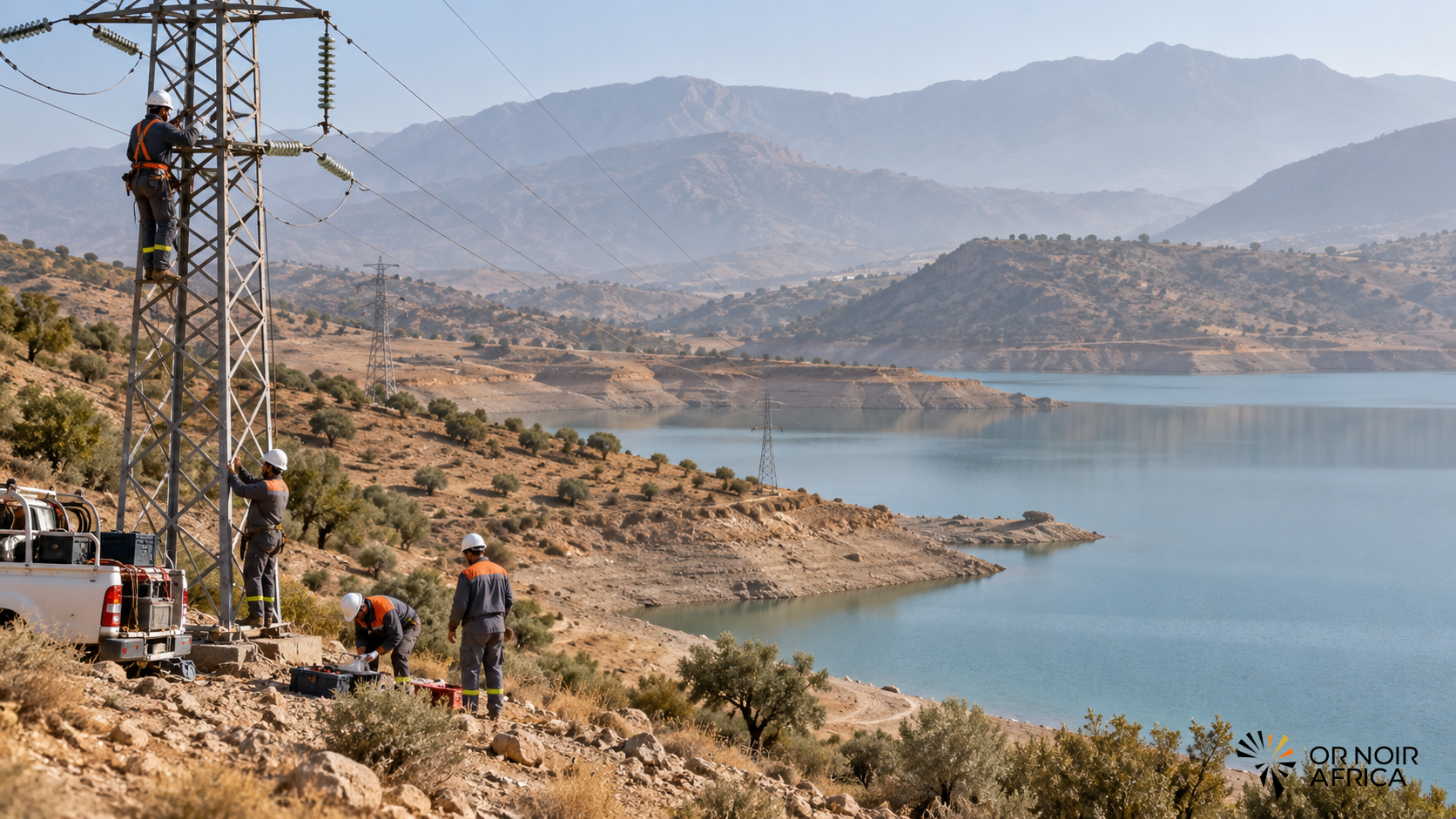
The African Development Bank (AfDB) has approved $487 million in financing for Morocco. Endorsed on October 21 by the Group’s Board of Directors in Abidjan, the package finances the third phase of the program supporting stronger economic governance and resilience to climate change (PGRCC). Its ambition is twofold: support structural reforms and strengthen the Moroccan economy’s ability to absorb external shocks.
The program comes amid pressures on energy and transport costs, as economies remain exposed to geopolitical disruption and climate risks. AfDB presents the financing as support for economic transformation, more inclusive growth and mobilization of private investment. Approval is a financing milestone; it does not by itself mean the intended reforms or investments have already been implemented.
Refocusing the state and expanding the private sector’s role
The first component concerns the organization of public action. It notably provides for restructuring the state-owned enterprise portfolio, modernizing the public-private partnership framework and improving the business climate. These reforms are intended to clarify the state’s economic role and create more favorable conditions for business activity.
The approach also seeks to strengthen the private sector’s contribution to investment and value creation. Small and medium-sized enterprises, innovation and Moroccan companies’ integration into global value chains are among the Bank’s stated priorities. For these participants, the practical challenge will be turning regulatory and governance changes into bankable projects, accessible contracts and lasting markets.
Restructuring state-owned enterprises is a sensitive component. It can make management clearer and improve service efficiency, but its impact will depend on implementation: timing, governance, transparency and alignment with users’ needs. The public-private partnership framework must also allocate risks clearly between public authorities and operators, so projects attract capital without disproportionately shifting costs onto the community.
Water and electricity at the heart of resilience
The second component concerns water and electricity governance and the integration of climate issues into public policy. AfDB wants to support modernization of these frameworks and contribute to the transition toward a lower-carbon economy. This approach is particularly important in a country facing water stress and growing demand for reliable infrastructure.
Resilience depends on more than building new capacity. It also relies on planning, regulatory quality, network maintenance and institutional coordination. In electricity, stronger governance can facilitate integration of new energy sources and continuity of service. In water, it can help anticipate scarcity and reconcile household, agricultural and economic needs.
Abdoulaye Coulibaly, Director of AfDB’s Governance and Economic Reforms Department, explained that the operation should help Morocco cushion economic, energy and climate shocks while consolidating reforms needed for resilience and private investment. This wording underlines the link between short-term stability and longer-term transformation: preserving room for maneuver today should allow time-consuming changes to continue.
Financing whose impact will depend on execution
The third phase is intended to consolidate earlier program stages and forms part of AfDB’s response framework for energy and fertilizer crises. The institution says the operation should help preserve priority spending while maintaining the pace of reform and investment. Detailed implementation arrangements and measurable results will therefore be decisive in assessing its effectiveness.
AfDB Morocco Country Manager Achraf Tarsim welcomed the continuation of reforms despite external shocks and presented Bank support as a means of advancing economic transformation, growth and job creation. These goals must be assessed through concrete indicators: public service quality, private investment actually mobilized, improved water and electricity management, and consideration of climate risk in public decisions.
Since 1978, the AfDB Group says it has mobilized nearly €15 billion for more than 150 projects in Morocco across transport, energy, water, sanitation, agriculture and social protection. The new package forms part of this long-term relationship. Its contribution will be measured less by the announced amount than by its ability to advance reforms, strengthen institutions and attract investment useful to the economy and its people.
Have any thoughts?
Share your reaction or leave a quick response — we’d love to hear what you think!
-
 0
-
0
-
0
-
0
-
0
-
0





