

# 28. Rare earths: the global challenge is less about scarcity than profitable extraction
Rare earths are often presented as rare metals essential to electric vehicles, wind turbines and digital equipment. Yet their name creates confusion: several of these elements are relatively common in the Earth's crust. The real obstacle lies elsewhere. They are rarely concentrated in deposits that are easy to locate, mine and process at a competitive cost. For African countries seeking to attract investment in critical minerals, the challenge therefore extends beyond discovering a geological anomaly. It involves building a complete chain from exploration to metal separation.
The rare earth group comprises 17 elements, including the lanthanides, scandium and yttrium. Their magnetic, optical and electrochemical properties give them varied uses in permanent magnets, electric vehicle motors, wind turbines, phones, advanced computing tools and certain defense equipment. Demand associated with the energy transition and digitalization strengthens their strategic importance. However, this demand does not mean that every deposit containing rare earths can become a profitable mine.
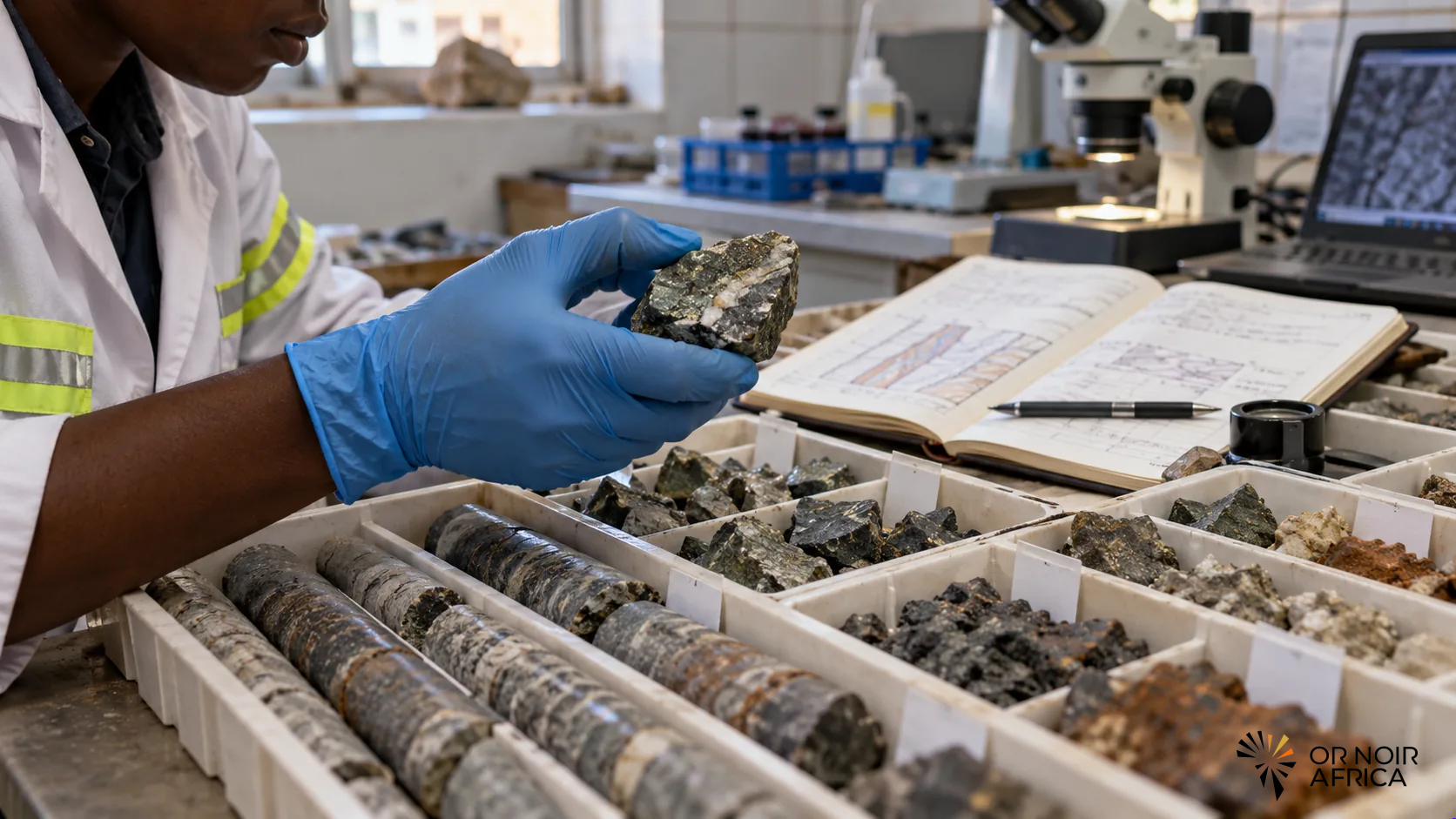
The first difficulty is locating them. The elements can occur in igneous rocks, carbonatites, hydrothermal systems or ion-adsorption clays. Each geological environment leaves different signatures. Exploration methods must therefore combine mapping, geochemistry, geophysics and laboratory analyses. In some extensive sedimentary basins, mineralized zones may be small relative to the area to be explored. Existing geological data were sometimes collected to search for other substances, which can make rare earth indicators less visible in older campaigns.
The second difficulty emerges after discovery. A high-grade sample is not enough to establish a deposit's economic value. Rare earths can occur in numerous minerals, some of which resist conventional processes. Recovery may then require substantial pretreatment, chemical reagents and energy consumption. Costs depend on the precise mineralogy, recovery rate and ability to separate the different elements effectively. A geologically promising deposit may thus prove too costly to process.
Environmental and industrial safety issues are also important. Some ores associated with rare earths contain thorium or uranium. Their presence requires specific controls for tailings and by-products. Process water, waste and reagent management must be incorporated into studies from the earliest stages. Permits and social acceptance will depend partly on operators' ability to demonstrate that risks are identified, monitored and funded throughout the project's life.
The concentration of processing capacity in a few countries is another bottleneck. Extracting a concentrate is not enough to supply the separated oxides and metals manufacturers need. Specialized facilities, metallurgical expertise, reliable infrastructure and industrial customers capable of supporting investment are required. Some countries have substantial geological resources but still export their concentrates to established processing centers. Mastering chemical separation and magnet manufacturing remains a separate activity from mining.
This situation offers Africa an opportunity, but also imposes requirements. Countries across the continent can seek to improve subsurface mapping and attract exploration projects. To retain more value, they will also need to examine the conditions for establishing processing facilities, access to energy and water, technician training and the stability of export rules. Regional projects could pool some infrastructure and bring producers closer to industrial demand. However, establishing a plant guarantees neither its supply nor its competitiveness.
Light and heavy rare earths have different profiles. Light elements are generally more abundant, while several heavy rare earths face more pronounced supply constraints and are geographically concentrated. A deposit's composition therefore matters as much as its total tonnage. Markets seek particular baskets of elements; a project can contain substantial rare earths without producing the elements users need most.
New methods are being studied to recover these elements from geothermal brines or oilfield produced water. These approaches could make use of streams already brought to the surface, but remain at the research or pilot project stage for rare earth extraction. They also raise questions about selectivity, fouling, reagent consumption and aquifer protection. Their potential must not be confused with a commercially available large-scale solution.
The race for critical minerals will thus depend on the ability to turn geological occurrence into regular industrial supply. Discovery announcements will attract attention, but results will depend on metallurgical testing, costs, tailings management and sales contracts. For African governments, the best strategy is to connect mining policy early on with training, energy, processing and environmental transparency. The value of rare earths is not measured solely underground: it is built throughout the supply chain.
Have any thoughts?
Share your reaction or leave a quick response — we’d love to hear what you think!
-
 0
-
0
-
0
-
0
-
0
-
0





