

# 29. Côte d’Ivoire: Koné mine produces its first gold ahead of schedule
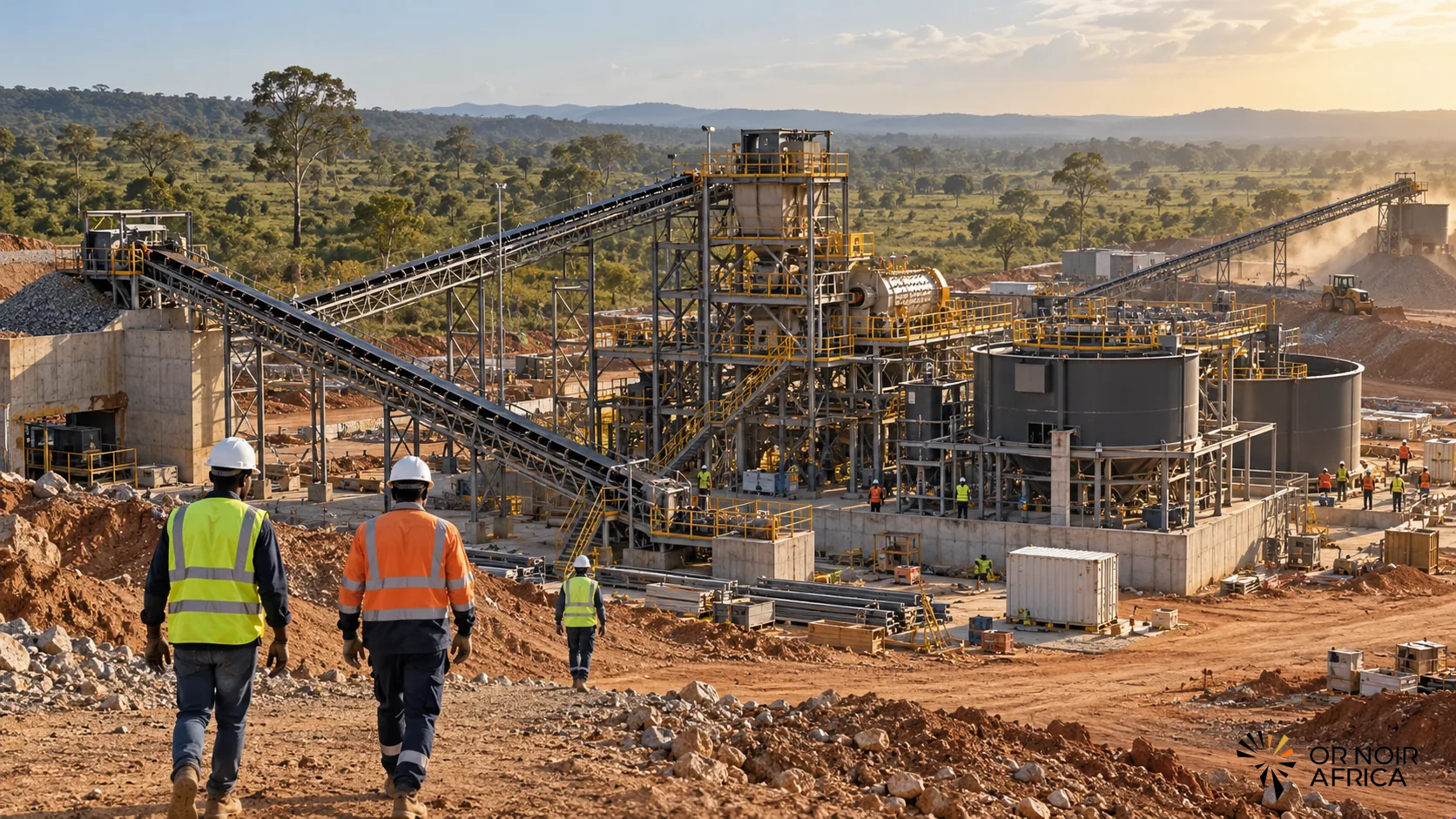
The Koné mine in northwestern Côte d’Ivoire poured its first gold on September 26, 2026, nearly twenty months after construction began. Around 42 kilograms of metal were produced at this initial stage from the circuit dedicated to oxide ore. This progress ahead of the original schedule marks the transition from construction to commissioning, but does not mean the mine has already reached commercial production levels. Ramp-up and completion of the hard ore circuit remain the next steps.
The project is being developed by Canadian company Montage Gold in the Woroba district. The first pour was achieved through an oxide processing circuit, a component that enables production to begin before full commissioning of the facility designed to process harder rock. This phased approach can accelerate initial revenues and shorten the wait between construction and operations. However, it requires close coordination between the different processing units and mining operations.
The hard ore comminution circuit, which mechanically reduces rock before processing, still needs to be completed. The company is targeting commissioning in the second quarter of 2027. This facility is crucial to exploiting the full mining profile envisaged in the feasibility study. Until it is operational and tested, production volumes will depend more heavily on available oxide ore and the capacity of the initial plant.
The approximately 42 kilograms from the first pour are an operational and symbolic milestone. They demonstrate that the oxide circuit has enabled metal to be extracted and produced, but cannot be used to assess future annual output. Performance will need to be evaluated over time: plant stability, recovery rates, the quality of the doré produced, equipment availability and costs per ounce. Successful commissioning is confirmed as operations gradually reach a stable pace, rather than by a single initial batch.
The Koné project was designed as a large asset. The updated feasibility study published in 2024 estimated a 16-year mine life and average production exceeding 300,000 ounces a year during the first eight years. These figures are project forecasts based on technical and economic assumptions; they are not results already achieved. The gap between projections and actual production will depend in particular on the ore profile, equipment performance and cost control.
Construction progress is also reflected in investment. According to information released at the time of the first pour, around CFA francs 430 billion had been committed out of a planned total budget of CFA francs 510 billion. The construction site recorded more than 13.7 million working hours. Around 3,600 jobs were reportedly mobilized during construction, with more than 95% held by Ivorian workers. At full capacity, the project is expected to generate some 1,500 permanent jobs. These benefits will depend on the duration of the positions, skill levels and the share of contracts awarded to local companies.
For Côte d’Ivoire, Koné comes during a period of expanding gold production and economic diversification. The government seeks to attract mining investment while increasing the sector's contribution to revenues, employment and domestic procurement. The arrival of a new asset with substantial capacity strengthens the country's export potential. It also raises expectations regarding training, taxation, infrastructure and environmental impact management.
The success of a large project is not measured solely by its first pour. Woroba communities and the authorities will need to monitor jobs actually retained, contracts awarded to Ivorian suppliers, royalties paid and the quality of environmental monitoring arrangements. The mine also depends on reliable infrastructure, particularly for energy, water and transport. The pace of production must remain consistent with commitments on tailings management and site rehabilitation.
Montage Gold is continuing work on the hard ore circuit alongside exploration activities on other Ivorian properties. The immediate priority at Koné is now controlled commissioning of the oxide circuit, followed by delivery of the complete plant within the announced timetable. The next operational reports will allow production and cost progress to be verified. The first pour signals that the project is entering a new phase; its lasting contribution to the Ivorian economy will depend on the quality of this ramp-up.
Water and tailings monitoring must accompany this transition to operations. As processing volumes increase, management of storage facilities, independent checks and dialogue with neighboring communities become as fundamental as financial indicators. A transparent ramp-up will help assess the benefits and pressures created by the mine.
Have any thoughts?
Share your reaction or leave a quick response — we’d love to hear what you think!
-
 0
-
0
-
0
-
0
-
0
-
0





