

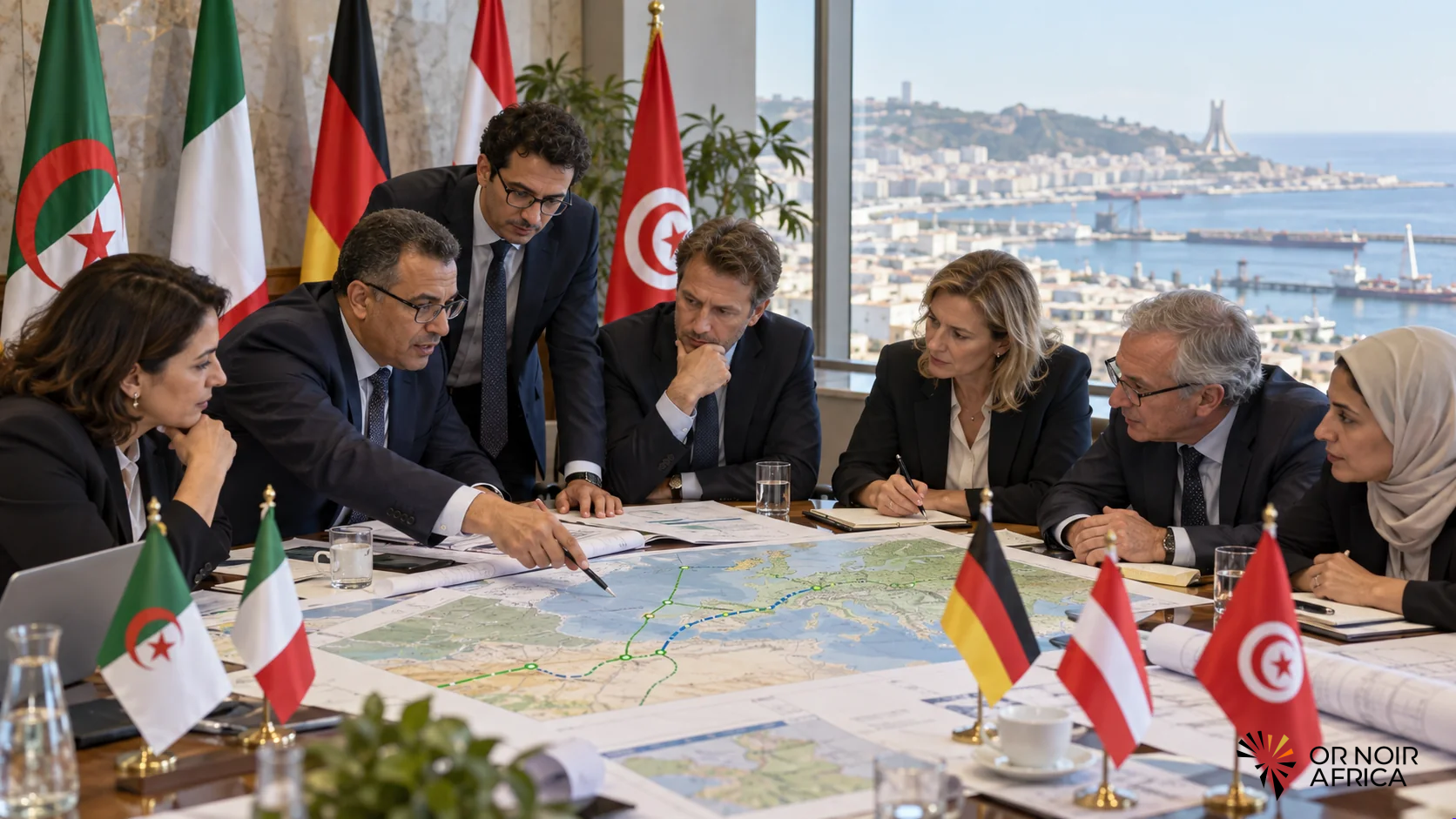
Algeria, Tunisia, Italy, Austria and Germany signed a ministerial declaration on the SoutH2 Corridor project in Algiers on October 1. The document marks a new political step for a project intended to transport renewable hydrogen from North Africa to several European markets. The five countries plan to strengthen cooperation and organize the technical work needed for the project's next stages.
The initiative would rely partly on existing gas infrastructure, which would need to be adapted to hydrogen transportation. Promoters refer to a link of approximately 3,000 kilometers and a transportation target of up to four million metric tons annually to Italy, Austria and Germany. These figures describe a long-term ambition; they do not yet represent built capacity or a final investment decision.
Infrastructure designed between production and demand
The corridor concept rests on complementary strengths. Algeria and Tunisia have renewable resources that could support hydrogen production through electrolysis. The European partner countries seek to diversify supplies of low-carbon molecules for industrial uses that are difficult to electrify. The corridor could connect these ambitions through a transportation network crossing North Africa and Southern Europe.
Reusing existing pipelines can reduce some expenditure and accelerate the establishment of cross-border infrastructure. However, pipelines, compression stations and measurement systems must be assessed to determine which sections can be converted and what new equipment is needed. Material compatibility, operating pressure, losses and safety standards require detailed studies.
Transportation is only one link in the chain. Supplying green hydrogen at scale requires building renewable power plants, installing electrolyzers, securing water supply and organizing storage. Long-term buyers must also be secured at prices able to cover investment and compete with available alternatives. These conditions determine the profitability of production and the corridor alike.
A political declaration before financial decisions
The signing in Algiers strengthens coordination between the five countries and provides a technical cooperation framework. It can help harmonize studies and bring together the authorities and companies concerned. However, it does not by itself determine cost sharing, contracted volumes, transportation tariffs or the distribution of value between producing and transit countries.
These questions are central for Algeria and Tunisia. Benefits should not be limited to exporting a new energy resource. Developing a local industry can create jobs, support manufacturing and services, improve electricity supply and strengthen engineering skills. Investment in renewable generation can also help diversify domestic energy systems.
Water availability will be a major issue for electrolysis in regions where water resources are already under pressure. Projects must demonstrate how they will limit pressure on local uses by prioritizing solutions suited to the territories and publishing projected requirements. Economic and environmental benefits should be assessed from the design stage.
Testing the corridor against actual demand
European hydrogen demand will depend on industrial policies, infrastructure and competitiveness against other low-carbon fuels. Buyers seek reliable, certified energy available at a predictable price. Long-term offtake contracts can help finance facilities, but require a common definition of standards and the renewable origin of production.
The next steps should clarify the route, schedule, costs, certification rules and governance arrangements. Comprehensive feasibility studies must also incorporate national production infrastructure and cross-border connections. Finally, financing mechanisms must allocate risk between governments, companies, development banks and buyers.
SoutH2 is therefore becoming an energy cooperation project linking industrial strategy and trade between the two sides of the Mediterranean. The Algiers declaration is an institutional advance, but the corridor's credibility will be measured by the decisions that follow: financed renewable projects, adapted networks, offtake contracts and demonstrable local benefits. Volume ambitions will take shape only if every link in this chain progresses together.
Have any thoughts?
Share your reaction or leave a quick response — we’d love to hear what you think!
-
 0
-
0
-
0
-
0
-
0
-
0