

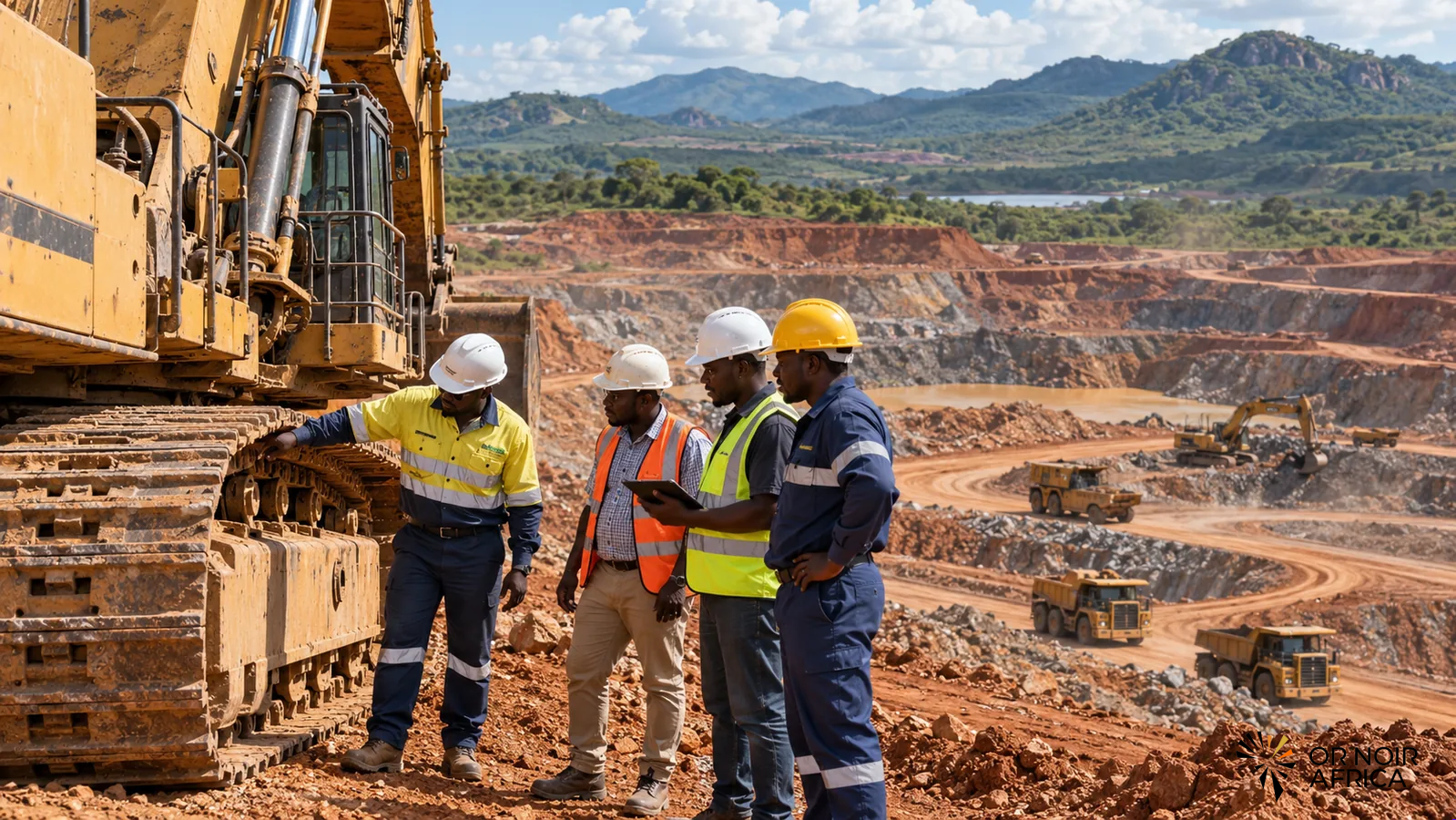
Mining companies in the Democratic Republic of the Congo say they have invested more than $1.5 billion in rehabilitating and financing Société nationale d’électricité (SNEL) infrastructure and other energy equipment. The Chamber of Mines of the Federation of Congolese Enterprises now demands that commitments made by the authorities be honoured. Behind this request lies a structural question: who should finance the electricity needed to extract and process Congolese copper and cobalt?
Mining is a major driver of national exports, but southeastern sites still face insufficient or unstable electricity supply. Extraction and especially processing require regular power. Interruptions can slow equipment, disrupt processing circuits and increase costs. To avoid these risks, some operators have directly contributed to rehabilitation or financing projects for infrastructure the public grid could not provide at the pace of industrial needs.
The private investment announced by the Chamber of Mines illustrates the scale of the constraint. It extends beyond installing generators on a site to contributing to broader electricity infrastructure and associated networks. This can improve participating companies’ supply, but raises an equity question: are costs pooled for the national system’s benefit, or financed by industrial companies for their own needs? Agreement terms and expected returns become essential.
Clarifying commitments between mines and the public sector
The demand to “honour commitments” signals disagreement over implementation. Public access to details remains limited, and the Chamber of Mines’ position must be understood as that of the companies. It calls for clarity on each party’s obligations, deadlines, maintenance responsibilities and repayment or compensation arrangements when operators fund assets benefiting the grid.
For authorities, energy is inseparable from mining development. The DRC’s copper and cobalt reserves place it at the heart of strategic supply chains, notably batteries and electrical technologies. Extraction alone captures less value than local processing, however. Refining ore or producing intermediate materials requires more energy, intensifying the need for a reliable grid. Electricity availability thus determines the country’s ability to advance mineral industrialisation.
Company financing can accelerate some work, but does not replace a national electricity strategy. Private investment tends to prioritise infrastructure meeting mine sites’ immediate needs. The public grid must serve households, services and economic activities across provinces. Integrated planning should identify shared lines and facilities, determine connection costs and establish access conditions for other customers.
SNEL plays a pivotal role. Rehabilitation must be accompanied by resources for maintenance and operations. Funded infrastructure that is inadequately maintained can quickly lose availability. Generation, transmission and distribution must also be coordinated: a power plant or electricity imports cannot resolve problems if lines are congested or substations cannot deliver energy to mining centres.
Interconnections and investment monitoring
The regional dimension can offer solutions. Southeastern Congo is close to Southern African grids and producers. Cross-border exchanges could supplement national supply but require contracts, infrastructure and transit risk management. Electricity imports must not exist only on paper: continuity depends on neighbours’ spare capacity, tariffs and interconnection stability.
To restore trust between the state and operators, publishing a statement of commitments would help: contributions, completed works, schedules, beneficiaries and outstanding obligations. Joint monitoring by government, SNEL and companies could resolve disputes before they threaten production. Indicators should include megawatts actually available, outage rates, network losses and the final electricity cost.
Community benefits must also enter the assessment. Mine-funded infrastructure can benefit surrounding areas if access rules and capacity permit. Beneficiary transparency would show whether investment improves service beyond industrial sites. Otherwise, residents may see energy projects crossing their territory without better local access.
The $1.5 billion contribution thus reveals mutual dependence: mines need electricity to produce, while the electricity sector can benefit from capital and large customers’ demand. This relationship will only last if commitments are explicit and verifiable. The Chamber of Mines’ demand increases pressure to clarify responsibilities. For the DRC, the challenge is turning private spending into reliable infrastructure and industrial processing capacity while ensuring the national grid serves a broader interest.
Have any thoughts?
Share your reaction or leave a quick response — we’d love to hear what you think!
-
 0
-
0
-
0
-
0
-
0
-
0





