

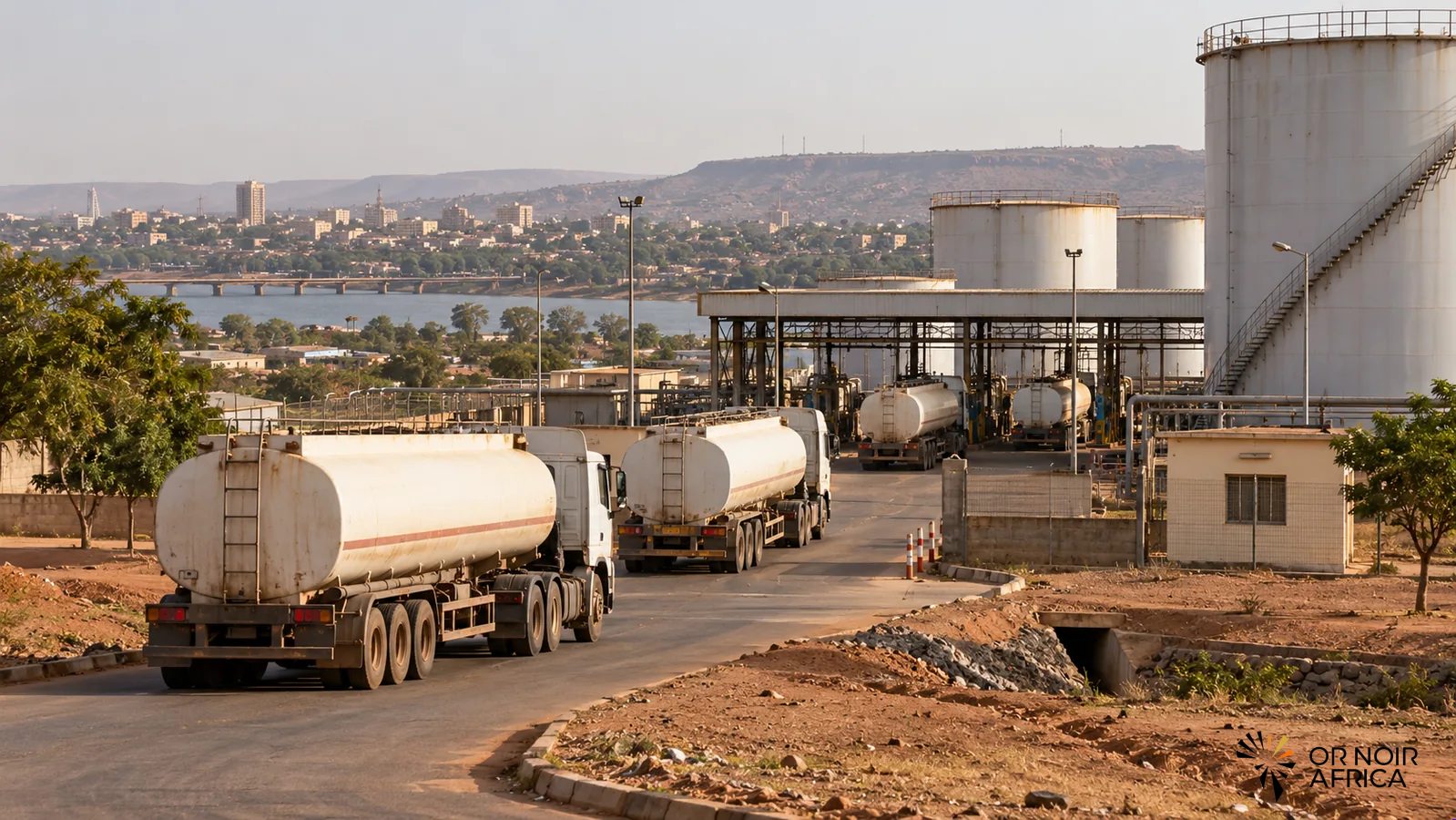
The West African Development Bank (BOAD) has granted short-term financing of CFA8 billion to Société de transport du Karta (SOTRAKA SA) to fund the import and marketing of around 20 million litres of petroleum products in Mali. Approved at the bank’s 152nd board session in Lomé on 24 September, the operation aims to strengthen fuel supply to the Malian market.
The financing comes as authorities closely monitor hydrocarbon stocks and flows. At a national meeting that week, supply chain participants reported nearly 58 million litres of diesel and petrol received between 14 and 20 September, transported by around 1,273 tankers. These volumes describe a specific period and do not alone represent total national reserves. They nevertheless illustrate the importance of transport and logistical coordination in a landlocked country.
The BOAD loan supports a targeted commercial operation. It is neither a general pump-price subsidy nor a refinery investment. The credit should allow the recipient company to mobilise resources to buy and distribute imported products. Rapid financing matters for an immediate need, but the operation must generate sufficient revenue to repay the loan and cover associated costs.
Logistical constraints on supply
Mali depends on supply routes crossing several borders and logistical corridors. Products unloaded at subregional ports must travel long distances by road. Any interruption can affect truck arrivals: port delays, security constraints, carrier availability, insurance costs or congestion at border crossings. Fuel is essential for transport, agriculture, services and generators supplementing electricity networks.
The financed 20 million litres add supply, but their significance must be assessed against daily demand and geographic distribution. Availability in Bamako does not guarantee regular deliveries to remote regions. Depots, tankers, safety stocks and distributors’ delivery capacity determine final access. Measuring the loan’s impact therefore requires shipment schedules, areas served, products concerned and resale prices.
Short-term credit can also ease an operator’s working capital needs. Hydrocarbon imports tie up capital before sales are collected. When international prices are high, purchase funding rises even if volumes are unchanged. Concessional financing or suitable terms can prevent liquidity shortages from delaying supply. The loan’s nature, guarantees and maturities nevertheless determine the operation’s actual cost to the company.
This intervention is part of a broader set of BOAD approvals totalling an announced CFA157.5 billion for various operations in the West African Economic and Monetary Union. It reflects the regional bank’s desire to support concrete infrastructure and economic financing needs. For Mali, short-term energy security rests on effective import mechanisms; over the longer term, it requires storage infrastructure, diversified routes and reserve planning.
Stocks, transparency and route security
The government meets regularly with supply chain participants to monitor stocks, receipts and delivery difficulties. These data are essential for anticipating shortages but would benefit from regular, comparable publication. Operators could plan purchases more effectively with transparent information on volumes, lead times and demand. Consumers could better understand pricing and the measures taken.
Dependence on road transport also exposes flows to high risks, particularly where security is fragile. Diversifying routes and building strategic stocks can reduce vulnerabilities. Investment in regional depots and multimodal transport nevertheless requires substantial capital and coordination with transit countries. The current loan meets an immediate need, while structural projects remain a priority for reducing market exposure.
The operation’s value will ultimately be judged by its ability to deliver fuel where needed without creating a lasting financial burden. Indicators include litres actually delivered, stock regularity, transport costs and repayment terms. CFA8 billion in financing provides a targeted supply response, but Mali’s energy resilience depends on managing the entire chain, from import financing to regional distribution.
Have any thoughts?
Share your reaction or leave a quick response — we’d love to hear what you think!
-
 0
-
0
-
0
-
0
-
0
-
0





