

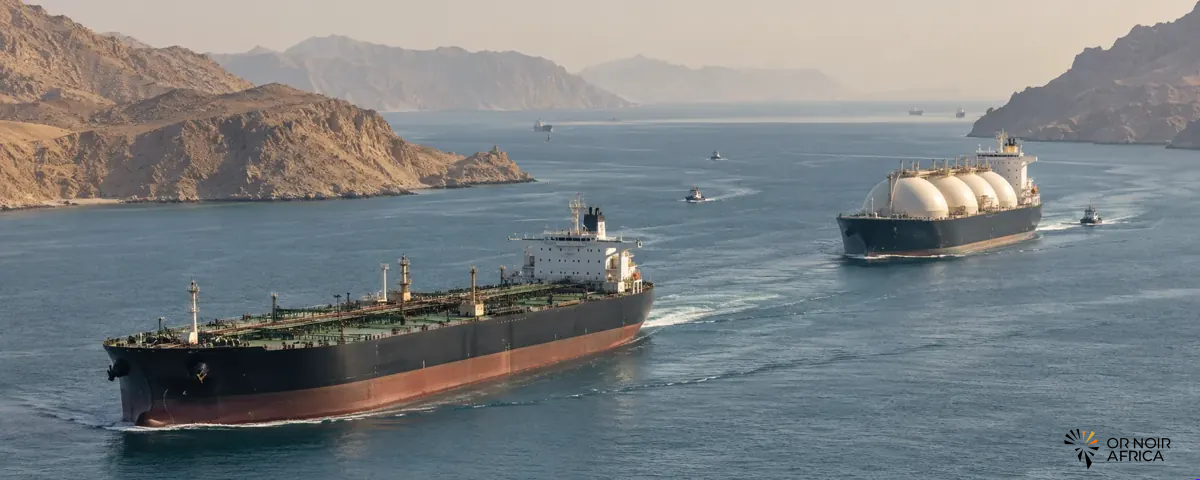
**Categories:** News, Oil **Tags:** oil, Brent, financial markets, Strait of Hormuz, volatility **Excerpt:** Brent exceeded $100 a barrel on October 7 amid tensions in the Middle East and doubts over the continuity of exports. The market reaction highlights oil’s role in inflation expectations, interest rates and business costs. **Slug:** petrole-au-dessus-100-dollars-bourses-tensions-moyen-orient **Image alt:** Oil tanker and offshore platforms at sunset amid tension in energy markets.
Oil climbed again on October 7, with Brent trading above $100 a barrel during the morning, while stock markets fell and government borrowing rates rose. The move came as tensions in the Middle East fueled fears of slowing exports. This price level is a market snapshot rather than an established trend: prices remain sensitive to news about supply, demand and the security of shipping routes.
Brent, the international benchmark, reached approximately $101.99 around 11:45 GMT, up 1.4% during the session. West Texas Intermediate (WTI), the US benchmark, rose to $89.44. The gap between these benchmarks reflects different quality, logistics and market characteristics. It can also reflect a premium for risks that affect international flows more strongly.
A market caught between supply and geopolitical risk
The rise cannot be explained solely by an immediate physical shortage. It also reflects the premium traders factor in when the likelihood of a disruption or delivery delay increases. Announcements concerning the Strait of Hormuz, attacks on vessels, facility security and exporters’ ability to maintain loadings influence expectations about availability.
At the same time, the market remains subject to signals of improving supply. Volumes that continue to be exported, decisions by producing countries and commercial inventories can limit the increase. This interplay between actual volumes and potential risk explains the rapid fluctuations observed in recent weeks. A headline announcing geopolitical tension can push prices up even before a lasting delivery disruption is confirmed; conversely, a return to normal can quickly erase part of that premium.
Assessing the situation requires monitoring several indicators: export volumes, vessel waiting times, premiums on physical cargoes, inventories and price differences between futures maturities. Futures prices reflect expectations, while the physical market indicates the immediate availability of barrels. The two can move differently.
Why stocks react to rising crude prices
Rising oil prices can support revenues for producers and service companies, but they increase costs for transport operators, airlines, chemicals companies, logistics businesses and many manufacturers. Companies cannot always pass these expenses on to customers immediately. Margins then contract, particularly when contracts were negotiated before fuel prices rose.
Households are also affected by fuel prices and, depending on national mechanisms, changes in gas and electricity costs. More expensive energy reduces disposable income and can slow consumption. In importing countries, the energy bill can also weigh on foreign exchange reserves and public finances, especially when domestic prices are subsidized.
Bond markets react in turn. If investors expect more persistent inflation, they may demand higher bond yields. Rising interest rates increase financing costs for businesses and governments and can reduce the valuation of financial assets. This effect is not automatic: it also depends on central bank decisions, wages and aggregate demand.
The decline in stock indices observed that day therefore does not mean that all companies lose value in the same way. Oil groups can benefit from higher selling prices, while energy-intensive businesses are more exposed to rising expenses. The consequences also vary with each company’s financial hedging, cost structure and pricing power.
Africa’s particular exposure
The continent combines hydrocarbon-exporting and importing countries. Exporters can benefit from higher revenues in the short term, but the impact depends on actual production volumes, costs, contracts and how revenues are used. Higher prices do not always immediately improve public budgets, particularly when production is constrained or revenues are already committed.
For importers, the bill can rise rapidly. Fuel plays an important role in goods transport, agriculture, electricity generation and household spending. When prices are regulated, the shock can be absorbed by the government or distributors, shifting pressure toward public finances and businesses. Exposure also depends on the payment currency and the level of foreign exchange reserves.
The situation highlights the value of strengthening energy resilience: diversifying supply sources, improving storage, reducing losses and developing local alternatives where their cost is competitive. In the short term, transparent communication about pricing mechanisms and inventories can reduce uncertainty. In the medium term, diversification does not eliminate exposure to oil but can reduce the transmission of shocks to consumers.
What to watch
The next trading sessions will show whether Brent stays above $100 or the increase loses momentum. Production data, Gulf exports, producers’ decisions and demand signals will be decisive. Central banks and markets will also monitor crude oil’s effect on inflation expectations and bond yields.
Crossing $100 highlights the link between energy security and financial stability. On its own, it is not enough to signal a lasting shock. The duration of the increase, actual cargo availability and the ability of companies and governments to absorb the bill will determine its economic impact. For markets, the price of a barrel remains as much an indicator of geopolitical risk as a reflection of the balance between supply and demand.
Have any thoughts?
Share your reaction or leave a quick response — we’d love to hear what you think!
-
 0
-
0
-
0
-
0
-
0
-
0





