

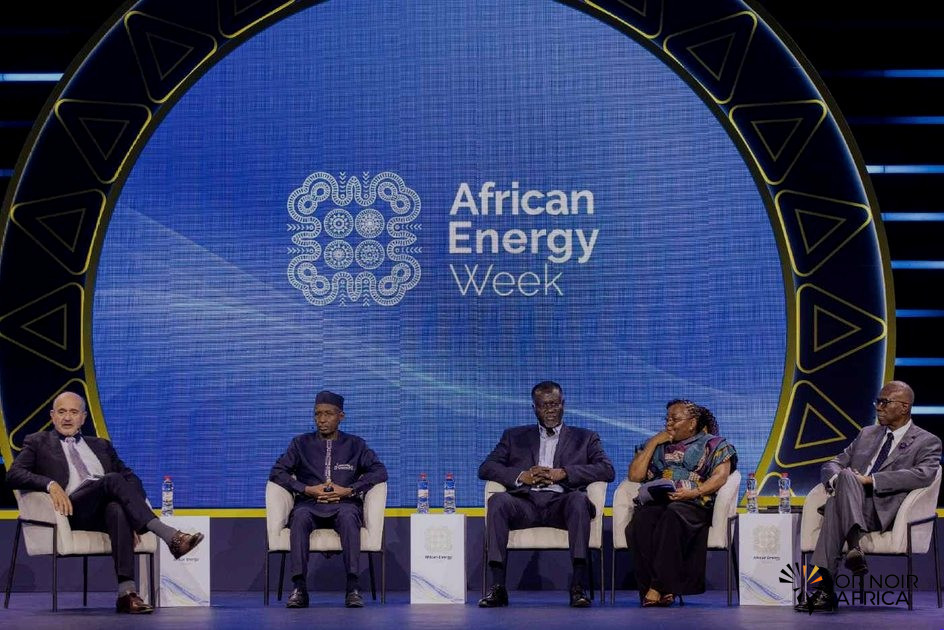
Energy partnerships between Africa and the Caribbean will only gain value if they go beyond declarations of intent. At African Energy Week 2026 in Cape Town, several officials called for concrete mechanisms for co-investment, technology transfer, training and benefit sharing. Their message addresses a recurring difficulty for emerging producers: attracting capital and expertise without allowing most of the value to leave the country.
Connecting producers’ experiences
The session on South-South cooperation brought together representatives of countries with different energy trajectories but shared development challenges. Namibia is seeking to structure an emerging oil industry; the Caribbean has longer experience in hydrocarbons and developing its resources. These experiences can inform practical exchanges on contract negotiations, revenue management, oilfield services and skills training.
For Ndapwilapo Selma Shimutwikeni, head of RichAfrica Consultancy, partnerships should connect emerging producers with experienced markets and participants, notably through joint ventures. Cooperation limited to extraction risks excluding host countries from the most skilled activities. She therefore calls for consideration of the entire chain: engineering, services, processing, logistics and commercial outlets.
Gilbert Yevi, a consultant to Grenada’s technical working group on hydrocarbons, emphasized sharing risks, skills and benefits. For countries embarking on costly and uncertain projects, a balanced alliance can distribute technical and financial risks. It can also help build local capabilities that endure after a contract ends or a field’s production declines.
Local content must serve an economic strategy
Local content is often among the most visible commitments in energy projects. However, it can remain limited to hiring or local procurement targets if public policies are not part of a broader industrial plan. Eric Williams of Royal Triangle Energy Solutions advocated an approach connecting resource use with economic transformation. The experience of Trinidad and Tobago discussed during the session emphasizes using hydrocarbons as inputs to develop industries, rather than solely as export products.
This direction requires decisions at an early stage. Governments must identify activities that can be competitive locally, invest in the corresponding qualifications and give suppliers sufficient visibility to develop. Companies, for their part, need clear standards, transparent procurement procedures and a workforce prepared for technical and safety requirements. Without this foundation, local content obligations can increase costs without creating a lasting ecosystem.
Regional training was discussed as a way to pool expertise. Shared skills centers would train technicians and managers for several markets, disseminate professional standards and reduce dependence on imported resources. Cooperation would then become more effective if programs were designed around specific industrial needs and recognized by companies.
Sovereignty can hinder integration
The main obstacle is not solely financial. Omar Farouk Ibrahim, Africa regional chair of the World Energy Council, stressed that the desire to retain every activity within national borders can leave regional cooperation purely theoretical. This tension arises in infrastructure, gas markets and supply chains: a cross-border project can be more efficient regionally, but the distribution of jobs, revenues and capacity must be negotiated.
Energy sovereignty is not limited to national ownership of an asset. It also depends on the ability to secure supplies, control technical choices, finance projects and retain a substantial share of value. Cooperation that meets these objectives can strengthen participating countries’ autonomy. Conversely, poorly defined agreements can fuel distrust if benefits appear concentrated in a single country or among a small number of participants.
Common rules and governance mechanisms can reduce these frictions. This includes clarifying cost and revenue sharing, operational responsibilities, infrastructure access conditions and dispute resolution procedures. Contract stability and the publication of measurable commitments also help reassure investors without depriving states of their ability to defend the public interest.
Making commitments verifiable
To move into action, cooperation announcements must lead to identified projects, budgets, deadlines and accountable parties. Governments can define common training or service priorities; regional financial institutions can structure suitable guarantees and financing; companies can open their value chains to local partners and share their requirements early on.
Results will be measured by the number of operational partnerships, capital mobilized, skills transferred, progress made by local suppliers and benefits retained in the economies concerned. South-South exchanges have no automatic advantage: they must demonstrate their relevance through financing terms, market access and results comparable with traditional partnerships.
The AEW 2026 debate thus raises a question of method. Africa and the Caribbean share interests in developing their resources and strengthening their companies’ capabilities. Their cooperation can have an impact if it organizes risk and benefit sharing around specific projects while connecting hydrocarbon development to broader economic objectives. Only then will South-South partnership become an instrument of transformation rather than a diplomatic slogan.
Have any thoughts?
Share your reaction or leave a quick response — we’d love to hear what you think!
-
 0
-
0
-
0
-
0
-
0
-
0





