

Security of supply for critical minerals has become an economic as well as an industrial issue. Lithium, cobalt, nickel, copper and rare earths are needed to manufacture batteries, electricity grids, vehicles and numerous digital technologies. Yet new refining and processing capacity remains concentrated in a limited number of countries. This dependence can amplify the impact of a trade decision, an industrial outage or geopolitical tensions.
The International Energy Agency observes deterioration in several indicators. Investment in the sector fell 9% in 2025 as concentration in refined supply increased. Leading suppliers accounted for more than 75% of refined supply growth over the past two years. China holds a dominant position in several supply chains, while Indonesia has become a major nickel producer. This does not mean that mining production is concentrated in exactly the same places: extraction and refining have different geographical patterns.
Control of processing determines value
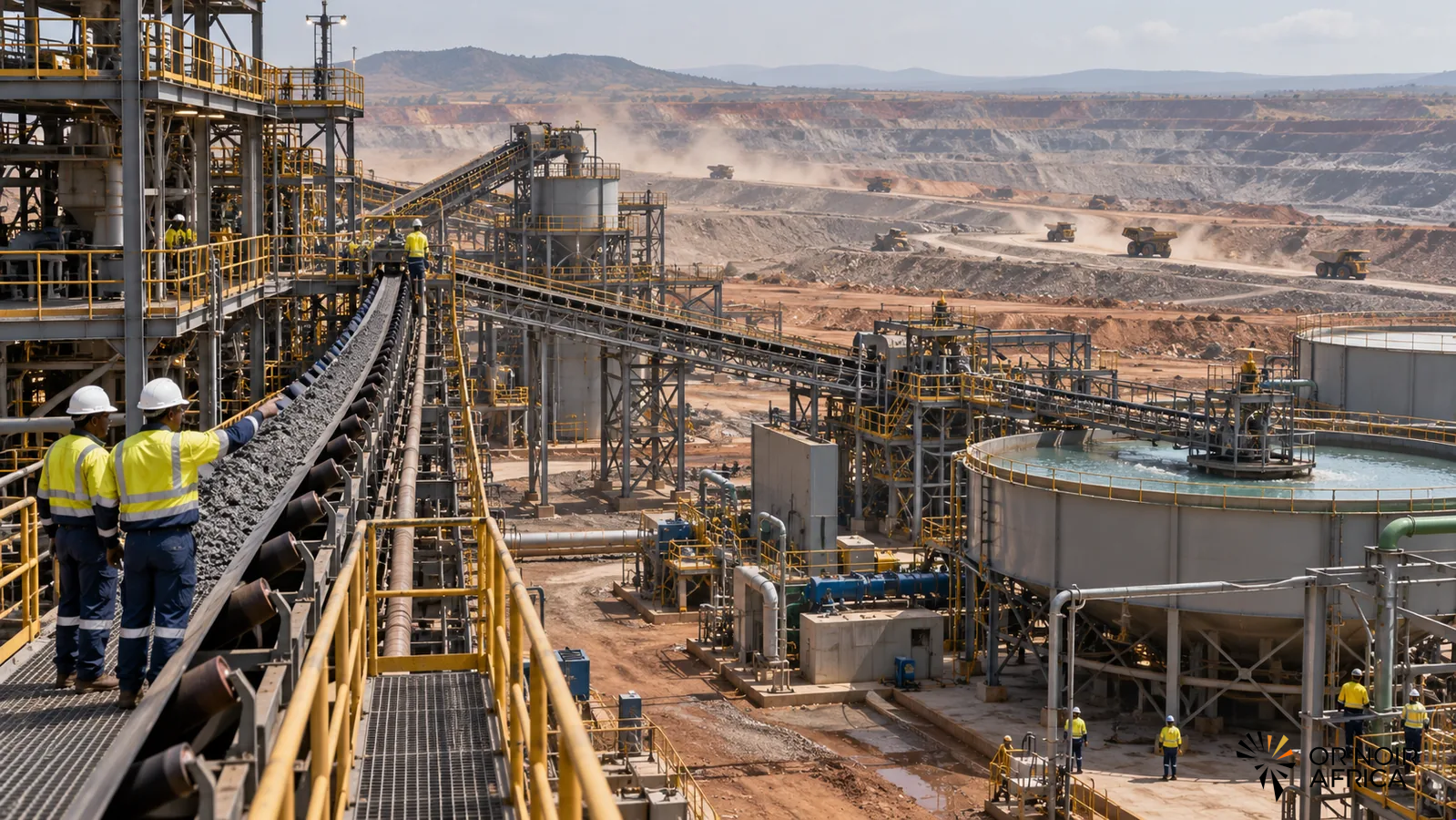
Mining is just one stage in the chain. Ore must be processed, separated, purified and converted into materials meeting manufacturers' specifications. These operations require capital, electricity, water, technical skills and strict management of residues. A country controlling refining stages can capture a larger share of value added and acquire a decisive role in industrial trade.
This distinction explains why announcements of new mines are not enough to guarantee access to materials. Additional mining output may be exported as concentrate to another region containing refineries, component manufacturers and end customers. Producing countries then have leverage to negotiate local investment, but establishing processing facilities depends on cost competitiveness, access to reliable energy and the existence of markets.
Today's concentration results from sustained investment, industrial policies and established ecosystems. Refineries often benefit from proximity to manufacturers, ports, energy networks and specialised services. Building a competing facility requires bringing together skills, permits, supply contracts and long-term financing at the same time. Political determination alone does not remove these constraints.
An investment slowdown at the wrong time
The 9% decline in investment in 2025 comes as demand for minerals is expected to rise with electrification, infrastructure and new technologies. Companies may delay decisions when faced with volatile prices, high financing costs or uncertainty about rules and end demand. In the short term, caution can prevent investment in unprofitable projects. Over the longer term, persistent underinvestment risks leaving supply less able to respond to a rapid increase in requirements.
Periods of low prices create a dilemma for investors. They reduce producers' margins and can undermine high-cost projects even when future demand remains strong. Industrial buyers benefit from competition and affordable prices, while producers need sufficiently predictable revenue to finance new capacity. Long-term contracts, demand guarantees and partnerships between states and industry can distribute this risk, provided responsibilities are clearly defined.
Export restrictions or local processing requirements can accelerate the establishment of activities in producing countries. They can also disrupt markets if introduced abruptly or before the necessary infrastructure is ready. Industrial policies therefore need to be sequenced: electricity access, training, the tax framework, roads and ports, environmental management and connections to customers. Agreements must preserve transparency and provide sufficiently predictable dispute resolution arrangements.
Diversifying without duplicating every stage of capacity
Reducing concentration does not necessarily mean building a complete supply chain in every country. A more robust strategy can combine several mining and industrial regions, targeted inventories, supply contracts and recycling. Governments can identify the most vulnerable stages and focus support on materials for which a disruption would have major consequences.
International public financing commitments for critical minerals have increased, reaching around $65 billion between 2023 and 2025, according to the IEA. This figure aggregates commitments relating to infrastructure, mining projects and processing. It demonstrates growing interest in diversification, but announcing capital does not guarantee that projects will be built or operated profitably. Monitoring implementation, timelines and outcomes is essential.
Recycling can reduce dependence on primary production, particularly as vehicles, batteries and equipment reach the end of their lives. However, available volumes will remain linked to equipment installed several years earlier. Economies investing early in collection, reuse and material processing can develop a complementary source of supply without replacing extraction and refining in the short term.
African producers face an industrial choice
For resource-rich African countries, the reshaping of value chains creates a negotiating opportunity. The continent already supplies essential minerals, but value capture remains limited when processing, components and manufacturing take place elsewhere. Attracting processing facilities can support employment and skills, but requires competitive electricity, logistics infrastructure and predictable governance.
The choice is not between exporting raw materials and immediately building an integrated industry. Intermediate stages, such as primary processing, mining services, manufacturing certain components or recycling, can establish skills and local suppliers. Partnerships must specify risk allocation, fiscal benefits, skills transfer and environmental requirements. Public investment in grids and corridors should benefit several economic activities rather than a single isolated project.
The IEA's assessment is a reminder that the energy transition also depends on upstream industrial supply chains. Geographically diversified supply would reduce disruption risks, but requires consistent financing and markets capable of supporting competitive projects. Falling investment and refining concentration do not make a shortage inevitable; they do show, however, that supply security cannot be left to production announcements alone. Governments, industry and financiers will need to turn commitments into concrete, traceable and economically viable capacity.
Have any thoughts?
Share your reaction or leave a quick response — we’d love to hear what you think!
-
 0
-
0
-
0
-
0
-
0
-
0