

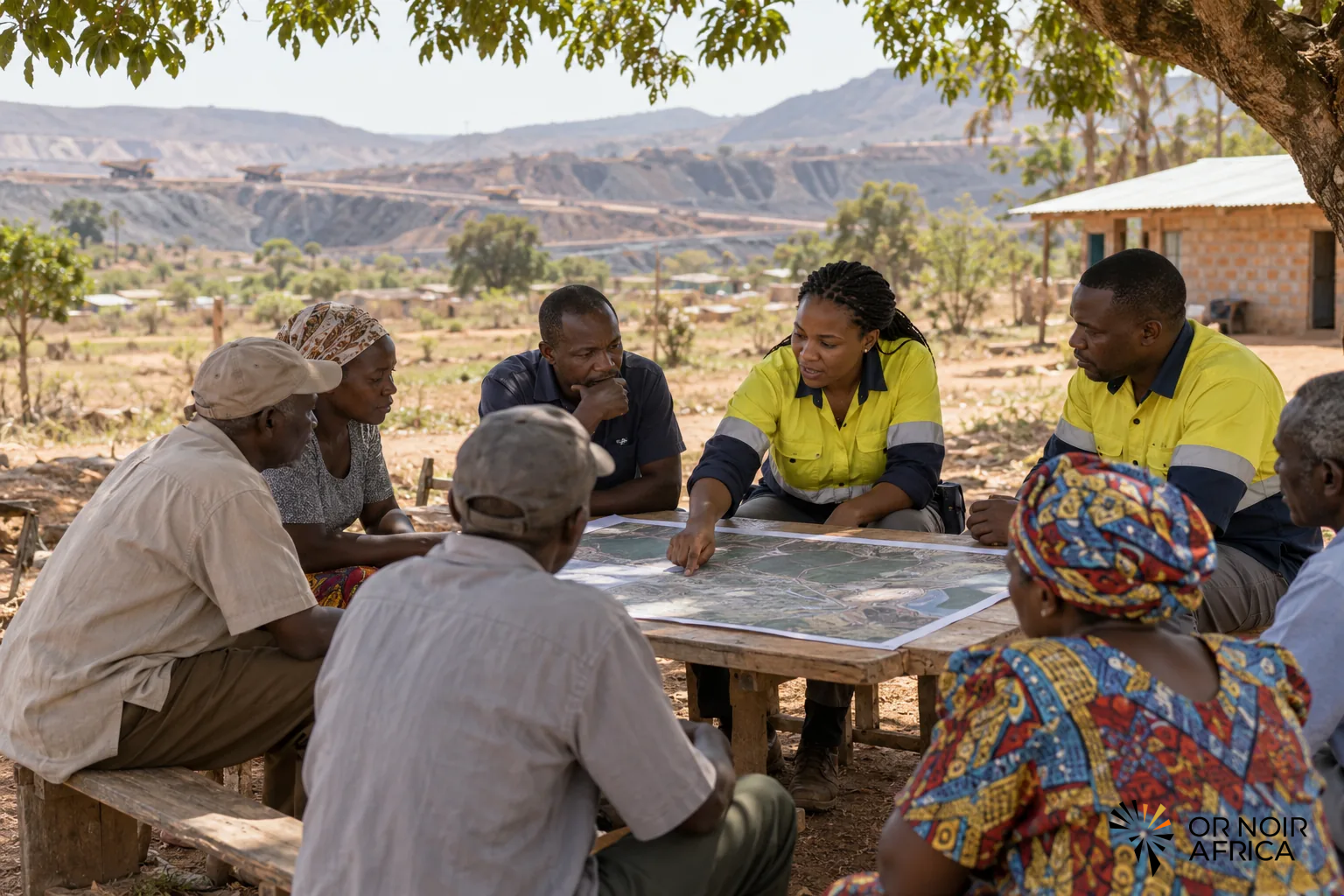
The race to process critical minerals in Africa raises a second question: who benefits from value created near extraction sites? A refinery or processing plant can increase national revenues and industrial jobs without guaranteeing neighboring populations directly benefit. A new United Nations support mechanism seeks to help producing countries address this challenge within broader energy transition mineral value chains.
The first six partner countries are Guinea, Madagascar, Nigeria, Zambia, Zimbabwe and Indonesia. For the five African countries, this comes as governments and investors increasingly focus on copper, lithium, graphite and other materials essential to batteries, grids and low-carbon technologies. The ambition is strengthening local processing, diversification and benefit sharing while improving transparency and traceability.
Local processing alone is not enough
Mining value policies often focus on a visible stage: replacing raw ore exports with a domestic processing unit. This can create jobs, develop skills and broaden the tax base. National benefits nevertheless do not automatically reach communities exposed to displacement, resource pressure, dust, noise or changing land use.
Territorial benefit sharing needs more precise arrangements. Local authorities must be able to plan royalty use, access understandable revenue information and participate in public investment choices. Companies can contribute local employment, training, regional supplier contracts and shared infrastructure. Indicators and monitoring are necessary to prevent general promises replacing measurable results.
Some countries already have local development mechanisms. In the Democratic Republic of the Congo, mining companies must notably allocate part of turnover to community projects. Financial resources alone do not resolve governance problems: approval delays, limited public information and priorities set without adequate consultation can restrict impact. The challenge is both collecting required contributions and ensuring transparent, relevant use.
Consultation must begin early
Effective participation begins before mine or plant construction. Residents need information about planned changes, water, land and economic impacts, and available remedies. Consultation after major decisions are settled can hardly influence projects or prevent conflict. Dialogue quality is measured through communities’ ability to shape priorities and obtain documented responses to concerns.
The question also concerns job distribution. Better-paid positions often require technical qualifications mining regions do not yet have in sufficient numbers. Training designed with companies, internships, skills certification and advance recruitment schedules can reduce this gap. Otherwise, local jobs risk concentrating in temporary or low-skilled activities while technical roles go to outside workers.
Local suppliers face similar obstacles: credit access, certification, delivery capacity and tender information. Mining firms can publish needs and split some contracts to enable SME participation without compromising safety or quality. Governments can support training and financing. Local content growth then becomes a diversification indicator rather than a preference merely written into legislation.
Data to verify benefits
Social and environmental assessment must use accessible data: local fund payments, financed projects, resident employment, regional business contracts, water availability and post-mining land condition. Regular publication would enable citizens, local authorities and investors to distinguish delivered commitments from intentions.
Civil society reports document numerous allegations of human rights and environmental harm linked to transition minerals. These are not all violations established by judicial decisions, but show why traceability and complaint mechanisms are governance priorities. A supply chain cannot be considered responsible solely because minerals are processed nearer the mine; extraction conditions, workplace safety and community consequences also matter.
The UN mechanism can help countries assemble technical expertise and coordinate administrations. Its reach nevertheless depends on government demand, local authority involvement and turning recommendations into implemented reforms. Participants have different resources, legal frameworks and administrative capacities, so useful support must suit each country’s priorities.
For African countries, the critical minerals opportunity is measured not only in output or the share refined on the continent. It also depends on locally retained value, job quality, service access and nearby populations’ trust. Industrial processing is a driver, but must connect to territorial governance that distributes gains and addresses costs. Only then can global mineral demand support more inclusive development in supplying regions.
Have any thoughts?
Share your reaction or leave a quick response — we’d love to hear what you think!
-
 0
-
0
-
0
-
0
-
0
-
0





