

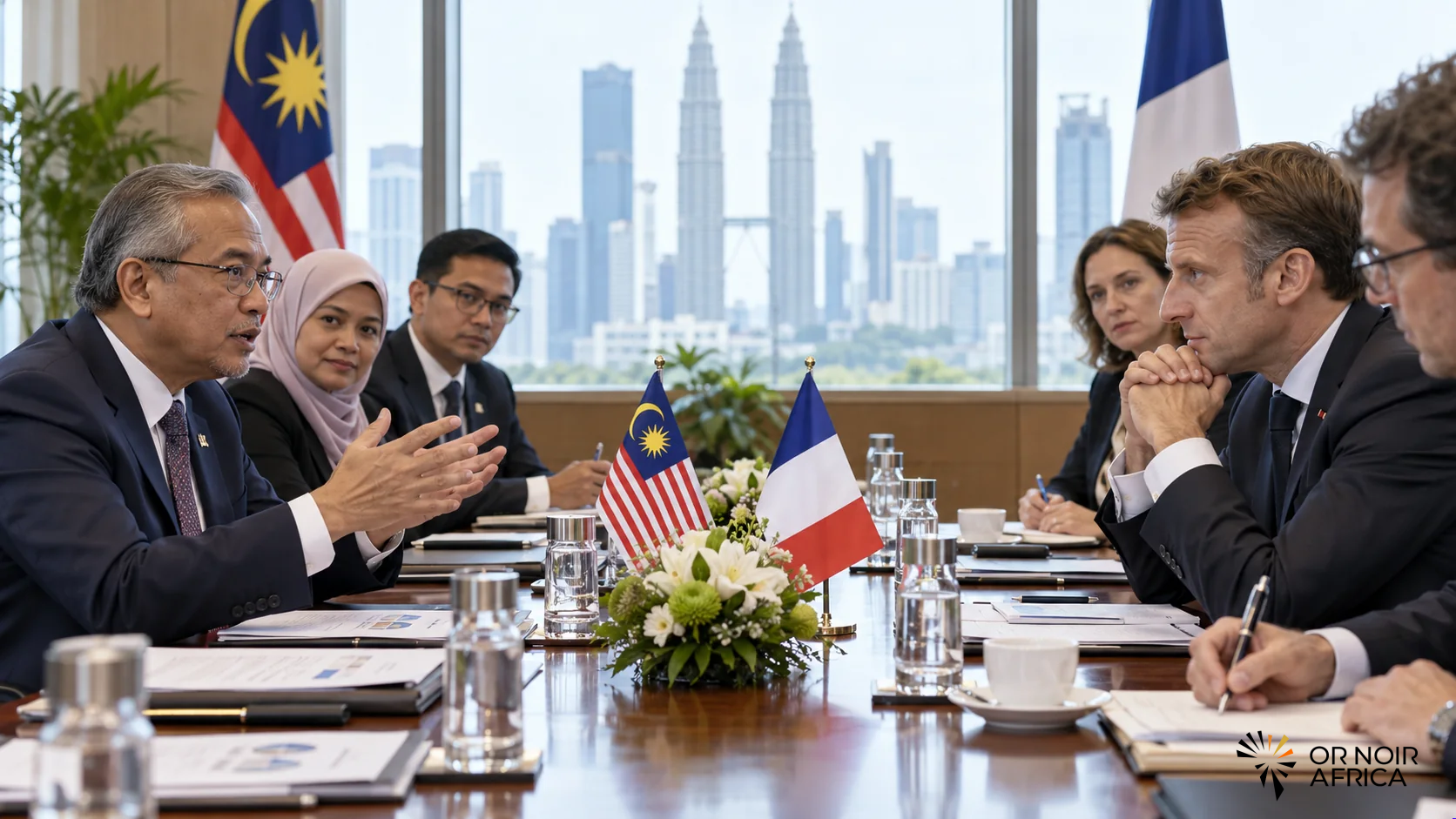
Malaysia and France expect to sign a memorandum of understanding on the energy transition soon. The subject was discussed in Kuala Lumpur on October 6 during a meeting between Malaysian Deputy Prime Minister Fadillah Yusof, also responsible for energy transition and water, and French Ambassador Marc Abensour.
The announced rapprochement concerns renewable energy, green technologies, sharing expertise and investment opportunities in particular. At this stage, it is a diplomatic intention: no detailed timetable, budget or joint project has yet been made public. The agreement's scope will therefore depend on its translation into work programs and measurable achievements.
Cooperation addressing complementary needs
France has companies and institutions active in several energy-transition fields, including renewable generation, networks, storage, energy efficiency and low-carbon industrial technologies. Malaysia must support changes in its electricity system while responding to sustained demand from industry and digital services. A partnership can connect these needs with technical skills and financing capabilities.
Bilateral cooperation can take various forms: engineer training, exchanges between regulators, technology demonstrators, connection studies, solar projects or support for local suppliers. Skills transfers are often less visible than investment announcements, but can deliver lasting benefits by strengthening the country's ability to design, operate and maintain infrastructure.
The challenge is also economic. Companies seek sufficiently competitive and reliable energy for their activities. For Malaysia, developing renewable capacity and modernizing the grid can support manufacturing and meet international investor expectations. For French companies, the market offers partnership prospects in a country with a substantial industrial base and a strategic position in Southeast Asia.
The memorandum must specify priorities
A memorandum of understanding does not by itself guarantee project implementation. To move from political cooperation to results, the two countries must identify priority sectors, responsible institutions and deadlines. They must also clarify whether projects will be commercial, public or structured with blended financing.
Project selection will be decisive. In solar, for example, generation capacity is not enough: grid access, intermittency management, storage and stable revenues determine viability. In energy efficiency, investment must be assessed against energy savings actually achieved. For network technologies, interoperability and cybersecurity must accompany modernization.
Finally, financing mechanisms must allocate risks clearly. Public guarantees, power purchase agreements, concessional financing and private capital can be combined, but each arrangement must preserve financial sustainability and transparency. Consultations with local companies and regional authorities would help develop projects better suited to needs on the ground.
Results to be measured beyond signatures
The energy transition has become a factor in competitiveness and economic security. Malaysia and France therefore have an interest in giving their cooperation substance that combines decarbonization, electricity availability and industrial benefits. The most useful projects will reduce costs and emissions while improving system reliability.
Several indicators could guide monitoring: renewable capacity commissioned, network losses reduced, skills developed, investment actually committed and local companies integrated into value chains. Periodic reporting would help distinguish announcements from projects under construction and operational results.
The expected agreement is an opening, rather than a final result. By setting clear priorities and favoring financeable projects, the two countries can give their partnership tangible substance. Success will be judged over time through technical cooperation, investment delivered and measurable improvements in access to cleaner, more reliable energy.
Have any thoughts?
Share your reaction or leave a quick response — we’d love to hear what you think!
-
 0
-
0
-
0
-
0
-
0
-
0





