

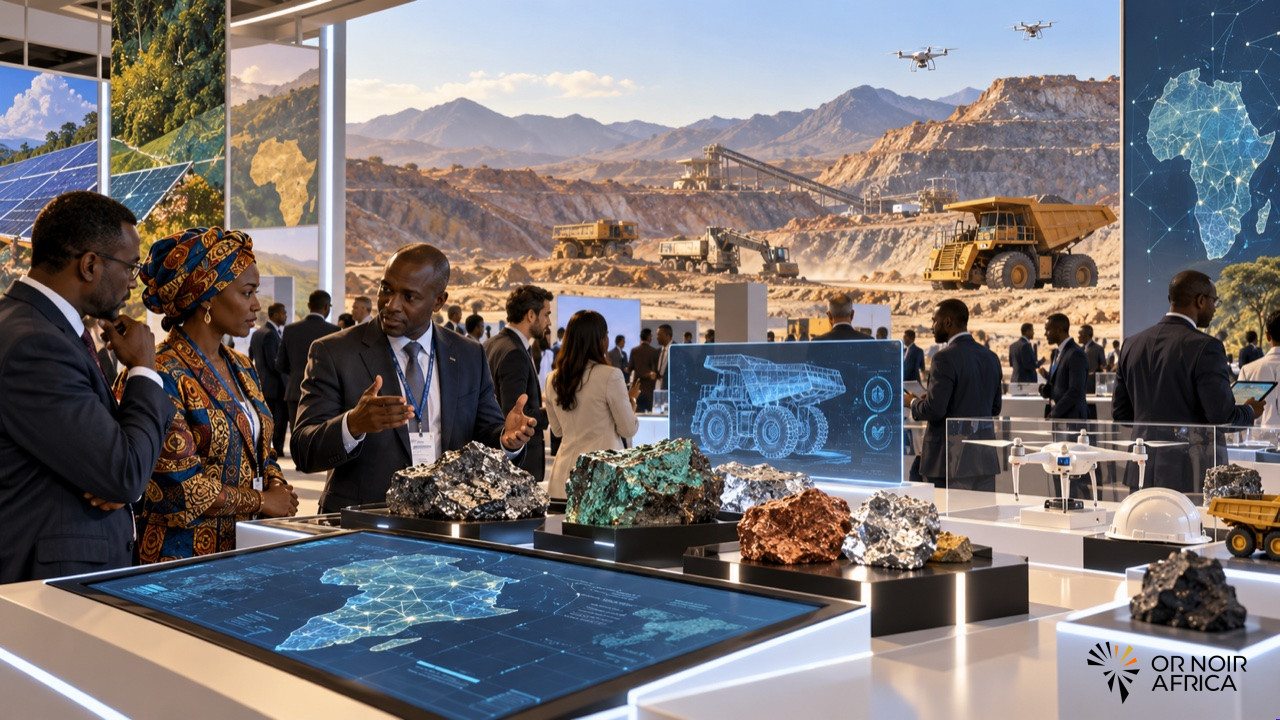
The third day of Investing in African Mining Indaba, held at the Cape Town International Convention Centre in South Africa, featured dynamic discussions and visionary presentations aimed at shaping Africa’s mining future.
The day began with an exclusive breakfast session on the Democratic Republic of Congo’s (DRC) mining prospects and crucial global supply chain role. Key contributions followed, including Tanzania’s Minister of Minerals exploring opportunities for regional mining cooperation.
A dialogue involving government leaders, development finance institutions, investors and industry bodies addressed the delicate balance between regional collaboration and resource nationalism, particularly in adding value to battery minerals. The World Gold Council examined Africa’s gold economy, incorporating cultural markets and financial frameworks across the gold value chain amid growing global demand.
The technology and innovation hub highlighted advances including autonomous platforms and artificial intelligence-powered targeting systems for low-impact drilling, alongside real-time geological data analysis for efficient, sustainable exploration. Influential mining chief executives shared strategies for volatile markets, stressing government-business partnerships for long-term value, the sustainability of a circular mining economy and changes in mining groups’ portfolios, asking whether companies are leaving Africa or simply adapting.
A session on unlocking capital for explorers and junior miners stressed bridging investment gaps, focusing on copper and cobalt partnerships for green technologies. Mali’s government presented plans to reposition mining as a national development engine, while Gauteng province was recognised as “Africa’s Mining Innovation Capital,” signalling a shift towards innovation and sustainability.
These exchanges highlight the challenges and opportunities in transforming Africa’s mining landscape through mineral wealth, innovation, regional collaboration and sustainable practices. The event promises perspectives that could reshape the sector for future generations while balancing economic, environmental and social considerations.
Have any thoughts?
Share your reaction or leave a quick response — we’d love to hear what you think!
-
 0
-
0
-
0
-
0
-
0
-
0