

The establishment of security arrangements around Lamu’s future oil complex marks another step in preparations for one of East Africa’s most ambitious industrial projects. As construction moves from announcement to implementation, Nairobi seeks to protect critical infrastructure and provide investors with a predictable environment. This effort accompanies a broader ambition: to make Kenya’s coast a hub for refining, logistics and regional trade.
Protecting the site as a condition for project delivery
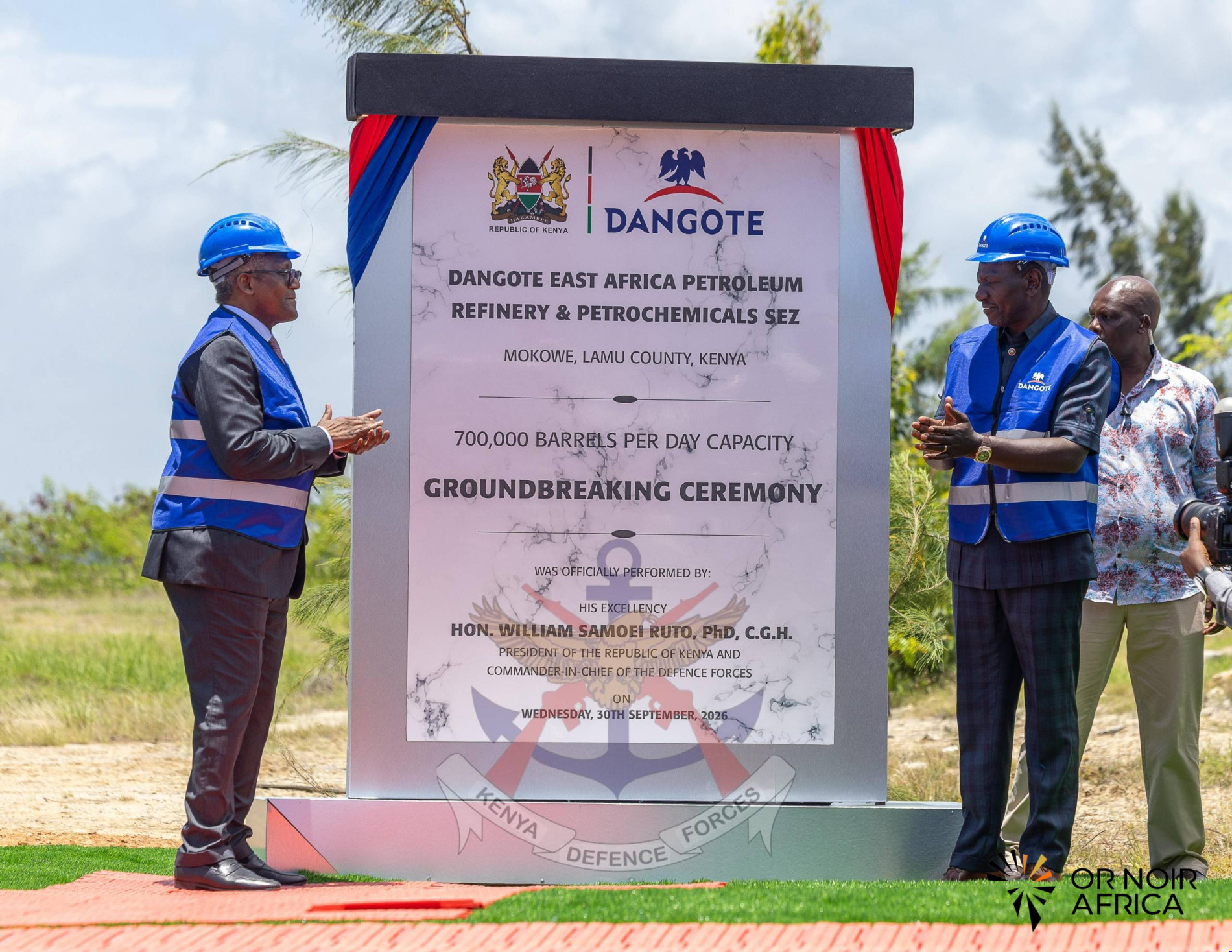
President William Ruto and the Dangote group launched work on the Dangote East Africa Petroleum Refinery at Mokowe in Lamu County on September 30, 2026. The project is estimated at approximately 2.2 trillion Kenyan shillings and targets processing capacity of up to 700,000 barrels per day. It is designed to supply Kenya and East African markets.
Against this backdrop, Kenyan authorities have formed a task force to coordinate project security. The arrangements provide for an increased defense force presence near strategic infrastructure. This decision addresses a practical challenge: ensuring continuity of construction and protection of personnel, equipment and logistics routes in a region exposed to security risks.
The issue is sensitive, but the institutional response also sends a signal to financial and industrial partners. Security is not peripheral to an investment of this size: it contributes to confidence, planning and companies’ ability to meet schedules. The announced coordination between defense forces and other authorities should therefore support an environment conducive to construction, without replacing requirements for transparency, local dialogue and compliance with rules.
An asset designed on an East African scale
The refinery forms part of a strategy to process resources locally and secure petroleum product supplies. If it reaches the announced capacity, it could reduce the region’s dependence on imported refined fuels and create new options for transport, industrial and distribution operators. However, the project still needs to be built: effects on prices, marketed volumes and imports will depend on its financing, technical delivery and integration with regional networks.
For Kenya, Lamu’s appeal extends beyond refining alone. The complex is intended to connect with the port and LAPSSET corridor, designed to link the country with South Sudan and Ethiopia. Such a connection can strengthen the Kenyan coast’s role in trade, attract storage and service activities, and create opportunities for local businesses. The site could therefore become an anchor for a broader industrial and logistics network.
This regional dimension is decisive. Infrastructure of this scale will only achieve economic balance if it serves a sufficiently large market and if port, road and energy connections keep pace with construction. Cooperation with neighboring countries, smooth cross-border trade and stable commercial rules will matter as much as the plant’s nominal capacity.
Turning investment into local benefits
The Kenyan government presents the project as a means of advancing industrialization and economic integration. The official launch, attended by Kenyan and African officials and the Dangote group’s chairman and chief executive, emphasized this continental ambition. William Ruto notably argued that Africa must process more resources locally and develop industrial capacity to support its prosperity. Aliko Dangote likewise emphasized the importance of infrastructure capable of meeting the continent’s energy and productive needs.
For this promise to translate into lasting progress, benefits must be measurable: jobs accessible to Kenyan workers, technical training, contracts awarded to local suppliers, development of maintenance and industrial safety skills, and the creation of related activities. Connecting the project to Lamu’s infrastructure can also support port services, transport and logistics, provided small and medium-sized businesses can access contracts generated by construction.
Project preparations must also integrate the needs of neighboring communities and the environmental requirements of a large oil facility. Consultation, water and waste management, industrial risk prevention and protection of local activities are components of the project’s credibility. They strengthen residents’ trust and contribute to operational continuity.
An encouraging step, with milestones still ahead
The launch of work and stronger security coordination give the Lamu project more substance. They reflect the authorities’ determination to advance infrastructure that could bring production, processing and distribution closer together within a single regional space. Announced capacity, the port location and links with the LAPSSET corridor are significant advantages for Kenya.
The next phase is execution: effective mobilization of financing, construction progress, grid and infrastructure connections, and the establishment of commercial partnerships. These stages will provide the basis for assessing ambitions for more accessible energy, jobs and value added. By securing the implementation framework while preparing conditions for local economic participation, Nairobi is laying foundations for a project that can strengthen Kenya’s role in East Africa’s energy industry.
Have any thoughts?
Share your reaction or leave a quick response — we’d love to hear what you think!
-
 0
-
0
-
0
-
0
-
0
-
0





