

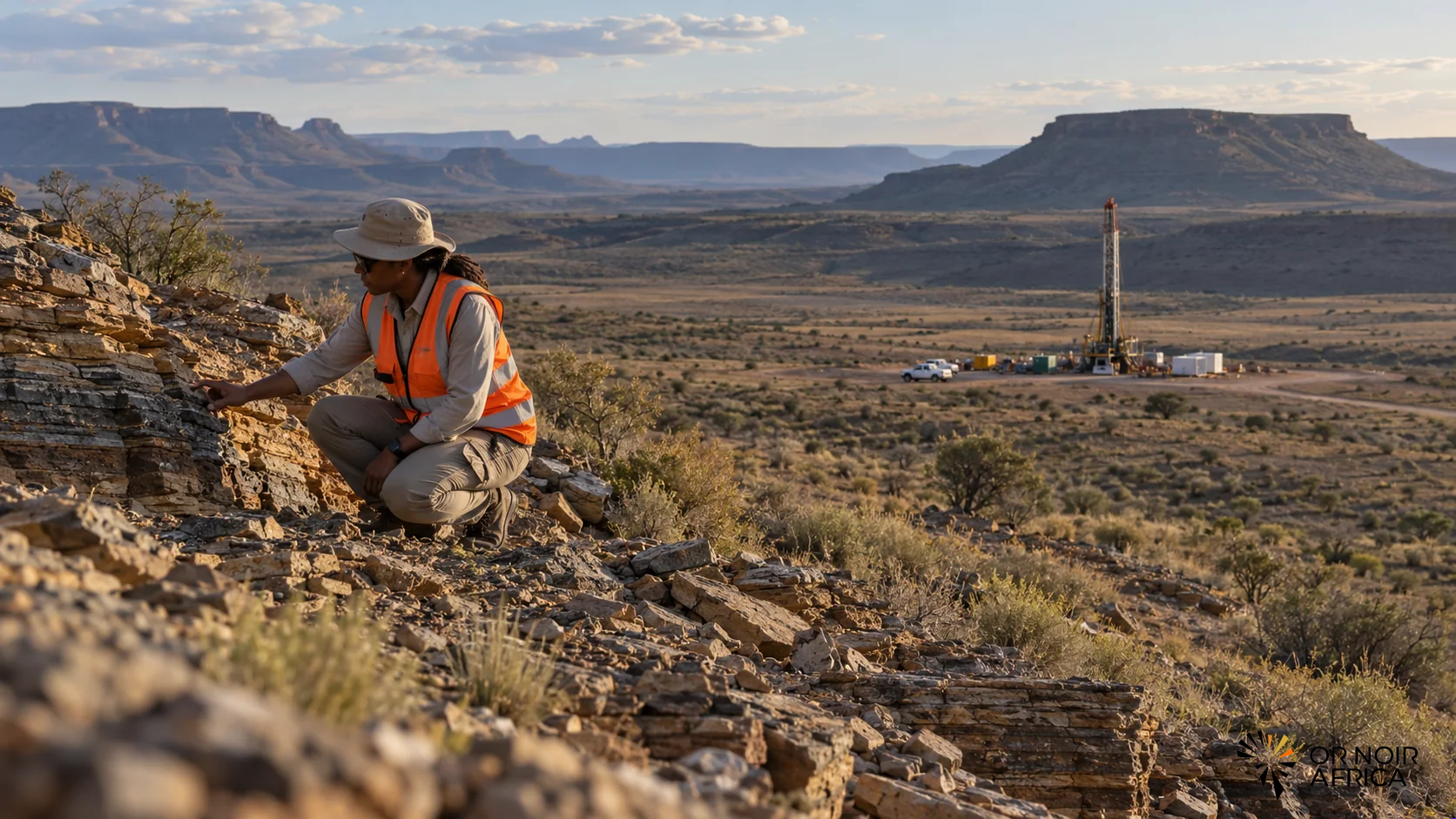
Shale gas is often presented as a vast energy resource capable of reshaping market balances or reducing import dependence. But estimated resources are not established production. Several stages separate a geological promise from industrial activity: gas presence in rock, technical extraction possibilities and project profitability.
What is shale gas?
Shale gas is natural gas, mainly methane, trapped in very low-permeability sedimentary rocks, generally shale or organic-rich clay formations. In a conventional deposit, gas migrates and accumulates in reservoir rock through which it can flow toward a well. In shale formations, it remains dispersed within rock that does not readily transmit fluids.
This difference explains why conventional vertical drilling is generally insufficient. Commercial production usually combines horizontal drilling, which follows the geological layer over a distance, and hydraulic fracturing, which creates cracks allowing gas to reach the well.
How is it extracted?
Following geological and environmental studies, a pad is prepared and a well initially drilled vertically. Drilling is then deviated to advance horizontally through the target layer. Steel casing and cement isolate the well from traversed formations. Their design, installation and inspection are essential to groundwater protection.
Fracturing injects pressurized fluid, primarily water and sand with a smaller proportion of chemical additives. Pressure opens small cracks in the rock; sand, called proppant, helps keep them open. Gas then flows toward the well and rises to the surface. Some injected fluid returns as flowback water, subsequently supplemented by water produced from the deposit. These effluents must be collected, characterized, treated or disposed of in suitable facilities.
A site can accommodate several horizontal wells from a common pad. This reduces the land footprint compared with multiple isolated sites without eliminating road, water or equipment requirements or operational and transport impacts.
A resource is not yet an economically recoverable reserve
Shale gas assessments rely on geological data and models. They distinguish volumes present, technically recoverable resources and reserves considered economically justified under specific conditions. These concepts are not interchangeable. A large estimate can change as knowledge improves; it proves neither well productivity nor industrial development profitability.
Costs depend on formation depth and continuity, well numbers, flow rates over time, gas prices, access to equipment and specialist services, and availability of transport and processing infrastructure. Initial wells can provide decisive information, but projects often require phased development and sustained investment.
What are the main environmental issues?
Water is central. Fracturing requires substantial volumes varying with geology, well design and selected practices. Where water resources are limited, competition with population supplies, agriculture and ecosystems must be assessed. Flowback treatment and reuse can reduce some withdrawals provided infrastructure and monitoring are reliable.
Groundwater risks depend notably on well integrity, management of products used and effluent storage. Surface leaks or casing failures can create migration pathways. This justifies strict construction rules, independent inspections, disclosure of products used and groundwater monitoring before, during and after operations.
Methane, natural gas’s main component, is a powerful greenhouse gas when released without combustion. Emissions can occur during drilling, flowback, processing or transport. Regular leak detection, gas recovery and limited flaring are therefore decisive for climate impact. Fracturing operations can also be associated with induced seismicity; larger tremors are often linked to wastewater injection into deep formations, although risks vary with geological context and practices.
The Karoo basin case
South Africa is the African case most often cited in shale gas debates, notably because of estimated Karoo basin resources. Published figures have varied between studies and selected boundaries. They must be interpreted as geological estimates rather than proven or commercially recoverable volumes.
The question remains understanding the subsurface and conditions for possible exploration. South African authorities have continued regulatory and scientific work on geology, groundwater and potential impacts. In March 2026, the South African energy minister still indicated that the shale gas activities moratorium remained in force pending regulatory progress. This illustrates how project schedules depend as much on public decisions and social acceptance as on estimated resources.
For African countries, the challenge is therefore not automatically replicating American experience. It is assessing data quality, water needs, oversight capabilities, infrastructure and the value gas could bring to local energy systems basin by basin. Domestic supply can support electricity or industry but does not alone guarantee low prices, lasting revenues or wider energy access.
Balancing potential with development conditions
Shale gas can broaden supply options when a deposit is demonstrated, costs are competitive and impacts can be controlled. It nevertheless requires strong regulation, transparent data, credible monitoring and early consultation with affected communities. Without these conditions, the gap between announced volumes and expected benefits risks fueling controversy rather than strengthening energy security.
The decisive question is therefore not simply how much gas might lie beneath a region. It is at what cost, with which water resources, under what oversight, for which uses and whose benefit. These criteria determine shale gas project viability.
Have any thoughts?
Share your reaction or leave a quick response — we’d love to hear what you think!
-
 0
-
0
-
0
-
0
-
0
-
0





