

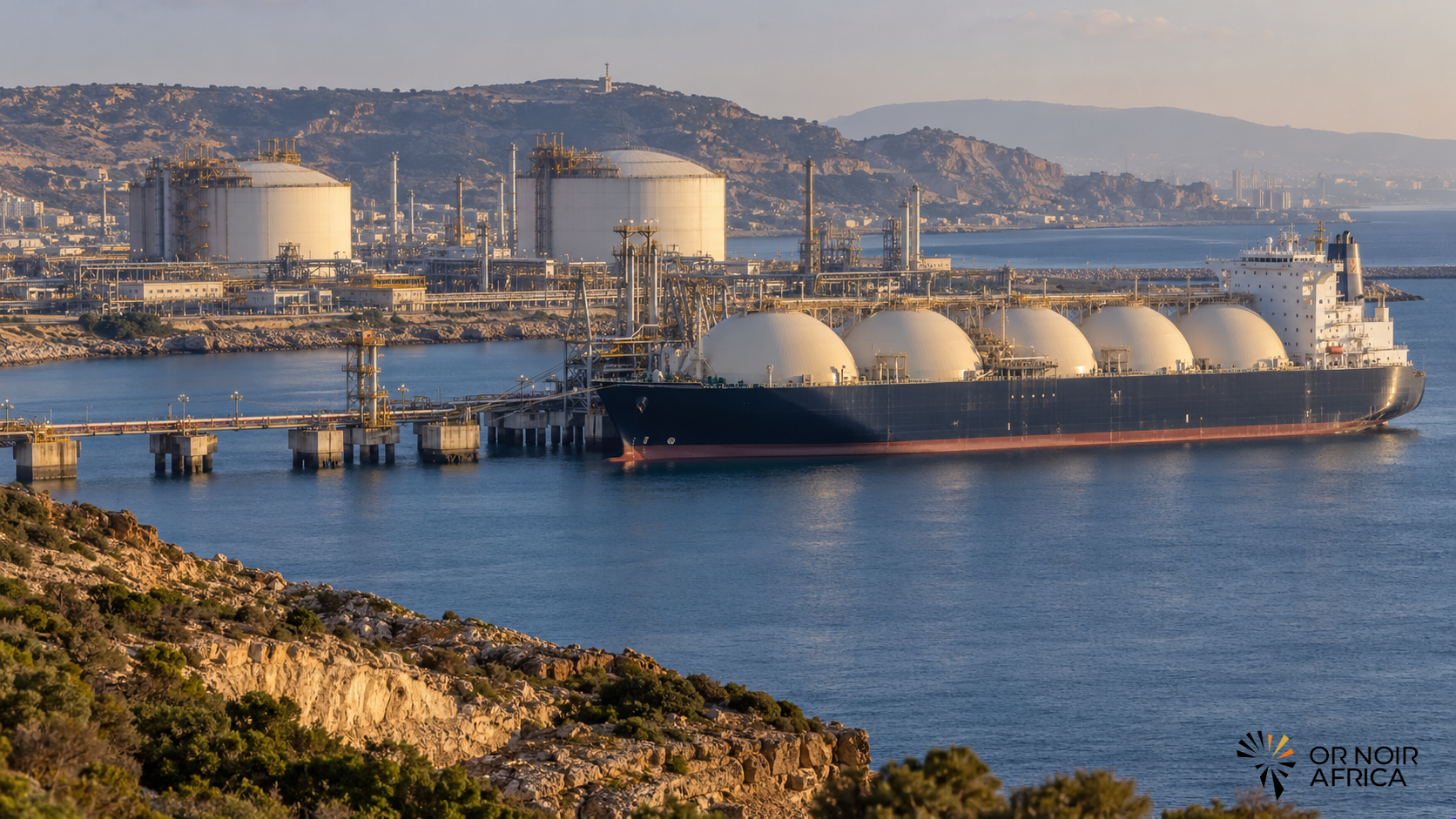
France has reportedly approached Algeria for additional oil and liquefied natural gas (LNG) as energy markets face severe pressure. The information, published on October 19 by a specialist platform and attributed to anonymous sources, was not accompanied by an official announcement specifying requested volumes, timing or commercial terms. It nevertheless highlights the difference between Algeria’s ability to increase some crude shipments and its reportedly more limited short-term LNG flexibility.
A reported request must therefore be distinguished from a supply agreement. No new contract or additional volume had been publicly confirmed as of October 20. For Paris, the issue is securing cargoes in an unstable market; for Sonatrach, it is balancing existing commitments, domestic demand and export possibilities.
Algerian oil shipments to France have already increased
Shipping data cited in available reporting show a sharp increase in oil deliveries to France in April 2026. They reportedly reached around 138,000 barrels per day, against 43,000 in March and 121,000 in April 2025. Year-on-year growth was reportedly around 14%, with France taking nearly 15% of Algeria’s seaborne oil exports that month.
These figures underline the commercial relationship’s importance, but do not demonstrate Algeria can sustain higher deliveries without trade-offs. One month of strong flows does not itself constitute new production capacity. Available cargoes depend on output, domestic consumption, maintenance and commitments to other customers.
Crude oil and refined products can also meet different needs. A French request for additional cargoes does not, by itself, specify whether the desired volumes are crude, diesel or other products. This detail is decisive in assessing shipping capability and implications for Algerian refineries and exports.
LNG is constrained by contracts and domestic demand
The situation is more complex for liquefied natural gas. Sources cited in the initial report believe Sonatrach would find it harder to supply additional LNG quickly, particularly because of contractual commitments to other buyers. Long-term contracts specify quantities and delivery schedules; redirecting or increasing cargoes therefore involves commercial and logistical discussions.
Domestic demand is another factor. Algeria uses gas to generate most of its electricity and supply households and industry. A growing share of output consumed locally mechanically reduces exportable volumes unless new fields or investment offset rising needs. Increased shipments to one customer therefore cannot be inferred simply from theoretical reserve availability.
LNG exports also depend on liquefaction capacity, maintenance schedules, vessel availability and delivery windows at buyers’ terminals. Even when an additional volume is found, it must be processed, loaded and transported within requested deadlines. Oil and LNG chains thus face different constraints.
An energy relationship requiring negotiation
For France, approaching Algeria can diversify supplies through a geographically close supplier. Proximity reduces some transport constraints compared with cargoes from more distant markets, but guarantees neither immediate availability nor a lower price. Terms will depend on international prices, product type, agreement length and competition among buyers.
For Algeria, a possible export increase would bring foreign-currency revenue, but must be weighed against domestic energy security and production objectives. Authorities’ announced investment program through 2030 notably aims to support hydrocarbon exploration, production and processing. New capacity takes time: investment announcements do not immediately become available cargoes.
Both countries have an established history of gas and oil cooperation, but occasional requests must be distinguished from multiyear agreements. Additional supply could take the form of spot cargoes, adjusted contracted volumes or a new commercial framework. Each option requires trade-offs on timing, prices and Sonatrach’s other customers.
The signal will be in volumes actually delivered
The next developments to watch are official confirmation of exchanges between Paris and Algiers, the products concerned and any announcement of volumes or contracts. Monthly export statistics will then show whether flows increase beyond previously observed fluctuations. Pending these indications, the information should be understood as a reported procurement approach, rather than a concluded agreement.
The sequence primarily illustrates the strategic value of suppliers able to deliver crude or LNG to Europe when markets tighten. It also recalls that resource access is governed by contracts, infrastructure and domestic needs. Sonatrach’s ability to respond to Paris will depend on more than political will: it must free volumes without undermining existing commitments.
If the French request materializes, the future supply terms will say more than declarations of intent. A transparent agreement on volumes, timing and duration would allow the energy relationship’s actual capacity to adapt to market tensions to be measured while preserving both countries’ supply balance.
Have any thoughts?
Share your reaction or leave a quick response — we’d love to hear what you think!
-
 0
-
0
-
0
-
0
-
0
-
0





