

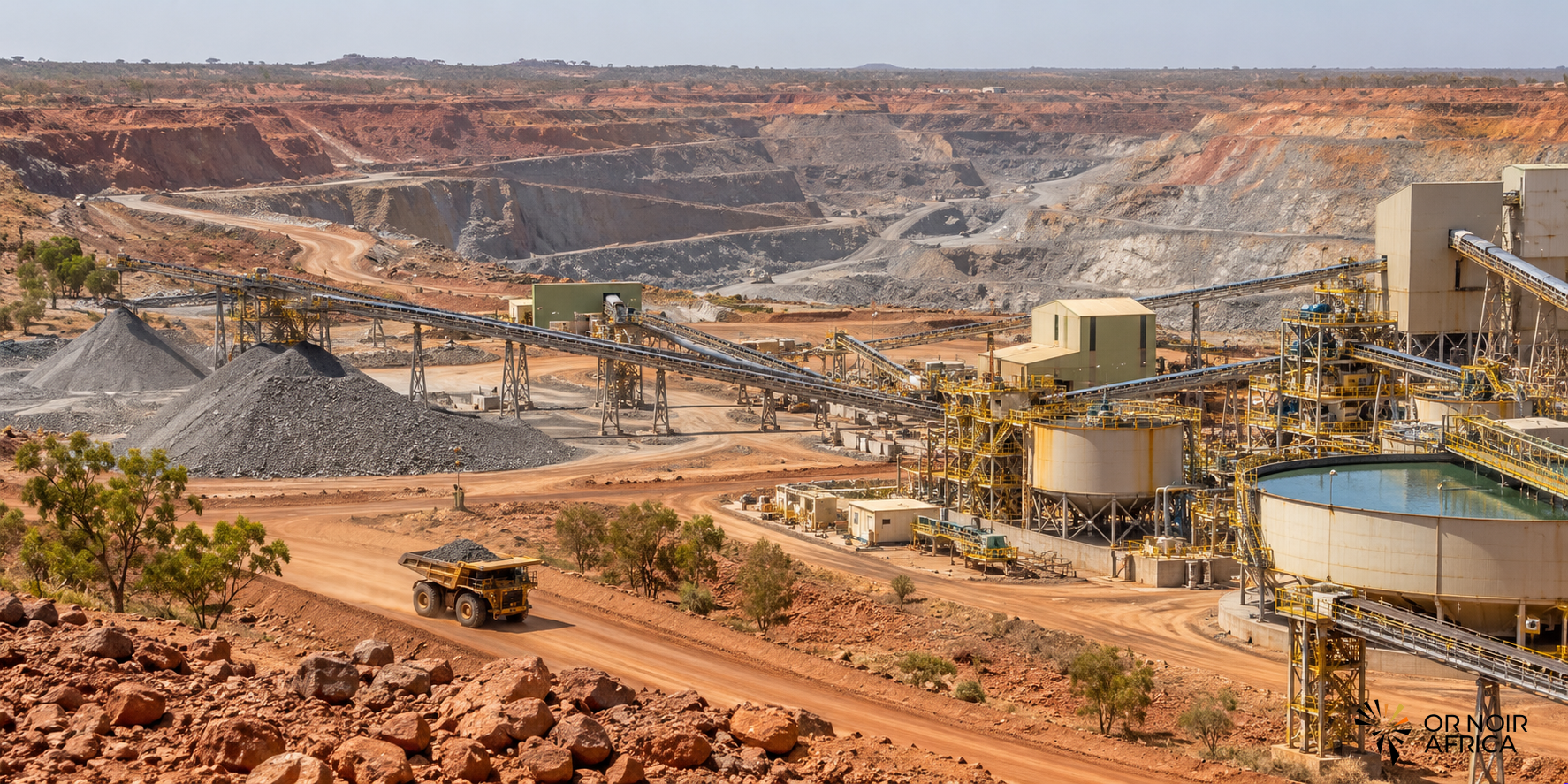
The Bomboré gold mine produced 116,188 ounces in the first nine months of 2026, already exceeding its full-year 2025 total of 110,014 ounces. This growth puts Orezone Gold’s Burkina Faso operation on track to target 160,000 to 180,000 ounces this year. Rising volumes increase the importance of public benefits, but production does not translate directly into budget revenue without accounting for costs, prices and fiscal mechanisms.
Processing capacity supports growth
Orezone attributed the volume improvement to expanded facilities at Bomboré. A hard-rock processing plant with capacity of 2.5 million tonnes a year entered service in late 2025. The equipment is intended to process new ore types and increase total site throughput. The 2026 annual target nevertheless remains the operator’s forecast; final results will depend on equipment availability, ore quality and operating conditions.
The group has also discussed potentially increasing Bomboré’s production further over the longer term, to 250,000 ounces a year, by examining expansion options. This ambition is separate from volumes already produced and the current target. It will require studies, additional investment and a formal decision before it can be considered an approved program.
Exceeding the 2025 total before the end of 2026 is an important milestone for the mine, but is insufficient to assess economic performance. Costs per ounce, ore volumes processed, recovery rates and cash generation must also be monitored. Higher production can coincide with lower margins if costs rise or operations consume more capital.
A 15% public interest
The Burkina Faso state has held 15% of Bomboré since August 2025, while Orezone Gold retains 85%. The public interest was increased under the new Mining Code adopted in 2024. It entitles the government to a share of dividends if the company decides to distribute them, but does not guarantee annual payments: profits, investment requirements and board decisions determine distributable amounts.
Royalties are another revenue channel. Burkina Faso changed its schedule in April 2025 to link rates more closely to gold prices. Previously capped at 7%, the rate is 8% when prices are between $3,000 and $3,500 an ounce, then increases by one percentage point for each additional $500 band. This framework increases the share captured as prices rise, but its application depends on the reference price and production marketed.
Orezone reported $35.7 million in royalties in 2025, up 57% year on year. The company links the increase to higher average selling prices and new rates. This illustrates the combined effects of markets and taxation, but is not an estimate of Bomboré revenue expected in 2026. Company accounts combine several periods and indicators; a historical figure must therefore not be turned into a forecast of budget revenue.
Production, profits and revenue do not grow at the same pace
The state’s 15% interest and royalties are separate mechanisms. The former provides access to possible dividends after expenses and investment. Royalties apply to production under a price-linked schedule, independently of profit distribution. Corporate income taxes and other levies can then supplement public revenue.
This structure can increase benefits when production and prices are favorable. It also exposes public income to market fluctuations and operating results. Mining revenue must be monitored alongside state expenditure, operator investment and other project commitments. Assessment cannot be limited to ounces produced.
Data transparency is crucial to measuring the site’s actual contribution. Regular information on volumes sold, royalties, dividends, jobs and local procurement would allow assessment of Bomboré’s economic and social benefits. The state can then compare its value-capture objectives with results on the ground.
Indicators to monitor in 2026
Orezone’s upcoming results will show whether Bomboré meets its annual production target and how costs evolve. For public finances, decisive factors will be royalties actually paid, any dividends and associated tax contributions. Expansion projects targeting 250,000 ounces must themselves pass through studies and financing.
Bomboré illustrates how an expanding mine can increase both production and the state’s exposure to gold revenue. Public gains will nevertheless depend on profitability, enforcement of fiscal rules and the ability to turn revenue into lasting services and investment. Growth in 2026 is a favorable signal; its benefits will need verification in accounts and operating data.
Have any thoughts?
Share your reaction or leave a quick response — we’d love to hear what you think!
-
 0
-
0
-
0
-
0
-
0
-
0





