

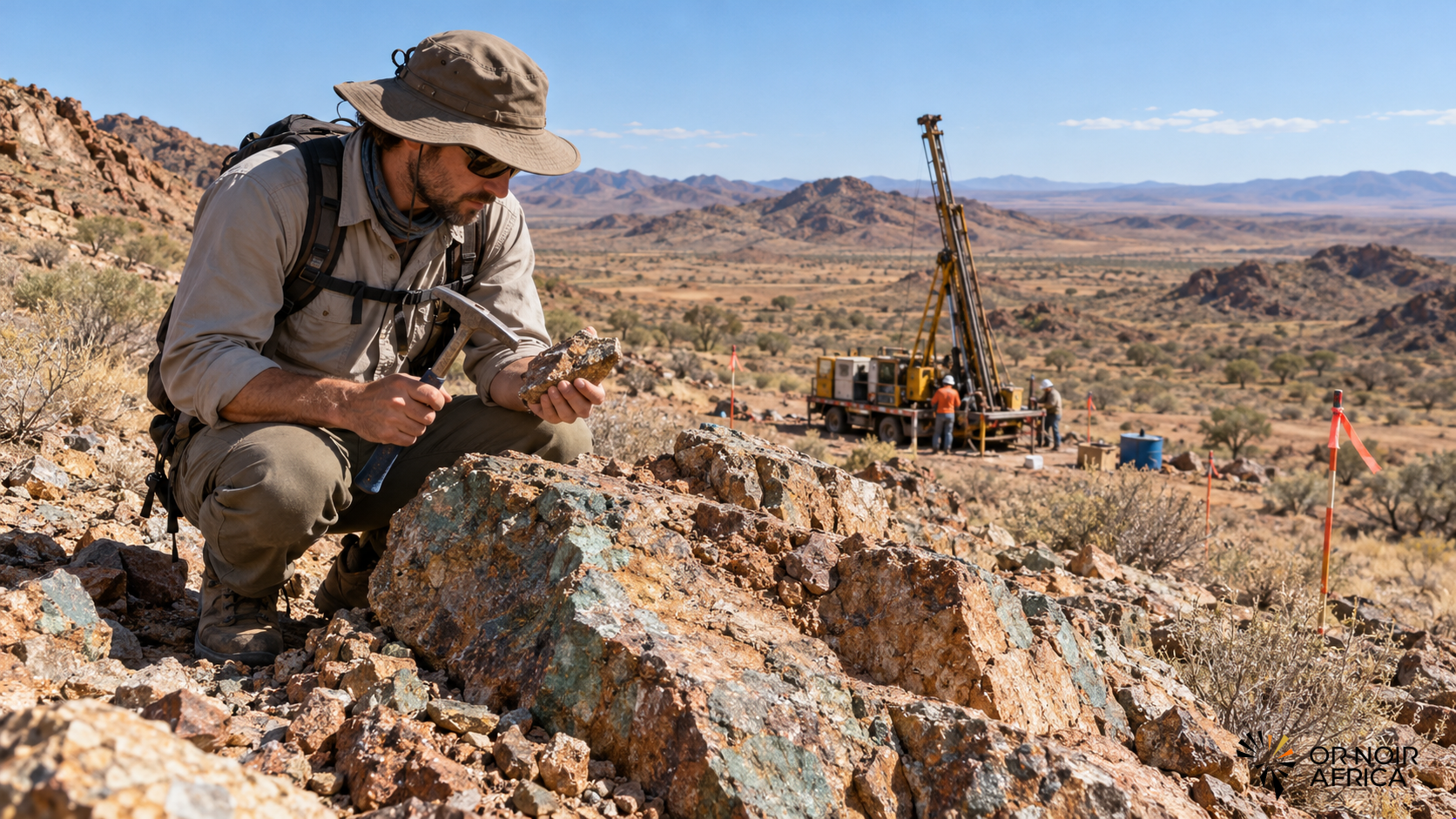
British junior Serval Resources is seeking to raise £6.5 million, or around $8.6 million, to finance copper exploration in Namibia, Botswana and Côte d’Ivoire. The plan combines a firm placing, an additional tranche and a subscription. Part of the funding remains subject to required approvals; announcing the amount therefore does not mean it is all already available.
Three markets, three exploration stages
In Namibia, the company plans a 20,000-meter drilling program at its Kaoko Basin project. It is targeting identification of a first deposit in 2027. At this stage, this is an exploration objective: neither an economically recoverable deposit nor the timetable for a possible mine has been established.
In Botswana, Serval intends to refine targets on its permits before launching an initial drilling program of around 3,000 meters. In Côte d’Ivoire, it plans to continue preliminary work at the Duékoué project. These activities may identify areas for deeper investigation, but their outcome will depend on geological data and successive campaigns.
The geographic allocation of funds gives Serval several exploration options and avoids concentrating all its risk in a single permit. It also complicates execution: authorizations, logistics, field costs and technical priorities vary by country. The company will need to show that capital raised can support all three programs without diluting work on the most promising prospects.
Financing still subject to conditions
The transaction includes a firm placing of around £2.5 million, an additional £3.5 million tranche and a £0.5 million subscription. The second tranche still requires shareholder approval, among other conditions. Serval said the order book had been built, a step that gathers demand and establishes issuance terms; it does not replace legal and financial completion of the transaction.
Investors in an exploration company finance work that may yield no commercial discovery. The share’s value then depends on program execution, geological results and the ability to raise further capital. The announced financing should allow Serval to continue operating, but does not guarantee that its projects will reach development.
The timetable provides for issuance of first-tranche shares around October 16. Upcoming financial results will need to confirm amounts actually received, final placing terms and expenditure schedules. The distinction between targeted funds, subscriptions and cash received matters when assessing the available funding runway.
Copper attracts exploration companies
Serval’s fundraising comes as mining companies anticipate increased copper demand. The metal is used in power grids, industrial equipment, vehicles and renewable energy installations. Growth in these uses is fueling concerns about long-term supply pressure, since discovering and bringing new deposits into production requires substantial investment and several years of work.
This outlook does not eliminate market risk. Prices can fluctuate, drilling costs rise and exploration results disappoint. Projects in less-developed basins also face infrastructure access, transport capacity, contractor availability and permitting challenges. For a junior, the quality of initial results often matters more than broad projections of global demand.
Namibia is one of Serval’s priority markets, where it is seeking an initial discovery at Kaoko. Botswana and Côte d’Ivoire complement this strategy with permits still at the targeting stage. Programs will be assessed against drilling actually completed, budget adherence and publication of verifiable results.
Serval links this strategy to the prospect of rising copper demand and potentially insufficient supply if investment remains limited. The company relies on a long-term deficit scenario; this is a market projection, rather than a certainty or a guarantee of profitability for its exploration permits.
Turning objectives into geological data
The next steps are completing the fundraising, issuing shares and deploying teams and drilling rigs. The 20,000-meter program in Namibia is the largest part of the announced plan. The 3,000 meters envisaged in Botswana and work at Duékoué complement the portfolio, but their timing and results will depend on field conditions and permits.
For host countries, immediate benefits may include temporary jobs, local contracts and better subsurface knowledge. A discovery does not guarantee a mine: further studies must demonstrate mineralization continuity, grade, processing conditions and economic viability. Serval’s projects therefore remain exploration assets, rather than already secured future production capacity.
The proposed fundraising gives the company resources to test several copper targets on the continent. Success will be measured by actual receipt of funds and the quality of results. Until then, the announced amount should be read as conditional funding being sought, and discovery deadlines as company objectives.
Have any thoughts?
Share your reaction or leave a quick response — we’d love to hear what you think!
-
 0
-
0
-
0
-
0
-
0
-
0





