

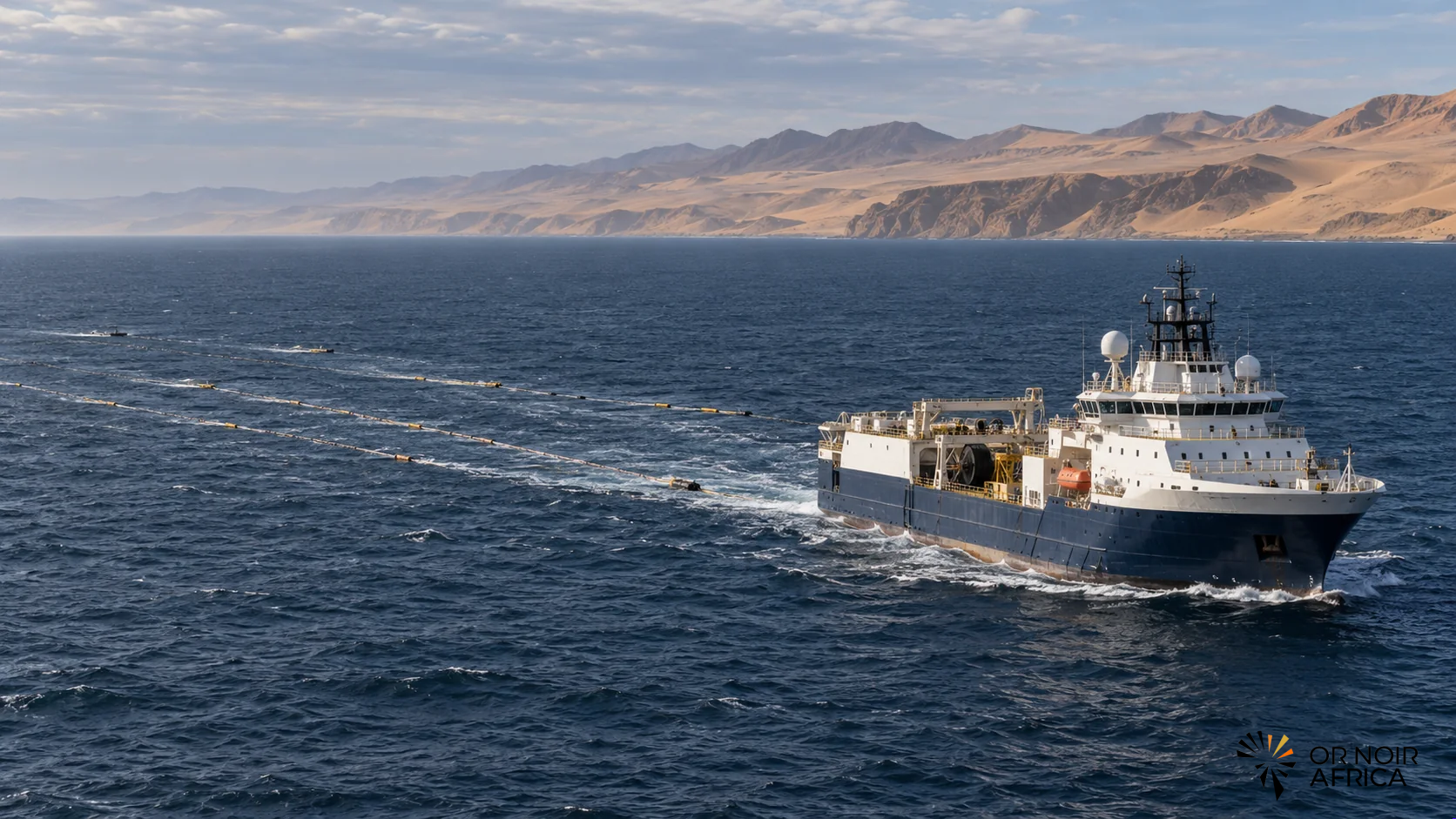
BP is preparing to take over three offshore exploration licenses in Namibia’s Walvis Basin. On October 1, 2026, Eco Atlantic Oil & Gas obtained the ministerial approval required to transfer 60% of its interests and operatorship of PEL 97, PEL 99 and PEL 100. The transaction brings a major company into a new exploration area, but the immediate program involves seismic data interpretation and acquisition, with no drilling announced at this stage.
The licenses cover the Cooper, Guy and Tamar blocks. Eco Atlantic will retain a 25% interest, while Namibian and local partners’ interests remain defined in the corresponding agreements. BP will assume operatorship and exploration-phase costs under agreed terms. The British company can thus reassess an offshore portfolio as several operators intensify activities in Namibia’s basins.
A transaction entering its final phase
The farm-out agreement was concluded in April 2026. Approval by Namibia’s Ministry of Industries, Mines and Energy meets the regulatory requirement governing interest transfers and operatorship changes. Once remaining formalities are completed, BP can lead work on the three licenses.
The transaction provides approximately $2.7 million in cash consideration to Eco Atlantic at closing and BP’s assumption of exploration expenditure. During future renewals, an additional option could allow BP to acquire another 10% if partners decide to enter a new license period in 2028 and commit to drilling a well. This mechanism therefore depends on decisions and conditions not yet secured.
Approval opens the way for more extensive geological and geophysical activity. Available information mentions seismic data reprocessing and possible new 3D surveys. This work seeks to refine understanding of subsurface structures and rank areas for examination. It is a preliminary stage before any drilling decision, which will depend on results, regulatory schedules and budgets.
Walvis: a basin still to be proven
International attention on Namibia has increased sharply following hydrocarbon discoveries in the Orange Basin in the country’s south. These successes revived interest in Atlantic margins but do not prove the same structures or volumes occur in Walvis. Each basin has its own geological history and must be assessed with specific data.
BP’s arrival brings technical capabilities and deepwater exploration experience to these licenses. It can also accelerate accumulated data analysis and improve decisions about where drilling would best test a robust geological hypothesis. This does not mean a discovery is expected in the short term: transferring licenses alone confirms no commercial resource.
For Eco Atlantic, the transaction reduces the capital it must devote to exploration while retaining block interests. For Namibia, it brings an international operator into a research phase that can provide investment, data and better offshore knowledge. Benefits will nevertheless depend on actual activity and compliance with local content and environmental protection rules.
Before wells come data and investment choices
Seismic reprocessing can reveal features earlier tools did not clearly identify. New 3D acquisition then maps subsurface structures more precisely in priority areas. These methods reduce some uncertainty but do not replace drilling, the only operation that directly verifies reservoir presence and quality.
A deepwater well entails major expenditure and technical risk. Before committing, partners must compare estimated potential, drilling and development costs, available infrastructure and national commercial conditions. In a largely unproven basin, work sequencing is decisive: investing first in better subsurface knowledge can avoid prematurely drilling a poorly understood target.
Decisions in 2028 will be a potential turning point. If BP and partners renew licenses and commit to drilling, exploration will advance decisively. Until then, attention will focus on completing the transfer, the scale of seismic work, allocation of partner responsibilities and investment signals in the three blocks.
A strategic entry, not yet a discovery
BP’s operatorship strengthens Namibia’s exploration portfolio and confirms its offshore basins’ appeal. For Eco Atlantic, it provides a partner capable of funding and conducting an expensive work phase. For authorities, it can accelerate evaluation of poorly documented licenses.
The transaction’s significance must nevertheless be assessed precisely: regulatory approval is not a scheduled well, a discovery or a commercially viable reserve. The next concrete result will first be a better geological picture of the basin. Those data will inform partners’ decisions about whether Walvis merits an exploration well and whether the region can join the oil areas already transforming Namibia’s energy landscape.
Have any thoughts?
Share your reaction or leave a quick response — we’d love to hear what you think!
-
 0
-
0
-
0
-
0
-
0
-
0





