

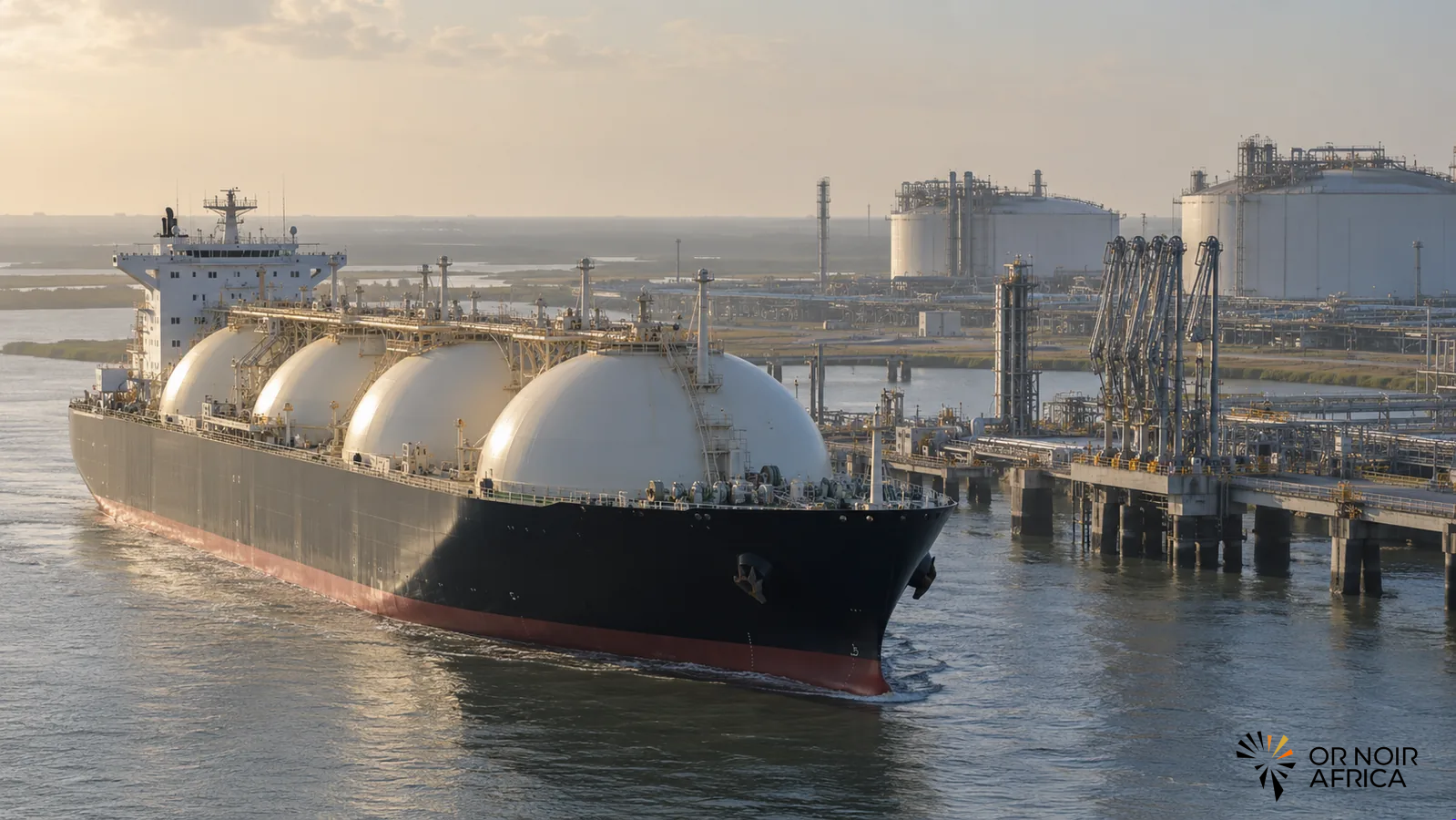
A new long-term agreement brings together two major US liquefied gas companies. Venture Global and ConocoPhillips have signed a twenty-year LNG sale and purchase agreement. Under the announced terms, ConocoPhillips is to purchase one million tonnes per year starting in 2030. The volume remains modest compared with US exports, but the contract’s duration gives it strategic significance: it places part of future production within a supply portfolio planned over several decades.
The agreement comes as the United States strengthens its position among the world’s leading suppliers of liquefied natural gas. For Venture Global, which is developing several facilities along the US Gulf Coast, the signing brings a major buyer and additional visibility on future sales. For ConocoPhillips, it expands its ability to market LNG across different markets and complements its gas exploration, production and trading activities.
The contract does not mean that cargoes will be available immediately. Deliveries are not due to begin until 2030, linking them to the development of liquefaction capacity, export infrastructure and operating schedules. Until then, Venture Global’s supply will need to be supported by projects that are operational or under construction, as well as the availability of feed gas and maritime shipping capacity.
A contract securing part of future supply
Long-term sales contracts play a central role in LNG financing. Liquefaction facilities require substantial investment and lengthy construction periods. Lenders and shareholders therefore seek assurance that some of the output will find buyers over a period long enough to support repayment of the infrastructure. A buyer such as ConocoPhillips can contribute to this visibility, particularly when a project still has construction or ramp-up milestones to meet.
The announced volume of one million tonnes per year allows ConocoPhillips to add an identified source of supply without concentrating all its purchases with a single supplier. The group can then integrate these cargoes into its global portfolio, depending on demand and regional price differences. This commercial flexibility is valuable in a market where shipping costs, vessel availability and seasonal needs can change the most economically attractive destination.
For Venture Global, the signing strengthens the commercial credibility of its expansion. New agreements can reassure investors about demand, but they do not eliminate execution risks. The developer must meet its project schedules and budgets, obtain the necessary permits and ensure the performance of its liquefaction units. Offtake contracts reduce some commercial risk, but construction, financing and operational uncertainties remain the responsibility of the companies involved.
The value of a twenty-year commitment depends on its terms
The announced duration does not reveal the full economic equation. Pricing arrangements, flexibility clauses, the delivery point and the allocation of logistical responsibilities determine the agreement’s actual value for each party. An indexed contract, for example, does not expose the buyer and seller in the same way as a fixed price or a formula combining several market benchmarks.
The agreement is presented as a long-term sale, but the publicly available information does not detail all these parameters. It should therefore not be taken as a guarantee of volumes delivered at a stable price over twenty years. US LNG is often marketed through contractual structures that give buyers destination options while charging for liquefaction and feed gas according to defined formulas. The details of each contract can nevertheless vary.
The 2030 start date also signals a bet on sustained growth in global demand. Several Asian economies use LNG to balance electricity generation, replace certain more polluting fuels or respond to fluctuations in consumption. At the same time, new export projects and the expansion of renewable energy could change expected requirements. The longer the time horizon, the more the buyer must weigh supply security against the risk of committing to a different future market.
US expansion faces global competition
The United States benefits from abundant gas production, expanding export infrastructure and considerable flexibility in redirecting cargoes. This position attracts buyers seeking to diversify their suppliers. Contracts signed today help shape the next wave of capacity, but they form part of a competitive environment in which Qatar, Australia, Canada and other producers are also defending their market shares.
For ConocoPhillips, which already has production and marketing operations, the contract’s appeal lies in adding further volumes to its global portfolio. The company will be able to match cargoes with its customers and markets, but will need to manage exposure to prices, vessel availability and logistical disruptions. For Venture Global, success will depend on its ability to turn commercial commitments into actual deliveries on the announced schedule.
The signing is therefore a useful milestone for both groups, without being proof on its own that new capacity is immediately available. The indicator to watch will be progress on the projects that are to provide the promised volumes, followed by adherence to the planned start in 2030. In a sector where contract announcements often precede major construction decisions, the agreement’s strategic value will be measured through its implementation.
Have any thoughts?
Share your reaction or leave a quick response — we’d love to hear what you think!
-
 0
-
0
-
0
-
0
-
0
-
0