

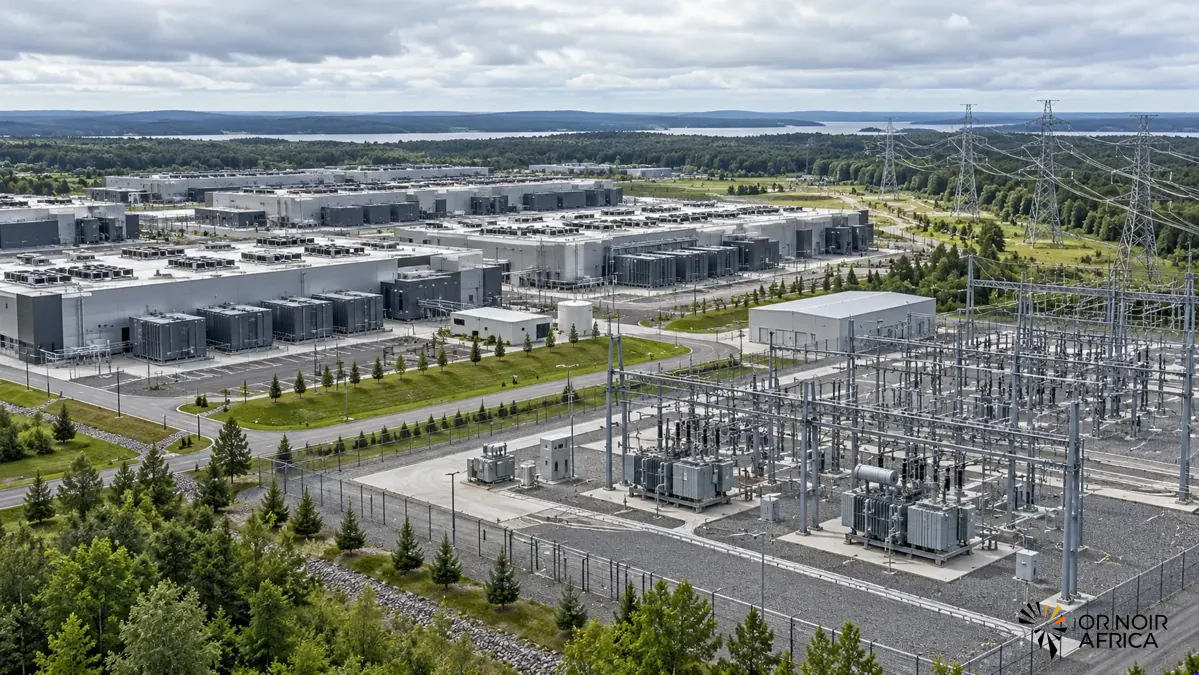
**Categories:** International, Energy **Tags:** Tunisia, Algeria, Sonelgaz, STEG, power plant **Excerpt:** Tunis and Algiers have agreed to launch technical studies for a 1,400 MW combined-cycle power plant in Tunisia. The project could strengthen electricity supply, but its cost, gas supply and implementation terms still need to be defined. **Slug:** tunisie-algerie-etudes-centrale-electrique-1400-mw **Image alt:** A combined-cycle power plant and electricity transmission network in North Africa.
Tunisia and Algeria are advancing plans for a 1,400-megawatt power plant on Tunisian territory. The two countries have decided to begin technical studies between the Tunisian Electricity and Gas Company (STEG) and Algeria's state-owned Sonelgaz. The project remains at a preparatory stage: costs, location, timetable and financing arrangements have not yet been finalised.
The project involves a gas-fired combined-cycle plant, a technology in which a gas turbine generates electricity and heat from its exhaust gases is reused to generate additional electricity through a steam turbine. This configuration improves efficiency compared with a simple-cycle turbine, but remains dependent on regular fuel supply and suitable infrastructure.
Substantial capacity to meet Tunisia's needs
A 1,400 MW plant would represent a significant addition to Tunisia's system. It could help meet peak demand and reduce dependence on electricity imports, particularly during summer. Tunisia has experienced growing demand in recent years, driven by air conditioning, industrial activity and household needs. Heatwaves intensify pressure when generating equipment and the grid are heavily used.
Nameplate capacity does not, however, represent an automatically available quantity of electricity. Actual generation will depend on utilisation, maintenance outages, gas availability, transmission constraints and the demand profile. A large unit provides concentrated power, but also creates operational risk: a breakdown or prolonged outage removes a substantial share of grid supply.
The studies will therefore need to compare the project with other options: rehabilitating existing units, new renewable capacity, storage, stronger interconnections and demand management. The plant's value will depend on how it complements solar and wind and its ability to cover periods when variable resources do not generate enough power.
A technical partnership that must define responsibilities
Sonelgaz has experience developing and operating generation facilities, while STEG understands the Tunisian grid's needs and national system constraints. Discussions between the two companies should clarify technical choices, connection requirements, equipment and operating arrangements.
The governments will then need to establish the project structure. Financing may rely on public capital, loans, bilateral agreements or a combination of resources. The allocation of responsibilities for studies, construction, fuel supply and operation will directly affect the risks borne by each party.
The announced timetable for studies is a milestone rather than a commissioning date. Before any final decision, the partners will need a feasibility study, a total cost estimate, a financing plan and an analysis of grid requirements. Construction and supply contracts must also be sufficiently robust to limit delays and overruns.
Gas: an energy security issue
A unit of this size would require substantial gas volumes if operated regularly. Fuel could come from domestic production, pipeline imports or liquefied natural gas deliveries after regasification. Supply choices will influence electricity costs and external dependence.
Cooperation with Algeria can therefore be relevant beyond technology, since the country is a regional gas supplier and a longstanding electricity partner. However, a supply contract does not eliminate price risk. Guaranteed volumes, commitment durations, indexation mechanisms and transport capacity will need examination.
If the electricity produced is too expensive, the project could weigh on STEG's finances or feed through into tariffs. Conversely, reliable capacity can avoid emergency solutions and reduce the economic cost of load shedding. A complete assessment must consider fuel costs, grid investment, maintenance and emissions over the plant's lifetime.
Preserving the role of renewables
Developing a thermal power plant must be compatible with Tunisia's energy mix diversification objectives. Gas can provide dispatchable capacity and support wind and solar integration, but excessive use or rigid contracts could tie up financial resources and infrastructure at the expense of other solutions.
The unit's design can take account of operating flexibility, partial-load efficiency and opportunities for technological adaptation. The grid will also need strengthening to absorb generation during off-peak periods and transfer it to consumption centres. Exchanges with Algeria and, eventually, other regional partners can complement these investments.
Next steps to monitor include publication of study results, confirmation of the location, estimated costs, the financing structure and gas contract choices. A final investment decision should come only after these elements are clarified.
The 1,400 MW project opens a path for energy cooperation between Tunis and Algiers. Its contribution to supply security will nevertheless depend on three conditions: sustainable financing, competitive gas supply and coherent integration with the grid and renewables. The studies must demonstrate that the new capacity meets needs at the best lifetime cost.
Have any thoughts?
Share your reaction or leave a quick response — we’d love to hear what you think!
-
 0
-
0
-
0
-
0
-
0
-
0