

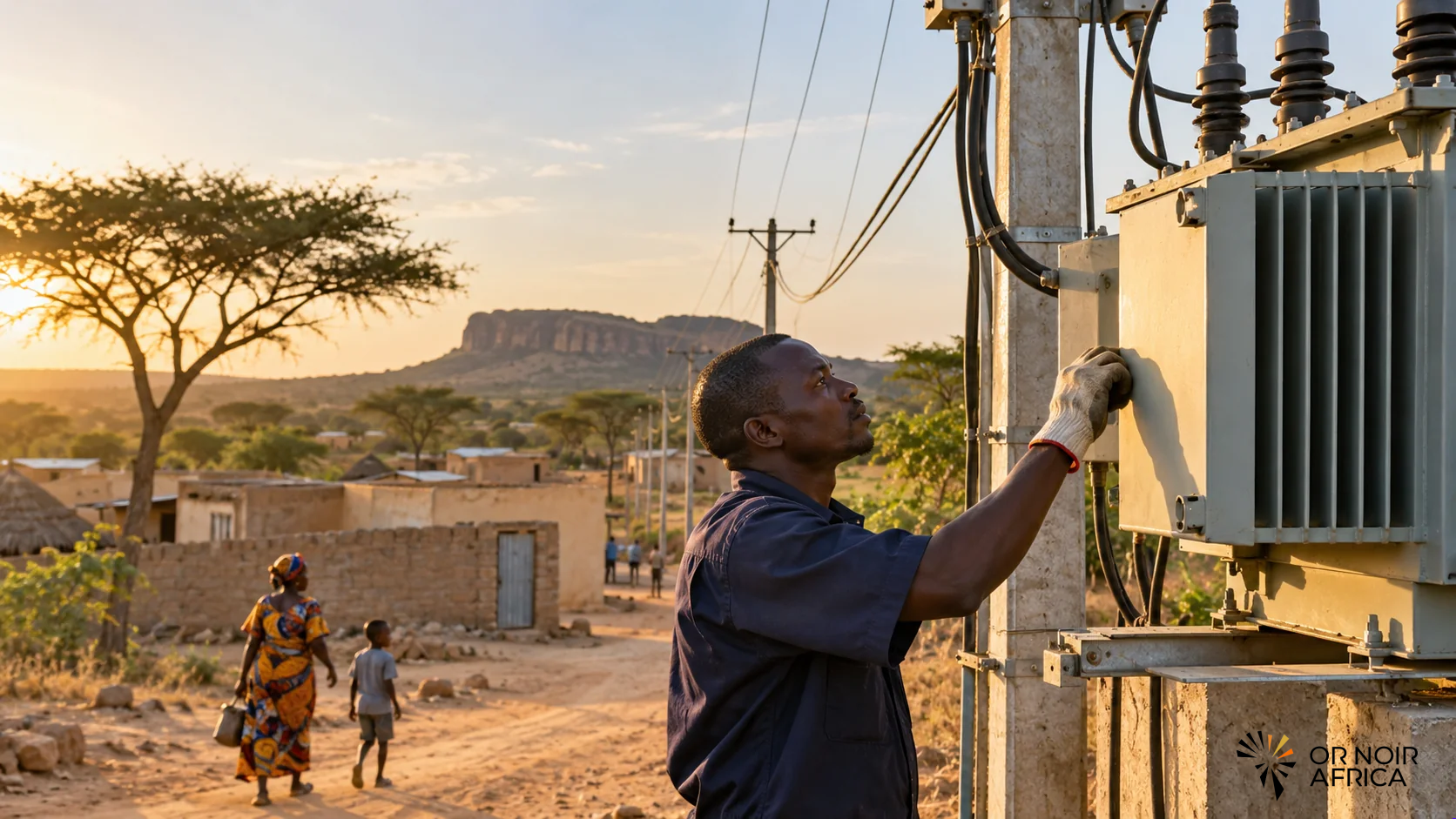
The objective of universal electricity access in Senegal by 2029 has just reached an important financial milestone. Following a roundtable in Dakar on October 6, the authorities announced CFA franc 998 billion in commitments from technical and financial partners and private-sector participants. The amount substantially exceeds the approximately CFA franc 400 billion estimated to meet the needs of communities still without service.
The announcement indicates the interest generated by the country's electrification. It does not yet guarantee connections, however. Between funding promises and electricity actually available in homes, schools, health posts and businesses, a decisive sequence remains: turning commitments into contracts, completed work and reliable services.
A final stage affecting nearly one million people
Energy Ministry data indicate a national electricity access rate of 86.2% at the end of 2024. Of 25,725 recorded localities, 12,683 were already electrified and 6,571 had projects underway. A further 6,471 localities reportedly remain to be served, representing nearly one million people.
These figures show why the final phase is often the most complex. Remaining areas are generally farther from existing networks and less densely populated than urban centers. Connections through grid extension may therefore require more kilometers of lines for a limited number of subscribers. In some cases, decentralized solutions—mini-grids, standalone solar or hybrid systems—can provide a faster response, provided maintenance, equipment replacement and affordable tariffs are planned.
The challenge is not simply installing poles and cables. A useful connection requires sufficiently regular supply to operate household equipment and productive activities. In rural communities, electricity availability can support agricultural product preservation, irrigation, workshops, digital services and small businesses. This ability to turn a connection into a lasting economic service will give the program its social significance.
Commitments to turn into actual investment
The announced breakdown shows CFA franc 181 billion from technical and financial partners for new projects and CFA franc 817 billion in private-sector commitments. This role for private operators broadens financing and execution options, but requires a clear contractual framework: schedules, responsibilities, quality standards, payment arrangements and results monitoring.
The term “commitment” covers different realities. Some amounts may correspond to already structured projects, others to intentions still requiring negotiation or subject to conditions. The next stage must therefore clarify each financing arrangement's maturity, the areas concerned and the share allocated to networks, generation, storage or decentralized solutions. Regular publication of these elements would help local authorities and beneficiaries monitor progress.
The announced amount exceeds estimated needs, but the difference does not necessarily mean an immediately available surplus exists. Funding envelopes may cover several components, include private investments requiring returns, or address maintenance and system-strengthening needs. Allocation quality will matter as much as volume. Projects must be coordinated with available generation and transmission capacity to avoid connecting communities without guaranteeing sufficient supply.
Service reliability, the next indicator of success
To meet the 2029 deadline, implementation must advance on several fronts at once. Rights-of-way must be secured, work coordinated between administrations and operators, necessary equipment obtained and maintenance organized from the design stage. In remote areas, the availability of technicians and spare parts can determine service continuity as much as initial funding.
Connection arrangements and electricity costs will also be decisive. Universal access has meaning only if households can use the service without forgoing other essential spending. Income-appropriate arrangements, flexible payment options and clear tariff information can help turn infrastructure into genuine access. For economic activities, predictable supply is often as important as price.
Results monitoring should therefore go beyond the number of localities declared electrified. Households connected, hours of availability, interruptions, actual service costs and productive electricity use would provide a fuller picture of impact. These indicators would also allow resources to be redirected quickly when a project falls behind or fails to meet local needs.
An opportunity for communities and the economy
The CFA franc 998 billion announcement is a favorable signal for areas still outside the grid. It can accelerate long-awaited investment and support essential services such as schools, health facilities and processing activities. It also strengthens the possibility of making electricity a driver of local development rather than simply an indicator of national coverage.
The credibility of the 2029 objective will now depend on execution. By publishing a detailed schedule, priority areas and financing progress, the authorities could give the announcement tangible substance. If commitments translate into reliable, affordable and maintained infrastructure, Senegal can bring universal access closer to the daily lives of nearly one million people still affected.
Have any thoughts?
Share your reaction or leave a quick response — we’d love to hear what you think!
-
 0
-
0
-
0
-
0
-
0
-
0





