

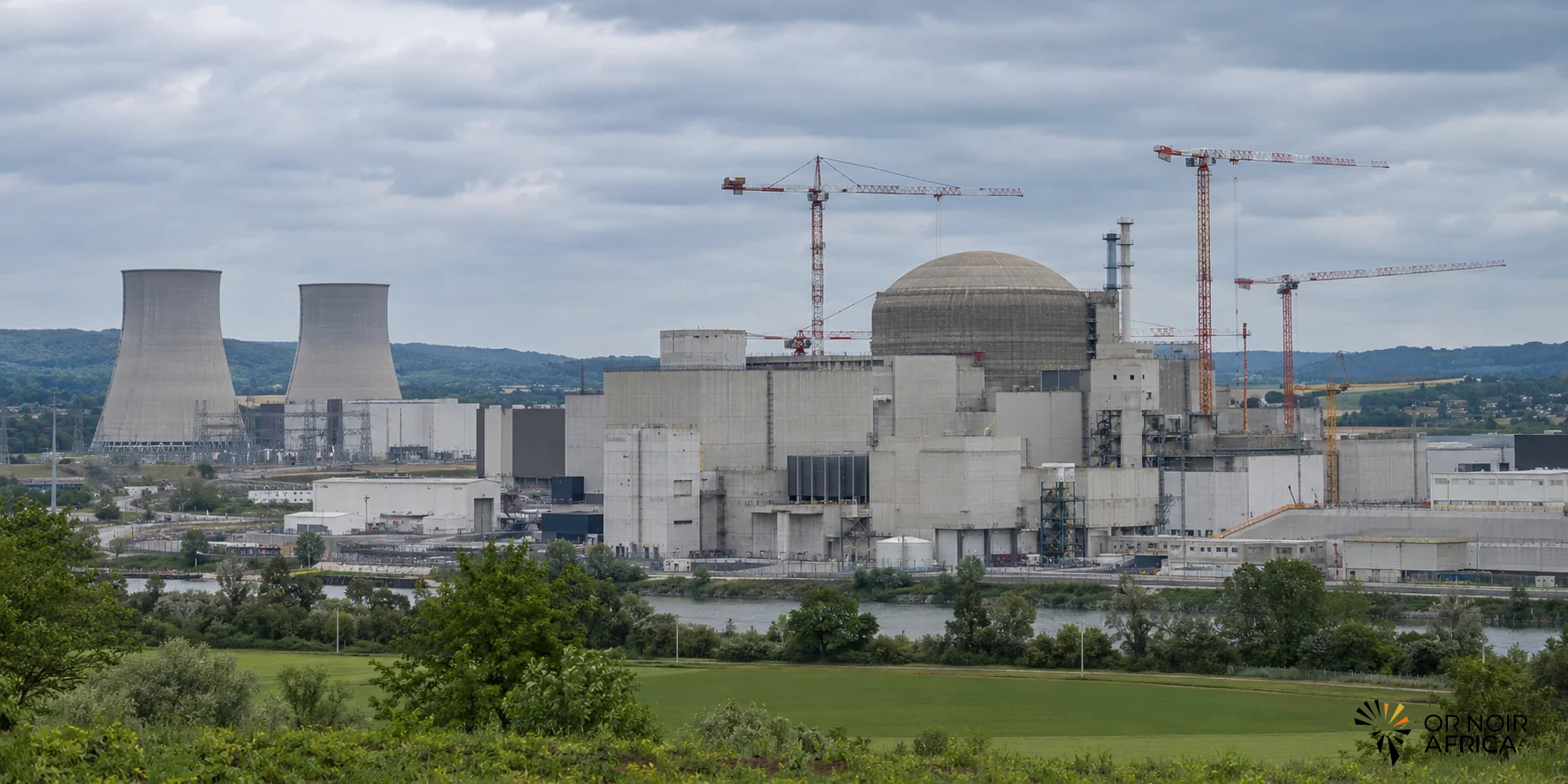
The EPR is a third-generation pressurised-water nuclear reactor designed to generate large quantities of electricity with redundant safety systems. Four units were operating at the end of 2025, including Flamanville 3 in France. Experience from these first construction projects now informs discussions about a revised version, the EPR2, and the industry's ability to build within announced schedules and budgets.
Key facts
- Technology: a pressurised-water reactor using uranium fission.
- Design capacity: around 1,650 MW of gross electrical power per unit.
- Operating EPR fleet: four reactors at the end of 2025, in China, Finland and France.
What is an EPR?
EPR refers to a high-capacity nuclear reactor model designed by the French industry and now promoted by EDF and Framatome. The acronym is generally expanded as ‘Evolutionary Power Reactor’. The first units were also presented as ‘European Pressurized Reactor’. The EPR belongs to the pressurised-water reactor (PWR) family, which uses water both to slow neutrons and carry heat out of the core.
Fission of uranium nuclei releases heat and neutrons. Water in the primary circuit circulates under pressure to remain liquid at high temperature. It transfers heat to a second circuit, where steam turns a turbine connected to a generator. The generation principle is therefore similar to other PWRs; differences concern capacity, system design, safety and intended performance.
What distinguishes its design
The EPR was designed for higher capacity than many older reactors. The reference value is around 1,650 MW of gross electrical power, but gross power, net power and actually available capacity are not interchangeable. Net power accounts particularly for electricity used by the plant's equipment. Annual generation also depends on shutdowns, testing, maintenance and reactor availability.
The design includes several redundant safety system trains to retain safety functions even if equipment fails. The containment and reactor building structures form part of the barriers intended to prevent releases and limit their consequences. These features do not eliminate risks: safety authorities must assess them, they must be tested during operation and maintained throughout the facility's lifetime.
The model has also been presented as using fuel more efficiently than previous generations. Some EPRs can use MOX fuel depending on approvals, reactor characteristics and national choices. However, gains depend on the fuel actually loaded and operating conditions; they should not be confused with a general promise to reduce all waste.
First units and operating experience
The first EPRs were built at Olkiluoto in Finland and Taishan in China, followed by Flamanville in France. At the end of 2025, four units were operating: two at Taishan, one at Olkiluoto and one at Flamanville. Two reactors are also under construction at Hinkley Point C in the United Kingdom.
The first construction schedules experienced significant overruns, linked particularly to complex work, manufacturing defects, welding problems, industrial coordination and evolving inspection requirements. These difficulties caused delays and costs above initial estimates. They also prompted companies and authorities to strengthen checks, review project organisation and draw lessons for subsequent units.
At Flamanville, the reactor connected to the grid in December 2024. EDF announced that it reached 100% of its nuclear thermal power on December 14, 2025, an important stage in ramp-up and testing. This figure describes heat generated in the reactor; by itself, it does not mean that the site has completed every industrial commissioning stage or continuously supplies its maximum net electrical power.
EPR and EPR2: two project generations
The EPR2 is a revised version intended to simplify construction and incorporate lessons from the first units. It is not a reactor already in widespread operation: its design and projects must still pass decision, authorisation, financing and construction stages. Announced power figures are design values that will need confirmation from facilities actually delivered.
In France, several EPR2 units have been the subject of plans and site studies. In the United Kingdom, construction continues on two first-version EPRs at Hinkley Point C. Each project follows its own schedule and procedures. Forecast dates evolve with work progress, permits and contracts and must therefore be checked when cited.
Benefits, costs and safety issues
An EPR's high capacity enables substantial electricity generation on a relatively concentrated site. Once available, a reactor can provide dispatchable generation independent of wind and sunlight. This feature can complement variable renewables in an electricity system, provided the grid, interconnections and flexibility resources are suitable.
In return, an EPR project requires considerable capital and a highly skilled industrial chain. Construction delays also postpone revenue and increase financing costs. Economic performance therefore depends not only on reactor efficiency but on the ability to repeat construction, control timelines, secure suppliers and maintain the facility over several decades.
Safety, spent fuel management, decommissioning and uranium supply are other essential issues. Operating authorisation is the responsibility of independent national authorities, which assess each facility and may impose requirements. A reactor model does not replace this site-specific assessment.
Frequently asked questions
What is the difference between an EPR and a conventional nuclear reactor?
The EPR is itself a pressurised-water nuclear reactor. It is a third-generation model, more powerful than many earlier PWRs and equipped with specific safety systems and architecture.
Is the EPR2 already operating?
No. The EPR2 is a version designed using experience from the first EPRs. Projects must still undergo authorisation and construction procedures before any commercial generation.
Does reaching full power mean construction is complete?
Not necessarily. Ramp-up involves tests and checks. Long-term commercial operation depends on validation of the planned stages and regular facility availability.
Have any thoughts?
Share your reaction or leave a quick response — we’d love to hear what you think!
-
 0
-
0
-
0
-
0
-
0
-
0





