

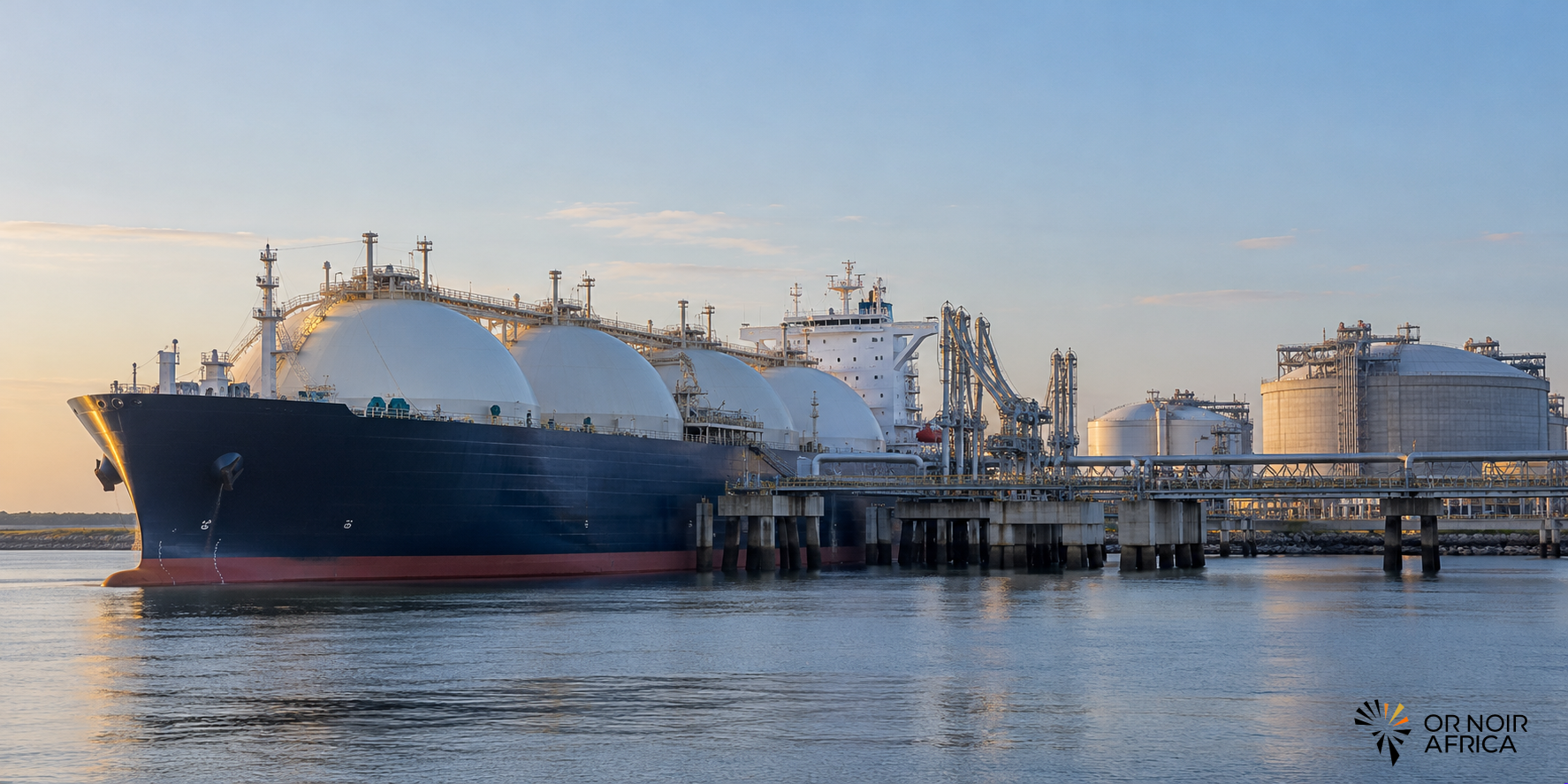
QatarEnergy has concluded two contracts to purchase liquefied natural gas (LNG) from Cheniere Energy, for a combined volume of up to 4 million tonnes per year. Deliveries are to come from Sabine Pass in Louisiana and Corpus Christi in Texas. They are scheduled to begin in 2031 and continue through the end of 2054, according to the agreements announced on October 22.
The transaction extends the Qatari group’s long-term procurement strategy while strengthening the role of US exports in its portfolio. For Cheniere, it provides commercial visibility over more than two decades and supports development of new capacity. But the announced volume must be read precisely: one million tonnes annually associated with Sabine Pass still depends on a positive final investment decision on the site’s first expansion phase.
Two contracts, two Gulf of Mexico terminals
The agreements provide for purchases of 2 million tonnes annually from each facility. Sales are on a free-on-board (FOB) basis: QatarEnergy takes responsibility for shipping from the loading terminal. The price is indexed to Henry Hub, the US gas benchmark, plus a fixed fee, according to information released by Cheniere.
This structure differs from a price directly indexed to Asian or European spot markets. It links the cost of gas to a US benchmark and leaves the buyer responsible for organizing transport from the United States. Its economic appeal will therefore depend on several variables: Henry Hub prices, contractual fixed fees, chartering and shipping costs, and regional price differences at delivery.
Both contracts are long-term sale and purchase agreements, but do not rely entirely on the same capacity conditions. Cheniere says one million tonnes annually under the Sabine Pass contract is conditional on a positive final decision for the terminal’s first expansion phase. This means the full 4 million tonnes must not be presented as volume already backed by fully approved new capacity.
A commercial outlet for US expansions
Sabine Pass and Corpus Christi are LNG export facilities on the Gulf of Mexico coast. Cheniere plans to expand Sabine Pass in stages. The proposed first phase comprises a new liquefaction train, boil-off gas reliquefaction equipment and associated infrastructure. The company estimates that this phase could add more than 6 million tonnes annually of peak production capacity, subject to project delivery and investment milestones.
QatarEnergy’s commercial commitment helps clarify the expansion for investors and project partners. A long-term purchase contract can support the bankability of new capacity, but replaces neither final investment approval nor construction and commissioning. Announced deadlines extend into the early 2030s, leaving several years to complete the necessary decisions and work.
For Cheniere, the agreement strengthens visibility on future sales and forms part of its supply growth strategy. For QatarEnergy, it adds a US supply source to a global portfolio comprising diverse contracts and capacity. The Qatari group presents this approach as a means of diversifying supplies and responding to changing demand. The agreements do not mean Qatar is abandoning its exporter role: they concern purchases intended to broaden its commercial options.
Diversification carries a logistics cost
US volumes strengthen supply flexibility, but FOB contracts transfer responsibility for organizing cargoes from the terminals to the buyer. This logistics component matters in the transaction’s overall economics. Shipping routes, LNG carrier availability, canal costs and market conditions will influence the actual value of cargoes delivered to their destinations.
The contracts’ duration, through 2054, reflects a time horizon in which buyers seek to secure volumes while producers finance expensive facilities. It also exposes both parties to market developments over several decades: gas prices, regional demand, competition from other sources, regulatory requirements and the pace of the energy transition. Pricing clauses and volume commitments will therefore be decisive in measuring both risk and commercial appeal.
The next steps to monitor
In the short term, the most important elements will be the investment decision for the Sabine Pass expansion, the construction timetable and confirmation of capacity needed to meet planned deliveries. Contractual volumes must also be distinguished from volumes actually produced: a contract establishes a commercial relationship, but cargoes will begin only once the facilities concerned are available.
The QatarEnergy–Cheniere agreement illustrates how long-term purchase contracts can connect producers, infrastructure and global buyers. It provides visibility for Cheniere and diversifies QatarEnergy’s options, while emphasizing that announced volumes remain dependent on expansion projects and investment choices. Commercial success will depend as much on terminal availability as on the competitiveness of US gas delivered to target markets.
Have any thoughts?
Share your reaction or leave a quick response — we’d love to hear what you think!
-
 0
-
0
-
0
-
0
-
0
-
0





