

Key facts
- One barrel: around 159 litres.
- Global demand: up 0.7% in 2025, according to the International Energy Agency.
- Global supply: around 3 million additional barrels per day in 2025 compared with 2024, according to the same institution.
What is oil?
Crude oil is a natural liquid mainly composed of hydrocarbons, molecules of carbon and hydrogen. It also contains varying proportions of sulphur, nitrogen, oxygen and traces of metals. Its composition depends on the deposit. Crudes are distinguished as light or heavy according to density, and sweet or sour according to sulphur content.
These characteristics influence prices and processing methods. Light, low-sulphur crude is generally easier to refine; heavy or sulphurous crude may require specific equipment. Quality therefore determines markets and processing costs.
How does a deposit form?
Oil comes from organic matter, particularly microscopic organisms, accumulated in sediments. Buried for millions of years, it changes under heat and pressure. Hydrocarbons then migrate through rocks and may accumulate in porous rock beneath an impermeable layer.
A recoverable deposit requires a source rock, sufficient transformation, migration pathways and a geological trap. In conventional reservoirs, oil flows towards wells. Oil sands and some tight-rock oils require other extraction or treatment techniques.
From exploration to sales: the oil chain
Upstream encompasses exploration and production. Teams analyse geology and seismic data to identify promising areas. Only drilling can verify the presence of hydrocarbons, without guaranteeing profitable production. The decision to develop a field then depends on recoverable volume, costs, infrastructure and applicable rules.
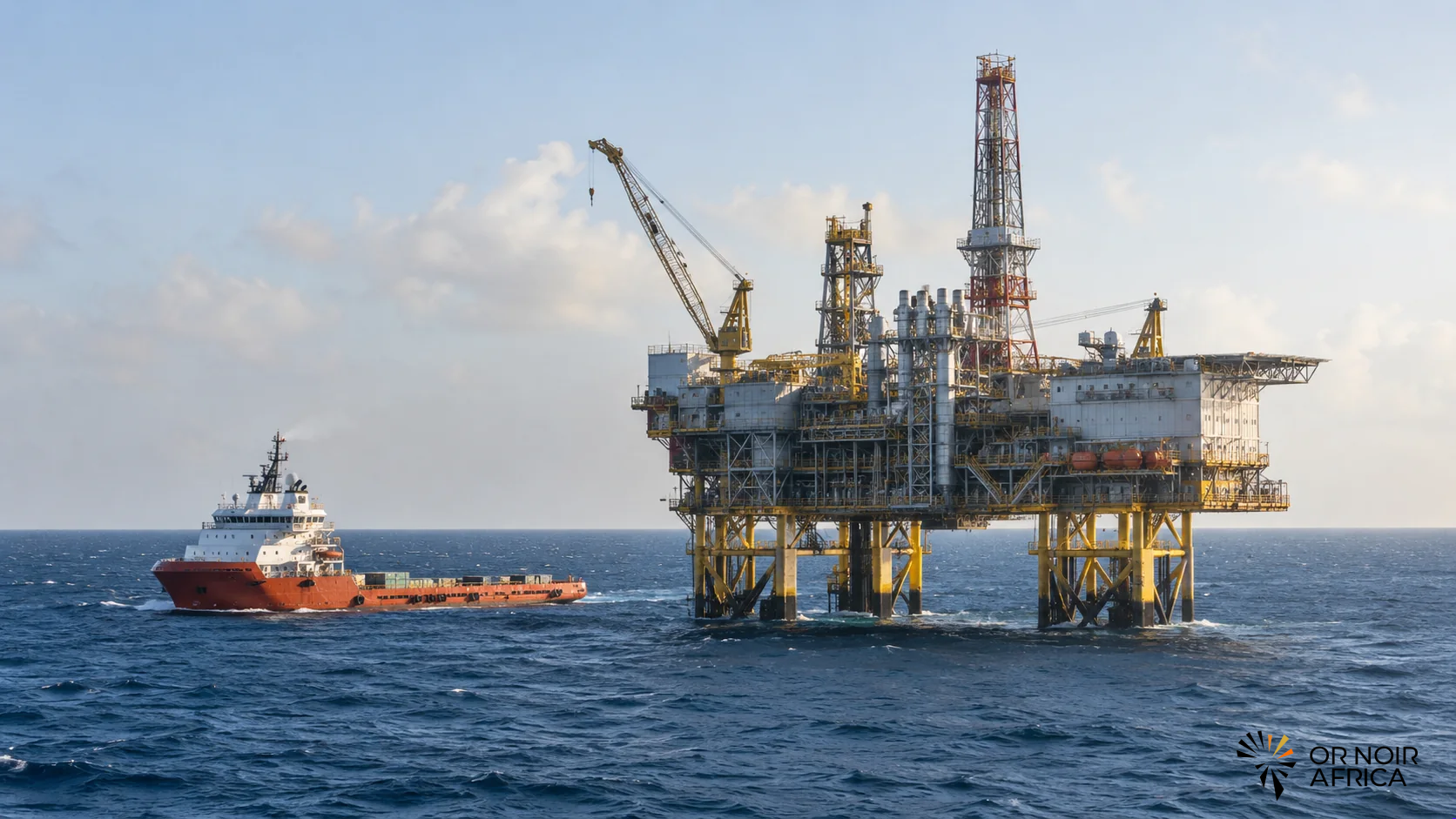
Production uses wells onshore or offshore. Crude, often mixed with water and gas, is separated and treated at the surface. It then reaches refineries or terminals by pipeline, vessel or truck.
Downstream includes refining, storage and product sales. Distillation separates constituents by boiling temperature; cracking transforms certain molecules to adjust yields. Refineries produce gasoline, diesel, kerosene, fuel oil, bitumen and petrochemical feedstocks, among other products.
The barrel and market measurements
The barrel, a unit inherited from early American oil trading, equals 42 gallons, or around 159 litres. Its abbreviations are ‘b’ or ‘bbl’. Daily volumes are expressed in barrels per day; ‘Mb/j’ in French means millions of barrels per day.
Statistics vary by scope: some count crude and condensates, while others add natural gas liquids or biofuels. Before comparing two figures, check the year and whether they describe production, supply or consumption.
According to the IEA, global demand increased by 0.65 million barrels per day in 2025, or 0.7%. Supply grew by around 3 million barrels per day over the year. The gap does not automatically cause prices to fall: inventories, refining, transport, producers' choices and geopolitical tensions also change the balance.
What is oil used for?
Transport is a major market: gasoline and diesel for roads, kerosene for aviation and fuels for some shipping. Oil also supplies lubricants and industrial inputs.
Petrochemicals convert another share of oil into components for plastics, synthetic fibres, rubber, solvents and detergents. These products are used in packaging, clothing and medical equipment. Road bitumen also comes from refining.
Oil is also used for heating, cooking in the form of liquefied petroleum gas and, in some countries, electricity generation. The latter use depends on the local energy mix.
Prices, energy security and transition
Oil prices depend on supply, demand, inventories, producers' decisions, transport and expectations. Brent and West Texas Intermediate (WTI) are two market benchmarks; final prices also vary with crude quality and delivery location.
For importing countries, hydrocarbon purchases affect foreign exchange and domestic costs. For producers, revenues fund budgets and investment but remain sensitive to price cycles. Local processing, transparency and diversification determine how lasting the benefits are.
The energy transition changes the outlook without immediately replacing every use. Electrification and efficiency can curb road demand, while aviation, petrochemicals and some heavy transport remain harder to substitute. The IEA recorded slower demand growth in 2025; what follows will depend on policies, technologies and investment.
Frequently asked questions
Can crude oil be used directly?
Crude is rarely used as it is. Refining converts it into fuels and products suited to engines, industry, heating or petrochemicals.
What is the difference between oil and natural gas?
Both are fossil hydrocarbons, but their composition and state differ. Oil is mainly liquid at the surface; natural gas mainly consists of gaseous methane.
Does a barrel correspond to a fixed amount of fuel?
No. It measures a volume of crude. The amounts of gasoline, diesel and other products obtained vary with the oil and refining processes.
Have any thoughts?
Share your reaction or leave a quick response — we’d love to hear what you think!
-
 0
-
0
-
0
-
0
-
0
-
0





