

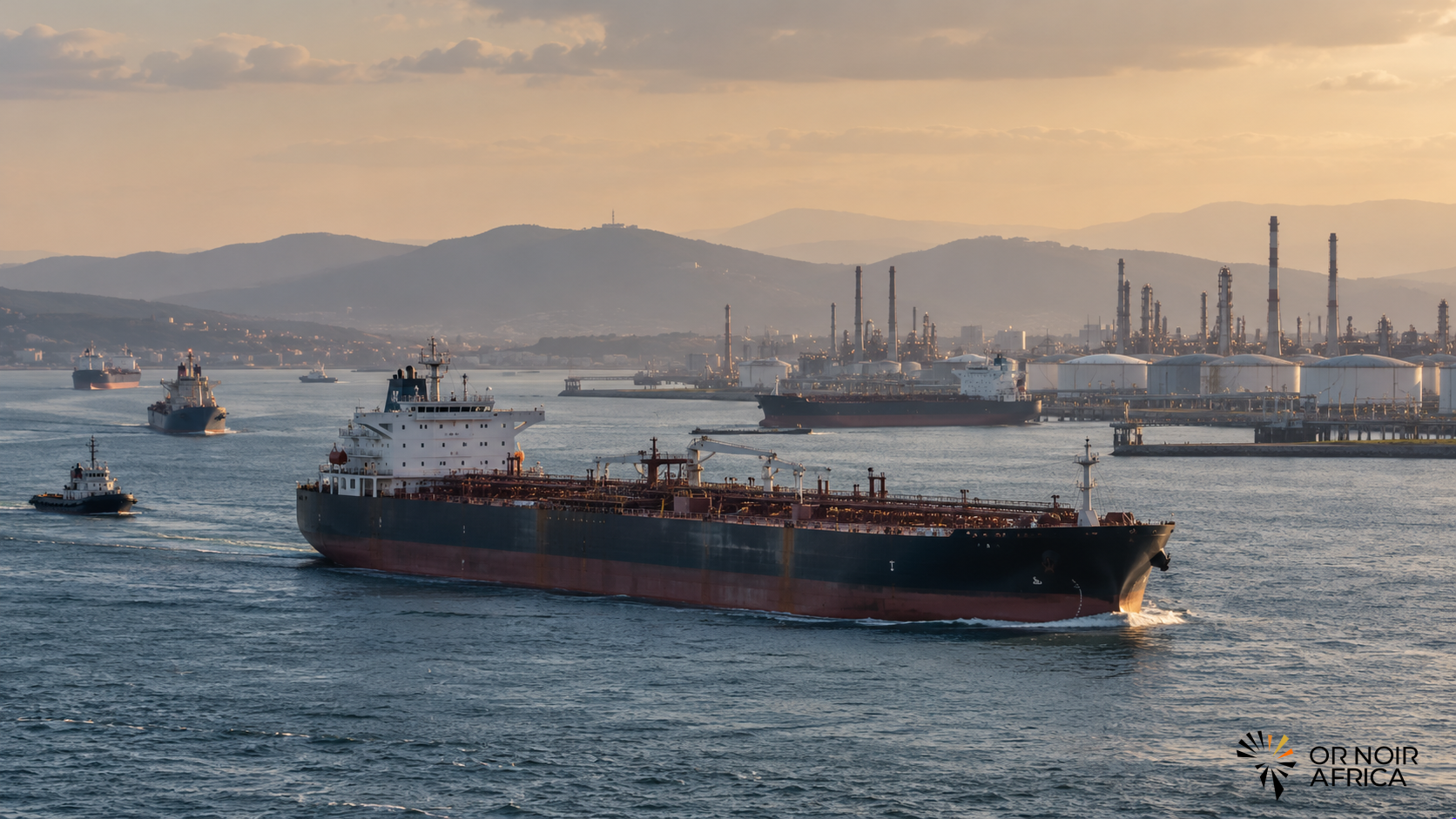
Oil prices reached a five-month high on Monday, October 19, 2026, as traders priced in a further rise in Middle Eastern tensions. Brent was trading above $110 a barrel after gaining nearly 4% on Friday. The increase reflected fears of escalation around Iran and the Strait of Hormuz, but did not by itself capture the state of the physical market.
In its report published that day, Bloomberg noted that Dated Brent, the benchmark for physical oil delivered in Europe, was trading around $117, nearly $16 below a week earlier. This divergence between financial contracts and the price of crude actually available illustrates the complexity of the moment: geopolitical risk supports expectations, while some flows continue to move.
A risk premium amid regional uncertainty
The rise in futures accelerated ahead of the weekend as markets feared worsening hostilities. Iranian statements about control of the Strait of Hormuz, through which a vital share of Gulf hydrocarbon exports passes, heightened concern. Reported attacks in the region and Red Sea tensions added risks for ships and export infrastructure.
An oil market responds not only to barrels already lost, but also to the likelihood of a future disruption. Futures prices can therefore rise before a sustained supply decline is confirmed. The size of this premium depends on the expected duration of disruptions, available inventories, alternative routes and producers’ ability to restore or divert cargoes.
The increase was nevertheless restrained by technical factors. Bloomberg reported that Brent’s nine-day relative strength index had entered overbought territory after Friday’s move. Systematic trend-following funds were also already heavily positioned on the long side, limiting their ability to add new positions quickly. These signals do not mechanically predict a decline, but show that the move may become vulnerable to profit-taking.
Gulf flows remain partly active
US Energy Secretary Chris Wright said at the time that oil flows in the Persian Gulf had returned to around 80% of their pre-conflict level. This estimate, reported by Bloomberg, concerned crude oil: refined-product shipments remained more constrained. Cargoes and vessels are not always easy to track, with some ships switching off their position signals, complicating the daily assessment of volumes.
Iraq, for its part, said it had exported more than 3.4 million barrels per day since the start of October, close to the level seen before the war. This figure, provided by Iraq’s oil minister, offers an indicator of some producers’ ability to maintain sales despite the tensions. It is not enough, however, to establish that all routes and regional markets have returned to normal operations.
This distinction explains why prices can remain high while some volumes return. Overall flows, oil grades, loading ports, marine insurance and the availability of refined products evolve differently. A cargo reaching one buyer does not automatically resolve diesel or fuel supply problems in another region.
Diesel faces greater pressure
Pressure appeared particularly strong on refined products. European diesel futures had more than doubled since the start of the year, according to Bloomberg’s October 19 article. Diesel powers freight, agriculture, construction and part of industrial production; persistent tightness can therefore quickly feed through to transport costs and goods prices.
Discussions about a possible US-Russian agreement on diesel exports added a political variable. US lawmakers were seeking to oppose the initiative, while analysts doubted that additional Russian volumes would provide sufficient relief to consumers. The question is not simply how many barrels are available, but also export routes, sanctions, refining margins and access to cargoes.
A market pulled in different directions, with no certain path
Rebecca Babin, an energy trader at CIBC Private Wealth, considered that the divergence between falling physical Brent and rising futures revealed the many conflicting forces facing investors. She highlighted, in particular, the persistence of some flows to China and uncertainties surrounding regional conflicts. This reading cautions against a single interpretation of prices: the market is measuring both disruption risk and supply resilience.
On October 19, June Goh, an analyst at Sparta Commodities, also described Brent as caught between geopolitical risk and improving flows from the Middle East. She believed the weak economic environment could limit the market’s ability to sustain higher prices. This remained an analyst’s assessment, not a certain forecast.
For African petroleum-product importers, the distinction between crude and refined products is decisive. Rising Brent can increase procurement costs, but diesel availability, regional refining capacity, exchange rates and transport charges directly influence the price paid by distributors. Governments and companies therefore need to monitor physical indicators as closely as futures prices.
The figures presented here describe the situation reported on October 19, 2026. What follows will depend on hostilities, shipping-route security and the actual return of refined-product volumes. At that date, the market was not choosing between certain shortage and a return to normal, but between two mutually reinforcing risks: a more severe geopolitical disruption and demand that might not withstand high prices for long.
Have any thoughts?
Share your reaction or leave a quick response — we’d love to hear what you think!
-
 0
-
0
-
0
-
0
-
0
-
0





