

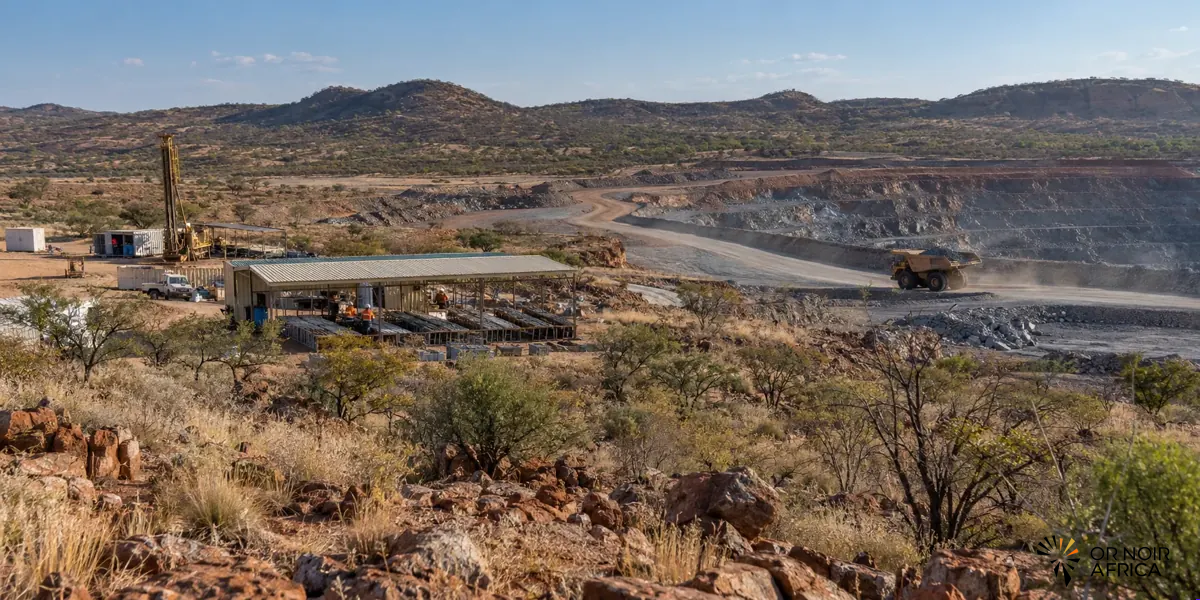
**Categories:** ONA Special Report, Mining **Tags:** gold, silver, copper, strategic metals, commodity markets **Excerpt:** In autumn 2026, gold and silver corrected from their peaks while copper remained close to record levels. This divergence reflects different drivers: demand for safe havens, industrial demand, inventories and supply constraints. **Slug:** or-argent-cuivre-trajectoires-marches-metaux-2026 **Image alt:** Gold bullion, silver and copper illustrating contrasting paths in metals markets.
Gold, silver and copper follow distinct dynamics, even though they sometimes react to the same macroeconomic factors. In early October 2026, silver traded around $60 an ounce after peaking above $120 in January. Gold was around $4,100 to $4,160 an ounce, below earlier records, while copper remained close to recent highs on the London Metal Exchange. These levels do not trace a common path: they reveal three markets with different fundamentals.
The comparison is useful for understanding the choices of producers, industrial users and investors. It does not allow future price movements to be inferred automatically. Metals are exposed to interest rates, the dollar and global activity, but factors specific to each market can dominate.
Gold remains sensitive to rates and reserve demand
Gold is often associated with protection against uncertainty, but its price depends on several forces. Central bank purchases, flows into specialist funds, geopolitical tensions and perceptions of financial risk can support demand. Conversely, a strong dollar and high bond yields increase the opportunity cost of holding an asset that pays no interest.
The correction observed after an all-time high is a reminder that an asset supported by safe-haven demand can also experience rapid profit-taking. High prices encourage some holders to sell, while changes in interest rates can reduce gold's appeal to investors comparing several investments. A decline from a record does not necessarily negate structural demand factors, but shows that they do not act alone.
Market forecasts are often expressed as technical scenarios, with support levels or correction targets. These reference points are neither commitments nor certainties. Their relevance depends on the period studied, the assumptions chosen and participants' responses. Mining decision-makers must therefore distinguish short-term scenarios from the prices used to finance a project over several years.
Silver combines a monetary role with industrial uses
Silver is both a precious metal and an industrial raw material. It is used in electronic components, certain electrical equipment and photovoltaic panels. This dual nature can produce more pronounced movements than gold: investment demand responds to rates and risk, while industrial uses change with manufacturing activity and technology consumption.
The sharp decline from January's peak therefore has several interpretations. It may reflect a correction after rapid gains, a reduction in speculative positions or concerns about industrial demand. Supply constraints and investment in energy technologies can provide support, but their effect depends on equipment's material intensity, possible substitutions and recycling.
Silver volatility also matters for producers whose revenues depend on several metals. A mine may extract silver, lead, zinc or copper, and the main metal is not always the one most decisive for profitability. Price assumptions must therefore account for by-products, processing costs and ore characteristics.
Copper: electrification and mining availability
Copper is primarily an industrial metal. Electricity networks, transformers, motors, buildings and charging infrastructure consume large quantities. Investment in electrification and data centres strengthens expectations of long-term demand. Meanwhile, opening new deposits is slow, and projects must contend with declining grades, environmental requirements and water and energy needs.
Copper's proximity to a price record partly reflects these supply concerns. However, a high level does not necessarily mean shortages are immediate. Available inventories, mined ore volumes, smelter capacity and Chinese demand influence short-term prices. Inventories can also vary between regions and warehouses, complicating interpretation of a single indicator.
Producers can respond to prices by increasing supply, but this takes time. Expanding existing mines may be faster than building new assets, while large projects require permits, infrastructure and community agreements. Higher prices can improve expected profitability without eliminating technical and regulatory risks.
Markets responding differently to the same shocks
Bond yields and the dollar can affect gold, silver and copper simultaneously, but the transmission varies. A strong dollar tends to make metals more expensive for buyers using other currencies. High interest rates can weigh on precious metals, while copper depends more directly on prospects for growth and industrial production.
Geopolitical factors also play a role. They can increase demand for gold as a reserve asset and disrupt energy or mineral supplies. For copper and silver, trade tensions can shift flows and change regional inventories. Investors therefore monitor the location of stocks and processing capacity as closely as aggregate global volumes.
What mining participants should monitor
For mining companies, analysis is not limited to a price target. Essential indicators include cash costs, sustaining expenditure, recovery rates, reserve quality, taxation and the production schedule. Project assessments must test several price and exchange rate assumptions because expenditure is often incurred before sales take place.
Authorities in producing countries can use periods of high prices to strengthen revenue collection and local processing while avoiding planning public expenditure around temporary income. Volatility makes fiscal stability and contract transparency particularly important.
The divergence between gold, silver and copper thus offers a reading of market priorities: protection against uncertainty, industrial demand and security of supply. Analysts' price scenarios must remain hypotheses to be tested against data rather than certainties. For Africa's mining sector, the central question remains the ability to turn global demand into financed, productive projects that create lasting value.
Have any thoughts?
Share your reaction or leave a quick response — we’d love to hear what you think!
-
 0
-
0
-
0
-
0
-
0
-
0