

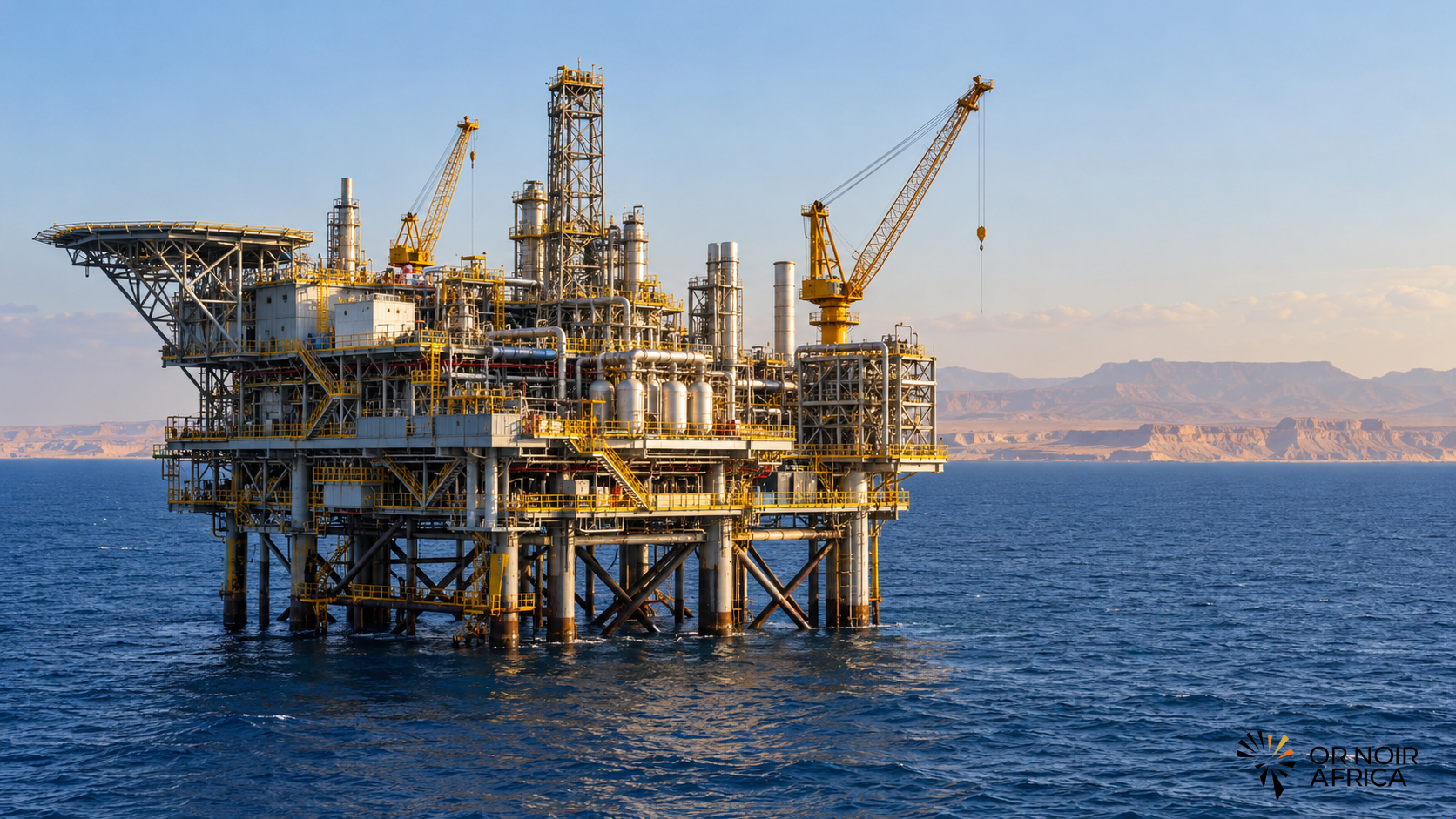
The offshore Bouri gas project in Libya has reached an important milestone. On October 19, Eni announced completion of the Bouri Gas Utilization Project, designed to recover and process associated gas previously flared during oil extraction. Commissioning procedures have begun, but the announcement does not yet mean normal operating rates have been reached.
Completed infrastructure, commissioning still underway
The project was developed by Mellitah Oil & Gas, Eni’s joint venture with Libya’s National Oil Corporation (NOC). It relies on a gas recovery module installed at Bouri in western Libyan waters and connection equipment needed for processing. The goal is to capture gas produced alongside oil and direct it toward existing gas infrastructure.
Distinguishing completion from actual start-up is essential. Eni says construction is finished and commissioning has started. Ramp-up, equipment stability and actual delivered volumes must therefore be verified before flaring can be considered eliminated in operation. The company presents expected additional capacity of around 700 million cubic meters annually once operational.
This avoids confusing announced capacity, planned additional production and already-available volumes. In an earlier statement, NOC mentioned around 100 million cubic feet per day. This exceeds the daily equivalent of Eni’s subsequently reported 700 million cubic meters annually. Announcements do not explain whether they concern different technical scopes or design phases. At this stage, Eni’s latest annual figure is the more cautious reference for expected supply.
Associated gas for electricity and exports
Recovered gas is primarily intended to supply Libya’s domestic market and electricity generation. This addresses a practical issue: using an already-extracted resource instead of burning it, while adding volumes to a system facing substantial domestic demand. Additional gas could improve power plants’ supply flexibility, provided processing and transport can absorb planned volumes.
The project could also free additional quantities for European exports through GreenStream, linking Libya’s coast to Italy. Eni specifies neither the export share nor commercial delivery timing. The balance between domestic needs and overseas markets will therefore depend on actual production, local demand and Libyan authorities’ choices.
An announced climate benefit requiring sustained confirmation
Eni estimates recovering previously flared gas will avoid around 1.5 million tonnes of greenhouse gas emissions annually. This is an expected annual reduction when the project operates as designed, not a result already measured since completion. Actual performance will depend particularly on availability, captured gas volumes and sustained operations.
Associated gas utilization has a dual industrial benefit: limiting losses of a marketable resource and reducing flaring emissions. It does not, however, resolve all environmental constraints of hydrocarbon production, including fugitive methane, equipment energy use and emissions from final gas consumption.
A milestone in Libya’s gas strategy
NOC targets elimination of routine flaring by 2030. Bouri forms part of this ambition and a wider strategy to increase gas availability, supply the domestic market and preserve export outlets. Other offshore and compression work should also support network deliveries, but schedules and outcomes must be assessed separately.
Libya’s challenge now lies in daily operations: completing commissioning, demonstrating module reliability and delivering gas to consumers. Commercial start-up will show whether announced volumes improve electricity supply and actually reduce flaring. The next stage is therefore less a capacity announcement than published, verifiable operating data.
Bouri thus becomes a practical test of Libya’s ability to use associated gas better. Completed facilities create that possibility; commissioning and regular deliveries will determine actual effects on production, electricity and emissions.
Operational monitoring will provide the answer.
Have any thoughts?
Share your reaction or leave a quick response — we’d love to hear what you think!
-
 0
-
0
-
0
-
0
-
0
-
0