

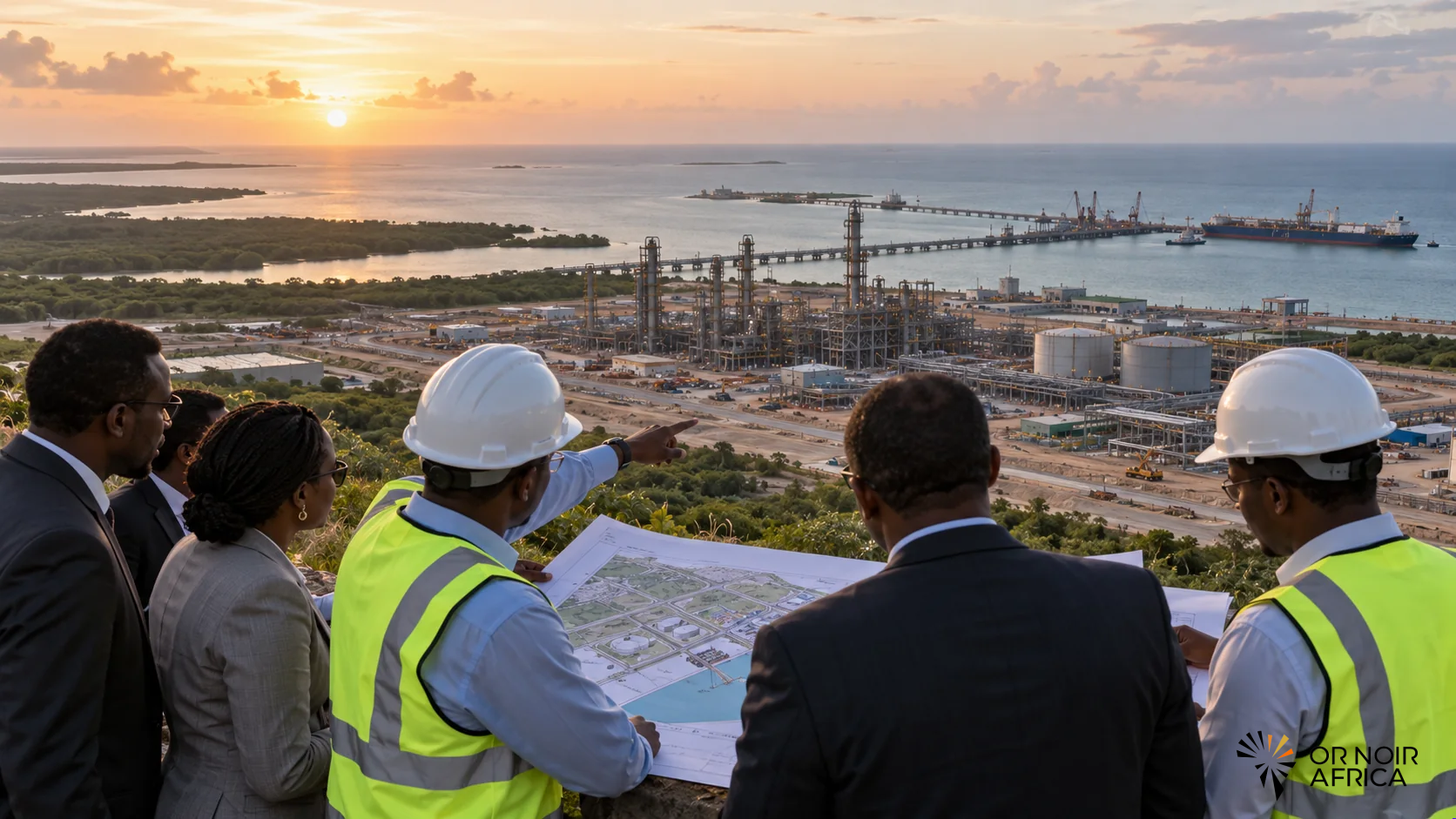
“If we can build a refinery, we can do anything”: the phrase sums up the ambition James Mwangi associates with the Lamu industrial project. Equity Group's chief executive sees this infrastructure as a test of capability for Kenya and, more broadly, Africa. Beyond oil processing, the project raises the question of whether financing, engineering, skills and regional markets can be brought together around a capital-intensive industry.
The Dangote East Africa Petroleum Refinery complex was launched in Mokowe, Lamu County, on September 30. It is announced with processing capacity of 700,000 barrels per day, estimated investment of 2.2 trillion Kenyan shillings and complementary infrastructure, including a 1,000 MW power plant and fertilizer and chemical production units. Construction is planned to span several years; the announced capacities are therefore not yet operational results.
An ambition extending beyond fuel production alone
For Mwangi, the appeal of such a project lies in its ability to move part of the value chain to the continent. African economies still export a large share of their raw resources and import processed products. A regional refinery could reduce this imbalance by bringing processing, logistics and consumer markets closer together.
Potential impact will nevertheless depend on the complex's integration into the local and regional economy. Requirements for construction, parts, maritime services, maintenance and engineering can create opportunities for Kenyan companies. Lasting jobs will also develop around technical training, suppliers, operations and related industrial activities. Value creation is therefore not measured solely by the number of jobs announced during construction.
Lamu's location strengthens the regional dimension. The port and LAPSSET corridor are designed to connect the Kenyan coast with inland markets and neighboring countries. If road, rail and port links develop in a coordinated way, the complex could serve markets beyond Kenya. Industrial infrastructure of this scale can therefore support regional trade, provided transportation costs and commercial rules allow products to compete.
Financing and execution remain decisive
Capacity of 700,000 barrels per day implies substantial financing, engineering and operating requirements. Investors must secure capital over several years, coordinate equipment arrivals, guarantee crude supply and build storage and distribution infrastructure. The construction schedule and final costs will determine the facility's competitiveness.
The project must also clarify its ownership model and contractual commitments. Transparency on risk allocation, public and private interests, potential guarantees and marketing terms will strengthen confidence among investors and citizens alike. Regular progress communication would help distinguish industrial objectives from milestones actually reached.
Supply is central. A refinery can improve energy security if it processes crude available on commercially viable terms and its products meet regional demand. It does not automatically guarantee lower prices: these will depend on financing costs, operating efficiency, taxation, transportation and competition with imports.
Turning ambition into continental learning
Mwangi's analysis emphasizes an institutional dimension: completing a major project can demonstrate that African companies, banks, administrations and workers can coordinate complex industrial investment. This confidence could subsequently facilitate financing for other infrastructure, from petrochemicals to agro-industry.
For this success to benefit the country, workers' skills development and local suppliers' access must be monitored throughout every phase. Training targets, accessible tenders and transparent quality criteria could help local companies position themselves without compromising facility safety.
The Lamu project therefore carries a real but conditional promise. Its value will be judged by its ability to operate at the planned cost, supply markets and develop an industrial ecosystem around the site. For Kenya, it can become a major economic transformation milestone if the refinery's ambition is accompanied by sound execution, verifiable local benefits and clear governance.
Have any thoughts?
Share your reaction or leave a quick response — we’d love to hear what you think!
-
 0
-
0
-
0
-
0
-
0
-
0





