

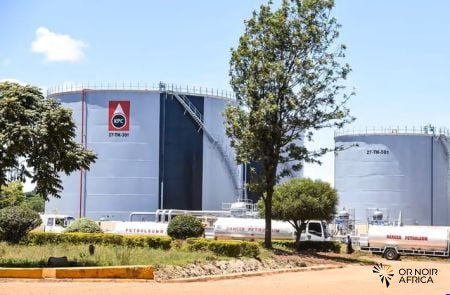
Aliko Dangote has confirmed the acquisition of 24.76% of Kenya Pipeline Company (KPC), the operator of Kenya’s main pipeline network, for approximately 42.5 billion Kenyan shillings, or $327.2 million. The announcement, made in London on October 21, ends speculation about the identity of the investor that purchased a block of the company’s shares.
The transaction comes seven months after KPC’s initial public offering, in which the state sold 65% of its equity. President William Ruto had confirmed the previous day that nearly a quarter of the shares had been acquired by private investors, without naming them. The transaction now gives the Dangote group a minority stake in strategic fuel transport infrastructure in East Africa.
A logistics asset at the heart of the regional market
KPC operates approximately 1,300 kilometers of pipelines connecting the port of Mombasa with inland markets. Its network serves Kenya and facilitates supply to neighboring countries, including Uganda, Rwanda, the Democratic Republic of the Congo and South Sudan. For a group developing refining and distribution capacity, this position provides exposure to an essential link in the energy chain.
The acquisition is part of Dangote’s announced plans in Kenya. On September 30, the industrialist and President Ruto launched preparatory work on a refinery estimated at $16 billion at Lamu. The site is designed to process up to 700,000 barrels of crude per day, with commissioning targeted for 2030. The group also plans to invest $1.5 billion in developing Kenya’s pipeline network, according to information released with the announcement.
The industrial logic is clear: a large refinery must be able to transport products to several markets, and existing pipelines can reduce dependence on road or maritime transport for some destinations. However, the 24.76% interest does not give Dangote control of KPC. Infrastructure access conditions, corporate governance and required additional investment will determine the actual significance of this equity stake.
A privatization that raises questions
The transaction forms part of Nairobi’s policy of mobilizing capital to finance infrastructure. KPC’s listing opens the company to investors and broadens its ownership, but has also prompted public debate about how shares were allocated. Lawmaker Ndindi Nyoro accused the authorities of encouraging public pension funds to buy shares before their resale to private investors. These allegations have not been established and must be distinguished from confirmed facts about Dangote’s acquisition.
For the authorities, selling part of the equity should help finance projects without relying solely on the public budget. For investors, KPC’s value will depend on its ability to maintain and expand the network, ensure continuity of service and meet growing regional demand. Transparency over the transaction’s terms will be decisive in preserving confidence in the privatization process.
An ambition still to be realized
The Lamu project is still under development and represents a considerable financial commitment. Its success requires securing financing, access to crude supplies, construction of complementary infrastructure and sustainable markets. The stake in KPC strengthens Dangote’s position, but guarantees neither completion of the refinery nor automatic integration of its future products into the network.
If both projects advance, Kenya could become a refining and distribution hub for East Africa. The challenge will be to balance the arrival of a powerful industrial investor with fair access rules for essential infrastructure, so that consumers and the economies served also benefit from the new structure.
Have any thoughts?
Share your reaction or leave a quick response — we’d love to hear what you think!
-
 0
-
0
-
0
-
0
-
0
-
0