

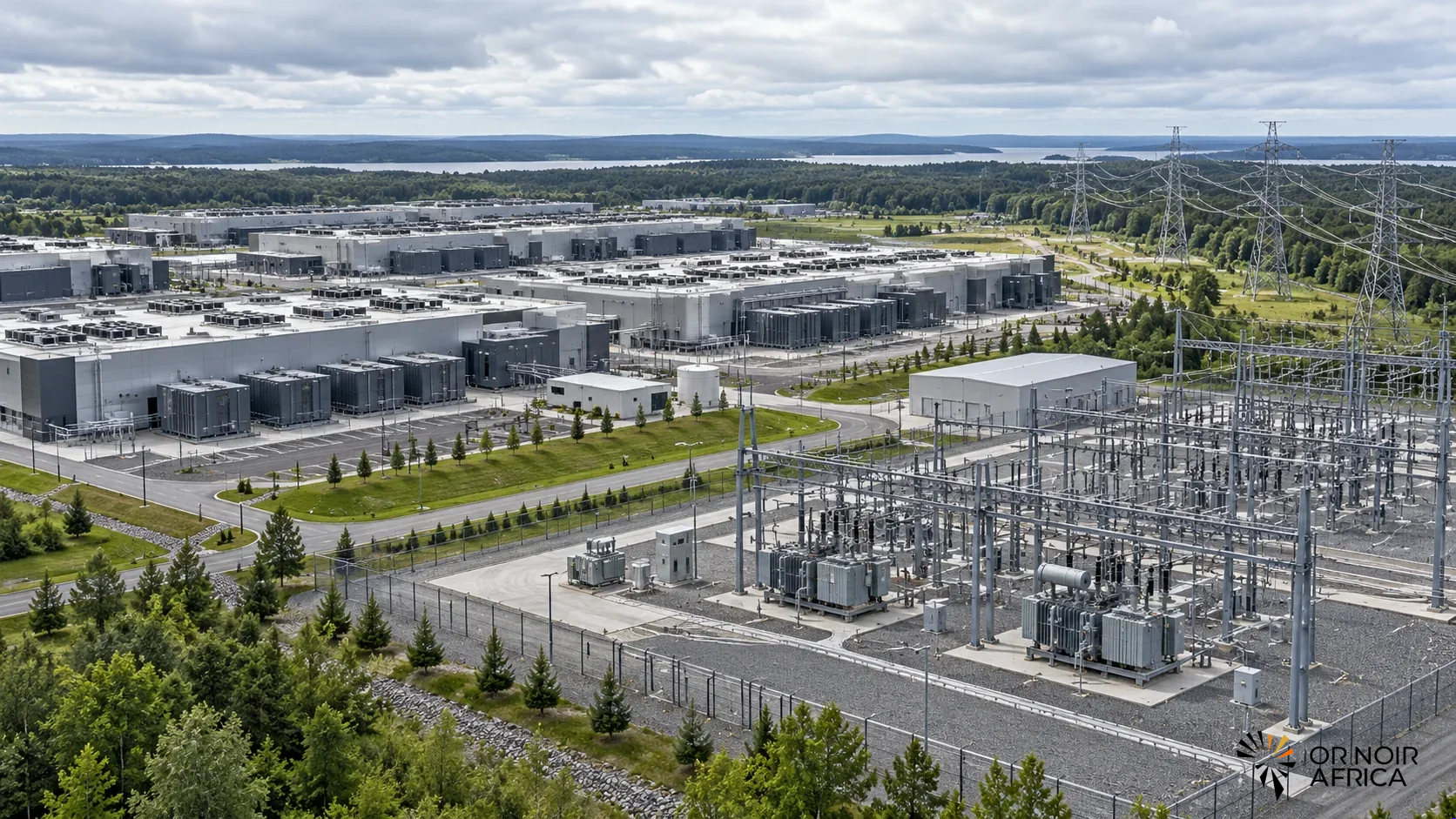
**Categories:** News, Energy **Tags:** Gambia, electricity, Brikama, generators, energy security **Excerpt:** Two generators of 10.5 MW each have arrived at Banjul port and are due to be installed at Brikama before the end of the month. This additional capacity can ease short-term pressures, but system reliability will also depend on maintenance, fuel and diversification. **Slug:** gambie-21-mw-groupes-centrale-brikama-approvisionnement **Image alt:** Electricity generation equipment and grid lines at a thermal power plant in West Africa.
The Gambia has received two new generators with a capacity of 10.5 megawatts each, or 21 MW in total. The units arrived at Banjul port in early October and are to be installed at Brikama power station, with commissioning announced before the end of the month. A third unit of a similar size is expected to follow.
This delivery aims to address electricity supply difficulties that have affected the country in recent months. The generators are a short-term measure to increase available capacity while the government continues investment in grids and renewable energy.
Additional capacity, provided it is commissioned
Arrival at port is one stage, but electricity becomes available only after installation, connections, testing and commissioning. Authorities said the two machines would be deployed at Brikama and were expected to operate before the end of October. Actual performance must be measured through megawatts delivered to the grid and unit availability.
Thermal generators can provide dispatchable output, useful when demand exceeds available capacity or other units are unavailable. However, their contribution depends on fuel supply, operating costs and maintenance. If fuel must be imported and international prices rise, the cost per kilowatt-hour can weigh on the operator and ultimately on tariffs or public finances.
The government says these generators fulfil a commitment separate from other equipment promised by foreign partners. This clarification highlights several parallel initiatives addressing the emergency. Coordination will matter to avoid redundant purchases or capacity that cannot be connected to the grid.
Dependence on thermal generation remains high
The Gambian system remains heavily dependent on thermal generation and regional imports to balance supply. In a small grid, failure of a major generator can quickly cause outages. Adding units improves available reserves but does not alone resolve transmission, distribution and grid-loss constraints.
Solar generation is also advancing. A 50 MW plant at Soma is planned to meet some daytime demand and preserve thermal units for peak hours. Other solar installations and storage systems could complement supply, but integration requires investment in the grid, frequency control and demand planning.
Diversification could reduce exposure to fuel costs and improve resilience to failures. However, it requires integrated planning. Authorities must compare full solution costs, including lines, storage, maintenance and reserve services. Intermittent solar capacity does not automatically replace dispatchable generation but can reduce daytime fuel consumption.
Reliability also depends on the grid
The new generators will deliver benefits only if the plant has regular fuel, qualified teams and spare parts. Grid capacity to carry additional power to consumption centres without overloading must also be checked. Preventive maintenance matters as much as installed capacity: available units reduce load-shedding risks and emergency costs.
For households and businesses, service quality is measured in electricity hours, outage frequency and backup energy costs. Businesses using standalone generators face high costs and uncertainty affecting productivity. Commissioning Brikama's units must therefore be accompanied by public performance monitoring.
The Gambia can also strengthen cross-border exchanges within the West African power system. Interconnections enable imports when needed and use of surplus generation, provided contracts and networks are reliable.
Measuring the actual effect on load shedding
The expected 21 MW represents a notable increase for a small system, but the final benefit depends on timing and generation consistency. Indicators to track include commissioning date, availability factor, fuel consumed, operating costs and changes in outages.
The arrival of Brikama's generators provides a concrete response to a supply emergency. To overcome this situation sustainably, the country must combine thermal capacity, renewables, storage, maintenance and grid modernisation. Success will be measured not only by installed power but by more regular and affordable electricity for households and businesses.
Have any thoughts?
Share your reaction or leave a quick response — we’d love to hear what you think!
-
 0
-
0
-
0
-
0
-
0
-
0