

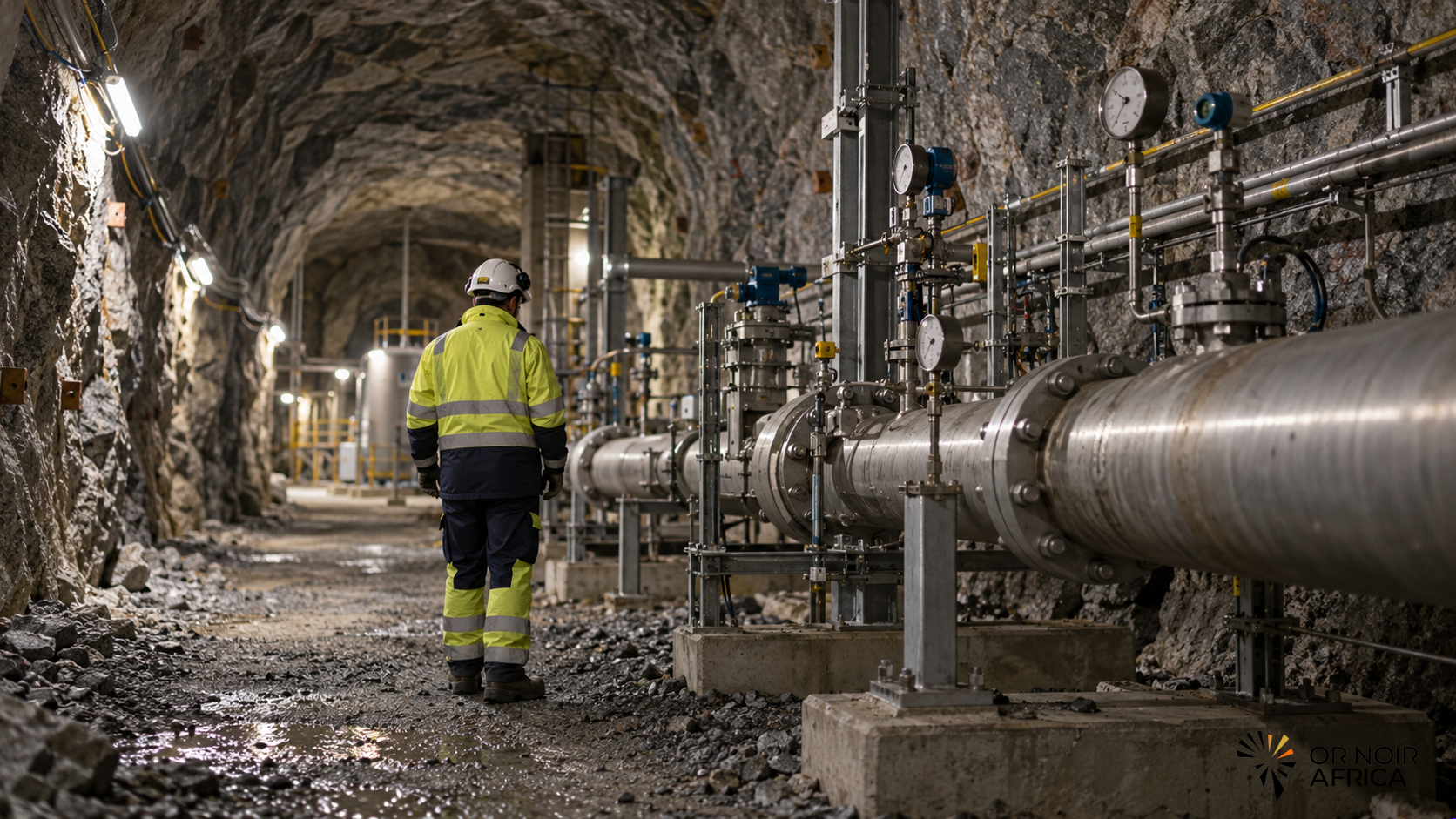
A study in Finland by research center VTT and the Geological Survey of Finland (GTK), together with companies active in hydrogen, examines storing the gas in cavities excavated in crystalline bedrock. This approach interests regions without salt formations, often used to create sealed underground caverns. It could broaden large-scale storage options, but does not mean commercial facilities are already ready for construction.
Researchers developed a hard-rock storage concept covering cavity structure, operating modes, geological and safety requirements, investment needs, and technical and societal risks. Site selection and further studies remain decisive. Gas tightness cannot be taken for granted in fractured rock.
Storage addresses a balancing problem
Renewable hydrogen is produced from electricity through water electrolysis. Renewable electricity generation varies with weather and seasons, while industrial consumption can follow different patterns. Underground storage aims to move energy volumes between periods, beyond the hourly fluctuations other flexibility measures can manage.
Salt caverns in several European countries have geological properties favorable to gas containment. Finland lacks comparable salt formations for this need. The Finnish concept therefore relies on cavities excavated in crystalline rock and technical solutions to ensure they are sealed.
This approach may be relevant to other regions whose subsurface is dominated by hard rock. Local geology is decisive, however: the presence, orientation and condition of fractures, faults and weakened zones affect both cavity stability and gas retention.
Crystalline rock requires investigation
Finnish crystalline bedrock is not naturally designed to retain hydrogen. Teams must select rock blocks with as few fractures as possible, then conduct drilling, geophysical studies and materials analysis. Major faults must be mapped and cavities located far enough away to limit risks.
Storage pressure is another variable. Over time, high pressure could alter or open some fractures. The rock’s behavior under anticipated stresses must therefore be understood, and possible reactions between hydrogen and cavity materials monitored. GTK geologist Teemu Lindqvist stresses that geological selection, site investigations and materials studies are essential to preserving facility stability and safety. His comment is a reminder that feasibility will depend as much on the subsurface as on technical design.
Sealed lining solutions are necessary in crystalline formations. They can improve containment, but add construction, inspection and maintenance requirements. Design must also consider compression equipment, leak management, safety systems and gas injection and withdrawal arrangements.
Potential depends on location and uses
Storage must be sufficiently close to production and consumption areas to limit infrastructure costs. Geologically favorable sites, however, are not always near future electrolyzers, plants or transport networks. The GTK and VTT study therefore examines not only cavity design, but also the business models and stakeholder ecosystems a project requires.
Storage demand will depend on hydrogen output, regularity of use and the ability to connect facilities. An expensive facility becomes profitable only if used frequently enough and if production-consumption imbalances justify the expense. Supply contracts, safety rules and incident responsibilities must also be defined before major investment.
A research milestone, not yet an investment decision
Publishing the concept marks progress in studying storage options, but is neither a construction permit, a final investment decision nor validation of a specific site. The next phase will require detailed subsurface studies and technical tests. Public authorities and operators must also assess local acceptance and the overall cost of the service delivered.
Finland wants to develop a hydrogen economy despite lacking suitable salt caverns. Crystalline-rock storage could help make a supply chain more flexible, particularly if renewable generation increases. Its actual contribution will nevertheless depend on geological work, safety, financing and regular demand.
For regions without salt, this approach therefore deserves technical attention rather than promises of immediate capacity. The Finnish project will help clarify hard-rock storage requirements. Construction can be decided only after demonstrating control of containment, stability and costs at a given site.
Have any thoughts?
Share your reaction or leave a quick response — we’d love to hear what you think!
-
 0
-
0
-
0
-
0
-
0
-
0





