

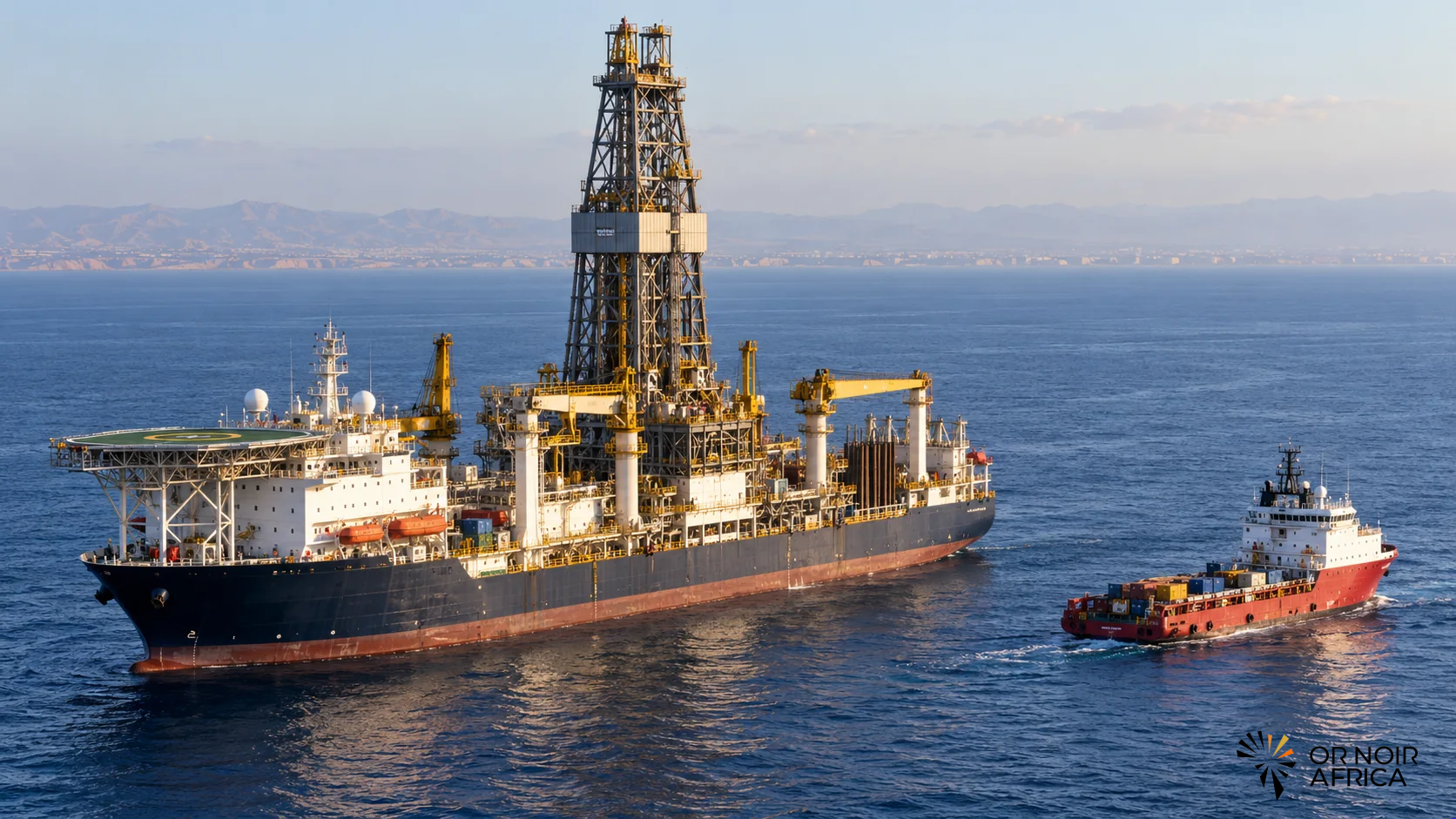
Egyptian Natural Gas Holding Company (EGAS) and Chevron signed an agreement providing at least $88 million to explore the offshore Lotus block in the Mediterranean. The program includes 3D seismic reprocessing and two exploration wells. Approximately 200 kilometers offshore, in water depths of 2,000–2,800 meters, the area had not yet undergone deepwater exploration drilling.
The agreement opens a new evaluation phase as Egypt seeks to replenish reserves and increase domestic production. It is nevertheless neither a discovery nor a guarantee of commercial reserves. The two wells will provide geological evidence to assess whether block structures contain economically sufficient gas or oil volumes.
The role of seismic data before drilling
Reprocessing 3D seismic data aims to improve images of subsurface formations. Existing surveys are reinterpreted using newer methods to identify potential hydrocarbon traps more clearly. This helps select drilling locations but remains indirect: only wells can confirm resource presence, nature and quality.
Deepwater drilling is a significant financial commitment. Nearly 200 kilometers offshore, operations require specialized vessels, offshore logistics and robust safety and incident-response preparation. Wells will collect geological, pressure and fluid-composition data. Results will determine next steps, ranging from appraisal campaigns to prospect abandonment.
The $88 million minimum investment indicates the program’s scale. Final expenditure and schedules will depend on operations, offshore conditions and results. The project forms part of Mediterranean opportunities the Petroleum Ministry wants to offer investors alongside the delta, Western Desert, Gulf of Suez, Sinai and southern basins.
Chevron strengthens its Mediterranean presence
Chevron holds interests in several Egyptian offshore exploration blocks, including Nargis, North El Dabaa, Lotus, North West Atoll, North Simian and North Cleopatra, where it works with Shell. The company has already participated in a gas discovery on Nargis. Oil indications were also recorded in a recent North Cleopatra well, without constituting a development decision.
Expanding its exploration portfolio enables Chevron to spread exposure across geological areas and seek reserves supporting regional activities. For EGAS and Egypt, an international operator provides capital, technical expertise and risk sharing. National returns nevertheless depend on drilling results, contract terms, available infrastructure and locally captured value.
Egyptian Petroleum and Mineral Resources Minister Karim Badawi supervised the signing. The government says settling partner arrears helped restore confidence and revive exploration. The connection between payments, confidence and investment is decisive: operators assess geology but also contract predictability and the state’s ability to honor commitments.
Domestic supply challenges
Egypt faces substantial gas demand from power plants, industry and households. A discovery could support domestic production, but the interval between exploration and supply is long. Success would still require delineation, potential assessment, a development decision and production and transport infrastructure construction or adaptation.
This sequence explains why well announcements cannot be read as immediate solutions to supply pressures. Even positive results require further investment and years of work. If wells do not confirm a commercial accumulation, exploration expenditure will not produce output but will improve basin knowledge.
Next steps are seismic reprocessing and scheduling the two wells. Investors and industry participants will track target depths, result quality and how quickly EGAS and Chevron communicate discoveries. For Egypt, Lotus is both a very-deepwater exploration wager and a test of converting Mediterranean opportunities into lasting supply.
Have any thoughts?
Share your reaction or leave a quick response — we’d love to hear what you think!
-
 0
-
0
-
0
-
0
-
0
-
0





