

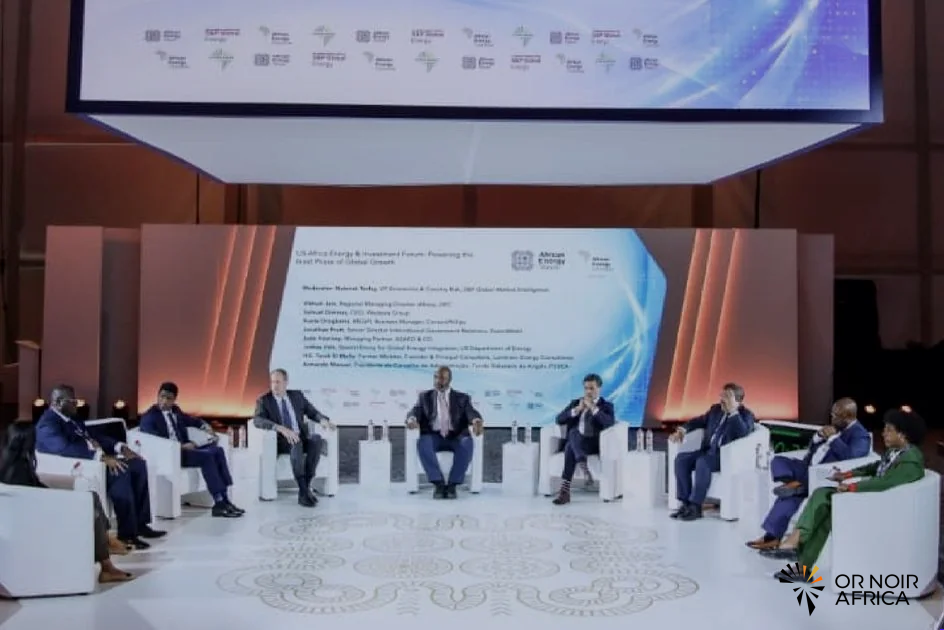
The US International Development Finance Corporation (DFC) has committed more than $14 billion in Africa, according to Vibhuti Jain, its regional director for the continent. At a US–Africa forum during African Energy Week 2026, she cited financing for liquefied natural gas import terminals and gas pipelines among areas where the institution supports projects. The amount represents commitments, not total funds already disbursed or projects completed.
The Cape Town discussion focused on turning investor interest into bankable projects. American public institutions, African sovereign wealth funds and operators agreed on an obstacle: many initiatives remain too early-stage or insufficiently prepared to reach financial close. Feasibility studies, impact assessments, guarantees and regulatory predictability therefore become central financing components.
Project preparation as the first barrier
DFC does not finance projects without feasibility studies, impact analysis and commercial viability assessments. It can nevertheless offer repayable grants to help partners finance this preliminary work. This support aims to reduce risk during a phase when spending is already substantial but future revenues and implementation conditions remain uncertain.
For interconnected gas infrastructure, Jain stressed host-government guarantees. A terminal, pipeline and power plant can depend on one another: if part of the chain lacks financing or buyers do not commit to volumes, the entire system becomes riskier. Guarantees and supply contracts can help make each component bankable, but also create long-term state obligations.
Angola's sovereign wealth fund has also created a project preparation allocation. Its chairman, Armando Manuel, explained that poorly prepared initiatives often fail to mobilise necessary financing. The fund focuses particularly on electricity transmission lines while examining prospects in petroleum midstream and downstream activities and marginal fields.
Broader American interest in African resources
American public financing extends beyond DFC. Joshua Volz, the Department of Energy's special envoy for global energy integration, said Africa now represents 30% of the Export-Import Bank of the United States' exposure. He called on African governments to shorten permitting procedures, arguing that administrative delays can discourage capital as effectively as political risk.
Operators stressed fiscal stability. For assets potentially requiring thirty to forty years of operation, stabilisation clauses and visibility over rules influence investment decisions. Former Egyptian petroleum minister Tarek El Molla noted that investors give more weight to guarantees written into legislation than to promises alone. Confidence develops over time through consistency among contracts, regulation and implementation.
Local content rules were also discussed. Requiring a majority local partner can deter some investors if that partner does not contribute financing proportionate to its interest. Increasing national businesses' share remains a legitimate objective, but must be accompanied by capital access, skills transfers and clear responsibilities so local companies can genuinely fulfil their role.
Mobilising capital without weakening states
Public guarantees can make projects more attractive to lenders, but expose national budgets to risks if demand, prices or schedules deteriorate. Authorities must therefore publish commitments, limit guarantees to precisely defined risks and test several market scenarios. Financing approval is not an automatic gain: it comes with conditions, disbursement schedules and sometimes fees and repayment obligations.
Co-investment agreements, such as that discussed around Angola's Longonjo rare-earth project, can combine public financing with sovereign wealth fund participation. They can support strategic assets but require explicit governance rules and return objectives. Public funds must also examine economic value created, local jobs, infrastructure access and contributions to industrial chains.
The $14 billion threshold signals DFC's emergence as an important actor in America's financial presence in Africa. The question now is what share of these commitments will become assets under construction, production capacity or energy services. The answer will depend on project quality, balanced risk sharing and governments' ability to ensure a stable environment while protecting the public interest.
Have any thoughts?
Share your reaction or leave a quick response — we’d love to hear what you think!
-
 0
-
0
-
0
-
0
-
0
-
0