

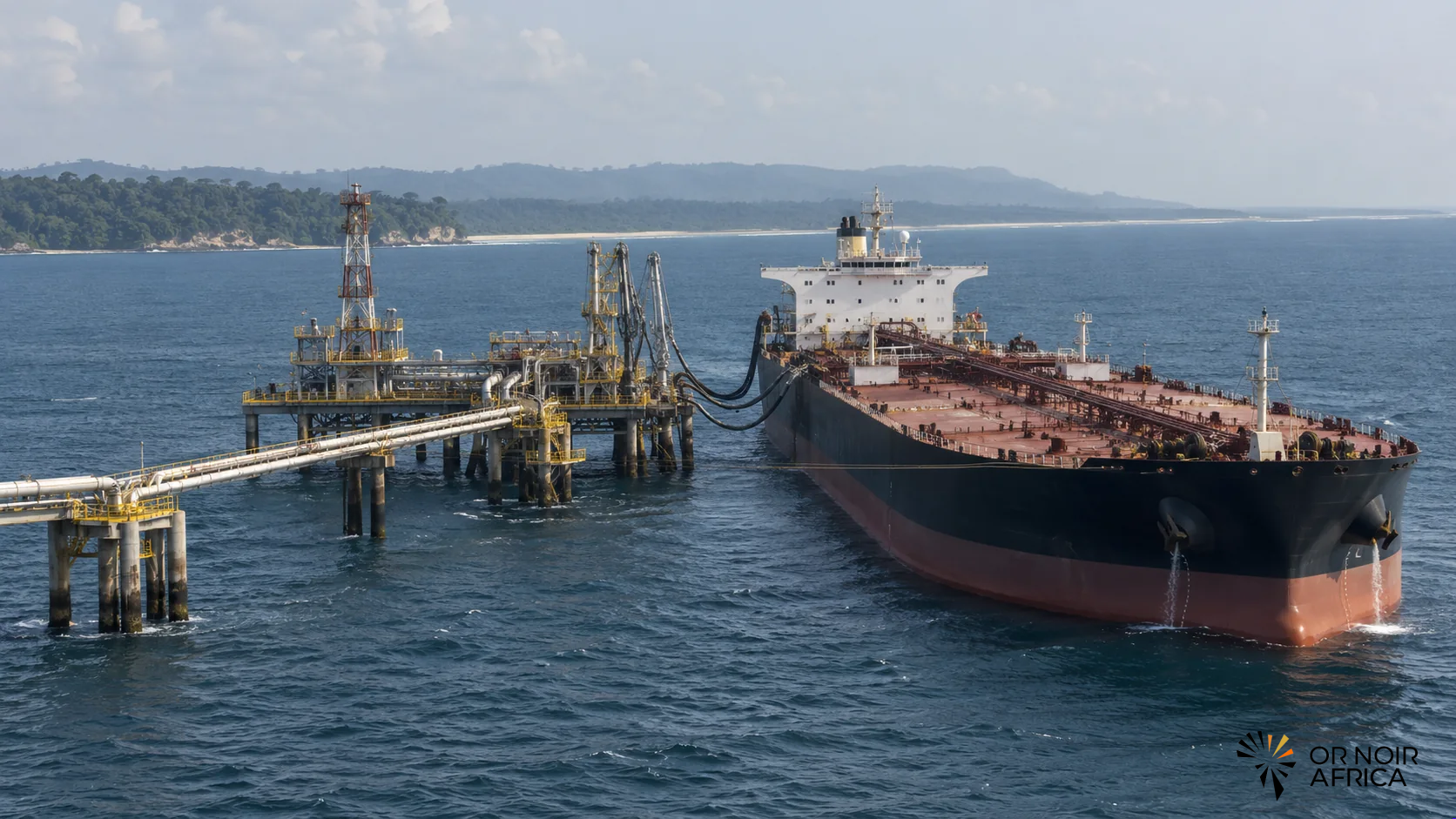
Congo's crude oil sales to Vietnam reached CFA franc 148.3 billion in the second quarter of 2026. Crude accounted for over 98% of bilateral trade estimated at around CFA franc 151 billion. This growth makes Vietnam a particularly important market for Congolese exports during the period and illustrates hydrocarbons' continuing central role in the country's external revenues.
Exports to this market accounted for 10.14% of Congo's total quarterly export revenues, according to the reported figures. This concentration provides significant foreign currency but also exposes external trade to oil-price changes, delivery schedules and shifting Asian buyer demand. The quarterly figure is therefore insufficient to establish an annual trend.
A market gaining importance
The CFA franc 148.3 billion measures the value of shipped cargoes, not necessarily an equivalent increase in physical volumes. International crude prices, the quality of grades sold and loading schedules can substantially change quarterly results. Assessing growth requires comparing tonnages and values over several periods.
Vietnam imports energy from different producers. Purchases from Congo show that the country's exporters can access Asian markets, where demand and refining infrastructure shape substantial trade. The commercial relationship may offer opportunities for contracts and market diversification, but the observed oil concentration means bilateral trade remains closely tied to a single product.
Congo's export economy remains heavily dependent on hydrocarbons. Crude sales provide public revenues and foreign currency, but fluctuate with prices, extraction volumes and operational interruptions. A temporary revenue increase can improve the trade balance without reducing structural vulnerability if other export sectors remain underdeveloped.
Converting revenues into diversification
Higher trade values can contribute to public finances if revenues are transparently collected and managed. Oil revenues can support infrastructure, training and non-oil activities. Their lasting effect depends on turning volatile income into productive investment rather than financing only recurrent expenditure.
Market diversification is useful but does not replace production diversification. Selling oil to more partners reduces certain commercial risks, while developing agriculture, processing industries, services and petrochemicals can create new value and employment. A diversification strategy must therefore address both markets and the composition of exports.
The country can also seek greater value in the energy chain through services, transport, maintenance and refining. Such activities nevertheless require investment, skills and regular supplies. They must be assessed for economic viability and their ability to meet national and regional demand.
Trade concentrated in crude
Oil's share of over 98% in trade with Vietnam highlights an unbalanced commercial relationship centered on a raw material. Imports from Vietnam and other Congolese exports to that country represent a small share of the observed total. A broader relationship could include more processed goods, services or industrial partnerships, but requires stronger productive capacity.
Delivery trends must also be compared with national production volumes and obligations under existing contracts with other buyers. Cargoes may be irregular, and sales allocation depends on producers' commercial strategies and market conditions. Quarterly figures should be supplemented with volume, average-price and contract-duration data.
A useful indicator, not yet a trend
The CFA franc 148.3 billion of oil sold to Vietnam in the second quarter reflects an important commercial opening and a significant contribution to Congo's export revenues. It also confirms crude's dominant role in bilateral trade. The significance of this performance depends on repetition, volume trends and how revenues are converted into lasting economic assets.
In coming quarters, key indicators will be export value and tonnage, hydrocarbons' share of external sales and investment financed by oil revenues. If Congo consolidates its markets while broadening its productive base, rising sales to Asia can form part of a diversification strategy. Otherwise, growth will primarily reflect oil-market conditions.
Have any thoughts?
Share your reaction or leave a quick response — we’d love to hear what you think!
-
 0
-
0
-
0
-
0
-
0
-
0





