

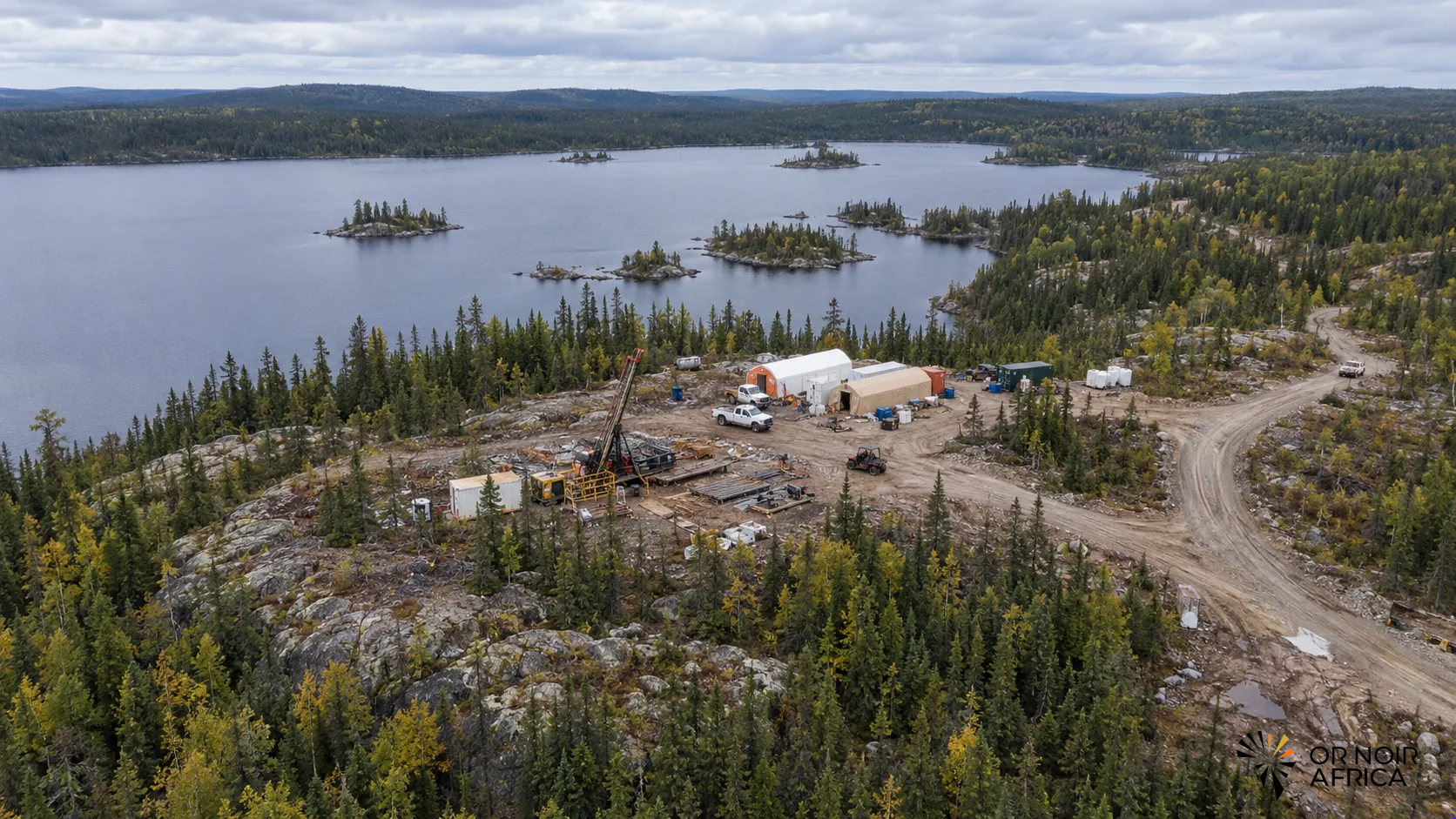
The Springpole gold project in northwestern Ontario is approaching a decisive moment: following federal environmental assessment approval, First Mining Gold is preparing the next technical and regulatory steps to bring the deposit closer to possible construction. The company also strengthened its cash position through a C$57.5 million fundraising in September. These advances reduce several uncertainties without yet turning the project into a mine ready to produce. Provincial decisions, Indigenous community agreements, final engineering and full financing remain outstanding.
Federal authorization announced on June 30, 2026 allows the project to cross an important threshold. Ottawa concluded that Springpole could proceed following environmental assessment. This is a significant decision for an asset approximately 110 kilometers northeast of Red Lake, in a region where mining projects face demanding regulations, sensitive ecosystems and First Nations rights. The authorization nevertheless does not constitute a general permit to build or operate: several provincial approvals and technical conditions remain necessary.
Ontario follows its own process. Its environmental assessment report was open for public comment until late July. The relevant ministry indicated that First Mining’s study met requirements and followed an approach considered consistent. The final decision nevertheless rests with the provincial minister and government. Distinguishing acceptance of a study submission from final project authorization is essential: it explains why a favorable announcement does not immediately result in construction starting.
Dialogue with Indigenous communities is another decisive component. First Mining announced agreements in principle and negotiated terms with Cat Lake First Nation, Lac Seul First Nation and Slate Falls Nation. For Cat Lake and Lac Seul, discussions established 35 conditions intended to form the basis of a project agreement. Slate Falls also agreed principal terms for subsequent negotiation. These frameworks seek to specify participation, benefits and monitoring arrangements. They must still undergo the relevant communities’ and company’s approval processes. They do not replace continuing consultation or commitments to be established before construction.
The next industrial step is completing the feasibility study. It must specify infrastructure design, schedule, capital costs, operating costs and production parameters. Geotechnical work and engineering studies are therefore more than preparatory exercises: they will establish whether preliminary study assumptions can be maintained in a development plan detailed enough for lenders and investors. In major mining projects, cost estimates can change substantially between preliminary study and final investment decision.
September’s announced financing gives First Mining room to advance these works. The share offering, initially valued at C$50 million, increased to C$57.5 million after full exercise of the over-allotment option. Funds will support development of company projects, including Springpole and Duparquet. This is development financing rather than the entire budget required to build a mine. Additional capital, probably raised at several stages, will therefore remain indispensable.
This question is central given project scale. The 2025 prefeasibility study estimated initial expenditure at more than US$1 billion, before adjustments potentially arising from the feasibility study and changing equipment, energy and labor prices. Investors will want to know how the company plans to combine equity, debt, potential partnerships and development timing. Rising gold prices potentially improve project economics, but eliminate neither construction risk nor capital costs.
For northwestern Ontario, announced benefits are significant in jobs, contracts and public revenues. They will nevertheless depend on project delivery, procurement awarded to local companies and the ability to train a regional workforce. First Nations discussions must also lead to measurable mechanisms beyond general commitments: environmental monitoring, employment access, local contracts and benefit sharing.
Springpole is thus entering a phase of declining regulatory risk but more visible execution demands. The schedule to monitor concerns the provincial decision, conclusion of community agreements, publication of the feasibility study and financing strategy. Federal approval and fundraising are concrete milestones. Project viability will now be judged by First Mining’s ability to convert them into complete authorizations, a controlled budget and a credible investment decision.
Have any thoughts?
Share your reaction or leave a quick response — we’d love to hear what you think!
-
 0
-
0
-
0
-
0
-
0
-
0





