

Finance Earth, FSD Africa and FSD Africa Investments (FSDAi) are launching a fund to finance nature restoration projects before they generate revenue. The Africa Nature Impact Fund is targeting $100 million in fundraising, with an initial $20 million close envisaged in 2027. The initiative addresses a bottleneck: forest, mangrove and regenerative agriculture projects often face several years of costs before selling carbon credits or other environmental services.
Financing the period before revenue
The fund was announced on October 13 in Kigali. FSDAi indicated an initial commitment of £5 million, or around $6.6 million. This provides early support, while the $100 million remains a fundraising target rather than money already raised. The initial $20 million close targeted for 2027 will test actual investor appetite and the fund’s ability to attract further capital.
According to the promoters, nature project developers may need three to seven years between starting activities and receiving their first revenue. Land rights must be secured, local agreements obtained, a baseline established, land restored and results monitored before emission reductions can be certified and marketed. Conventional financing, which seeks quickly predictable cash flows, is often poorly suited to this start-up phase.
Africa Nature plans to provide repayable financing on concessional terms to support preparation, initial activities and the transition to commercial operations. This structure may bridge the gap between a project’s early stages and future revenue, without treating environmental targets as guaranteed income. Repayment terms, rates, maturities and risk allocation will need to be clarified during implementation.
Ambitious objectives still to be demonstrated
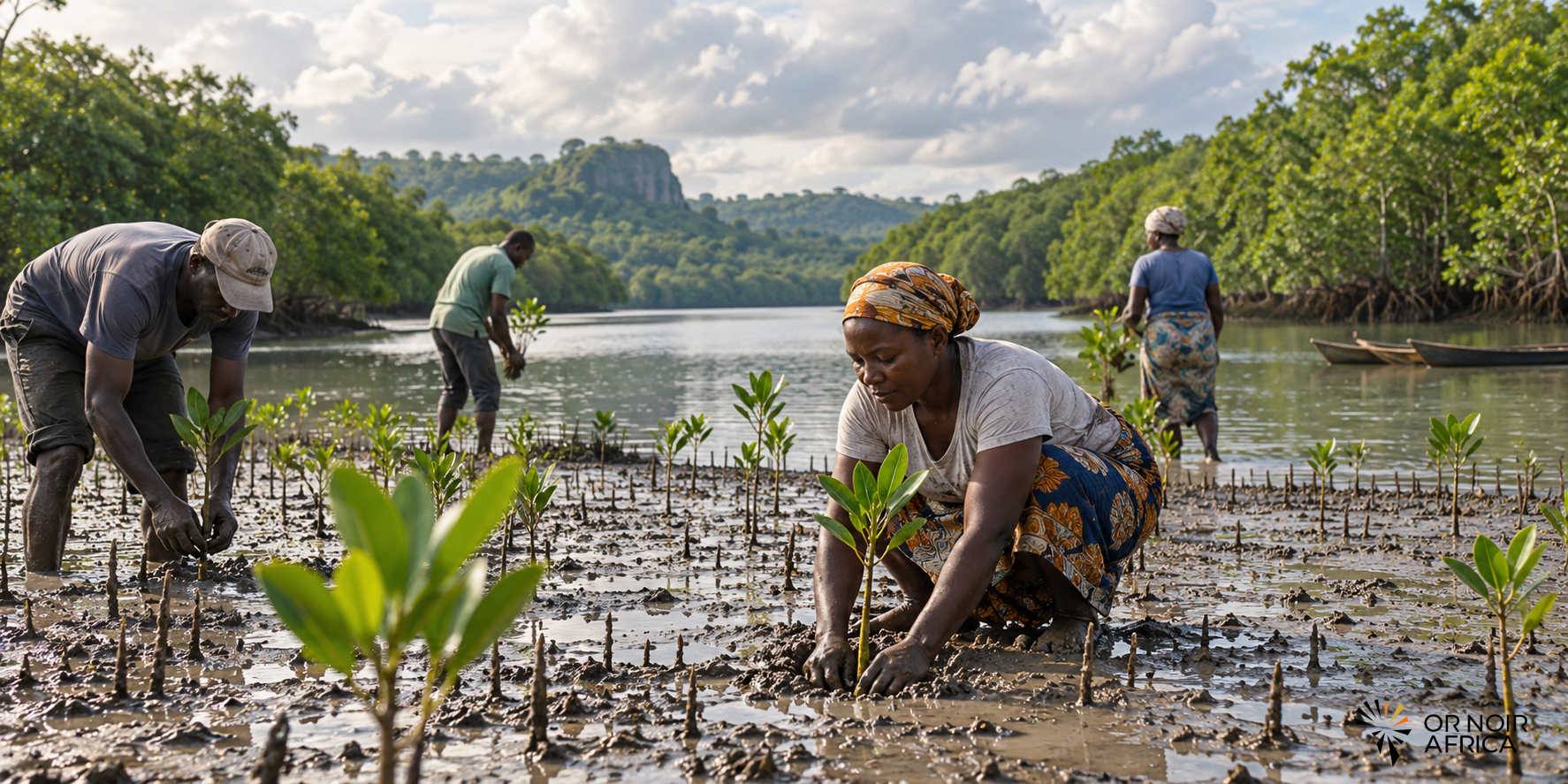
The first announced investments are expected to target forest and mangrove restoration, natural regeneration of degraded land and farming practices that store carbon in soils. The project pipeline draws on the Carbon Accelerator Programme for the Environment (CAPE), run by FSD Africa and Finance Earth. The program has reviewed more than 300 projects and identified potential exceeding 3.4 billion tonnes of CO₂ equivalent across 76.5 million hectares.
These figures describe the combined potential of the portfolio studied, rather than reductions already achieved or fully financed projects. The fund also aims to protect or restore 4.5 million hectares, avoid or sequester more than 100 million tonnes of CO₂ equivalent and improve the livelihoods of 1.4 million people. These are forward-looking targets; their credibility will depend on project selection, independent measurement and monitoring over time.
Sharing benefits with communities is a central condition
The promoters say they intend to finance only initiatives that provide for revenue sharing with the communities concerned, governed by transparent agreements and independent audits. The fund is targeting around $450 million in cumulative economic benefits for communities over the life of the projects. Again, this is an ambition rather than money already paid.
Local governance will be decisive. Communities must be able to understand land-related rights, consent to planned activities and know the rules for sharing revenue. An increase in carbon credit values does not automatically guarantee better livelihoods; expenditure, intermediary fees and conservation obligations influence the share reaching local producers.
Environmental quality must be checked just as rigorously. Projects must demonstrate that reductions are additional, that they do not displace deforestation to other areas and that stored carbon remains protected over time. Fires, land-use changes and measurement errors can reduce expected outcomes. Audits, published methods and an accessible complaints mechanism are therefore essential to maintaining trust.
Execution and transparency will be the test
By providing capital before the first revenue arrives, the fund may strengthen projects that would otherwise remain stuck in preparation. Its contribution, however, will be judged on actual disbursements, the number of projects reaching credible certification and the value actually transferred to communities. Announced financial commitments and potential hectares must not be confused with measured results.
The next steps are the initial close, project selection and publication of investment terms. The distinction between committed capital, disbursed financing, credits issued and credits sold must remain clear. If this discipline is maintained, Africa Nature can test a patient financing model for nature in Africa. Otherwise, numerical targets risk running ahead of evidence of climate and social benefits.
Have any thoughts?
Share your reaction or leave a quick response — we’d love to hear what you think!
-
 0
-
0
-
0
-
0
-
0
-
0





